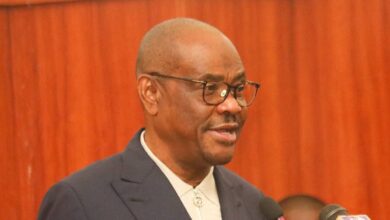
Kassim Omomia, Emma Obe and Ben Ogbemudia
The 2021 looks like a year the President Muhammadu Buhari’s presidency will not forget in a haste. The reason for holding this view is unmistakable. The administration seems to have a mouthful of challenges: the secessionist calls, insurgency as well as the innumerable cases of banditry,and kidnappings, among other vices.
Again, it is facing challenges thrown up as a result of COVID-19, the disturbing high unemployment and inflation statistics, the recurring cases of strikes by workers, the N60bn currency palaver and the last but not the least, the financial autonomy debate that has prompted the ongoing strike embarked upon by Judiciary Staff Union of Nigeria (JUSUN). Indeed, it looks like the one week, one trouble farcical scenario is playing out in the country.
In truth, the current action embarked upon by JUSUN members has resurrected a fresh battle between the Presidency and the governors over the implementation of financial autonomy for judiciary and legislature.
Recall that the Presidency last year, signed into law, Executive Order No 10 of 2020 cited as “the implementation of financial autonomy for state legislature and judiciary, 2020.”
A key provision of the Executive Order, “is the power given to the Accountant-General of the Federation to deduct from the allocations due to a state from the Federation Account, any sums appropriated for the legislature or judiciary of that state which the state fails to release to its legislature or judiciary as the case may be and to pay the funds directly to the state’s legislature or judiciary concerned.”
But the Chairman of the Northern Governors’ Forum and Governor of Plateau State, Simon Lalong, who spoke against the backdrop of the strike, last week, said though his colleagues were not opposed to financial autonomy for the judiciary and the legislature, they would not be forced to implement it.
He added, “People don’t understand what Order 10 is. Order 10 is talking about implementation. But for us governors, we are saying no. We are going to do implementation. We don’t need any Order 10 to force us to do implementation. So, we don’t need Order 10. We are only working on the law of implementation because Federal Government cannot tell us how to implement.”
However, reacting to the feud, many eminent Nigerians, especially Senior Advocates of Nigeria, urged the governors to stop pussyfooting around the issue.
According to them, the governors are hiding under constitutional immunity not to implement financial autonomy for judiciary.
The SANs ,who spoke on the issue include former Attorney-General and Minister of Justice, Akin Olujinmi; Aham Eke-Ejelam and Sam Zibiri;
Other lawyers, Samson Osagie and the secretary, Nigerian Bar Association Port Harcourt branch, John Owubokiri, also X-rayed the issue.
Zibiri, who described JUSUN strike as a righteous cause, noted that the governors were hiding under constitutional immunity to disobey a court ruling on financial autonomy for the judiciary.
The strike, he explained, was a way to force the governors to implement the decision of the court.
He noted that since the inception of the Fourth Republic, the judiciary budget had been submitted through the executive via the justice ministry, rather than directly to the legislature.
The implication, Zibiri added, had resulted in tempering of figures by the executive and the submission of whatever mutilated sum it deemed appropriate for the judiciary.
He stated that notwithstanding the president’s Executive Order 10, the governors refused on the ground that all the states did not have the same revenue generation capacity, even as they hid under constitutional immunity .
The SAN argued that the anomalies in the system had made the executive to successfully turn the judiciary into its lap dog.
He explained, “If a man controls the financial strength of another, then certainly the former is the master while the latter is a servant. And, in most cases, when the master has erred, the servant rarely finds the voice to admonish the master. This is the current effect of the judiciary financial power in the hands of the executive.”
Eke-Ejelam, who said politics had crept into the controversy, urged the Accountant-General of the Federation to do his work as directed by both the Executive Order and the court.
We need a special review of the entire gamut of the security – NGF
He added, “The financial autonomy of the judiciary is constitutionally provided for in the 1999 Constitution as amended under Sections 120 – 121, subsection 3. The concept of legislative and judicial autonomy are well spelt out there and funding of the two arms of government should be on a first-line charge.
“But you know how powerful the governors are. Despite the fact that they have horizontal and vertical levels of government, they still wield a lot of influence; horizontal being the executive, legislative and judicial arms of government and vertical being the federal, state and local tiers of government.
“At the federal level, judicial autonomy is not a problem because the federal government has complied with it. President Buhari tried to re-emphasise the financial autonomy of the legislature and judiciary with the Executive Order 10 of 2020. In that order, he made adequate provision for its execution and made provisions in respect of capital projects.
“The Accountant-General of the Federation is supposed to deduct the funds of the judiciary from the states’ allocations at source from the consolidated fund. But when he did it, the governors were not happy.
“It is not something that should generate any problem. The judiciary workers have even gone to court and the courts have made pronouncements in favour the financial autonomy of the judiciary.
“What is left is for the Accountant General of the Federation to do his work as directed both by the Executive order 10 of 2020 and the court pronouncements. I think that what is just playing out is political.”
Contributing, Owubokiri, condemned what he termed the “reluctance” of the governors to the provisions of the Constitution on the financial autonomy of the judiciary.
According to him, the governors’ stance is a self-serving strategy to control and colour the administration of justice.
He said, “If the governors are worried about the independence of the judiciary in their states, it is safe to conclude that what they are concerned the most about is the impartiality and neutrality of the judiciary. Again the governors’ reluctance to accept judicial independence makes us wonder if they have not been corrupting the administration of justice in their states by asserting the financial leverage they had been enjoying over the judiciary.
“With their stance on this issue of judicial independence, the people of Nigeria ought to be concerned and put in place institutional checks to forestall the state police commands being deployed to achieve their selfish advantages before decentralising the police structure. It is obvious to all now that the governors should face legal liability for their actions in government and not continue to enjoy constitutional immunity, a privilege that was extended to them to their offices against distraction and the malicious attacks of unreasonable opposition.
“Nigerians must all speak out now and condemn the governors who view their four or eight years in the corridors of power as more important than the order and stability and indeed the future of our country. I have stated in different fora that although JUSUN has adopted this struggle as its own, it is indeed a struggle for all Nigerians. Those who lament and condemn the strike embarked upon by JUSUN lack patriotic zeal for the order, good governance and the predictability of life in Nigeria.”
However, the former AGF stressed the need for all the parties to respect the constitution, especially the president and the governors, who, he said, controlled different tiers of government.
Olujinmi explained, “ It is settled more that the Federal cannot control how states carry out their governmental functions and if there is an abuse of the constitution by any state in the country , it is not for the president to redress that abuse. I think that is why the governors are saying look ,it is good we agree to the autonomy of the judiciary, legislature and local government, but the consequences tomorrow we cannot handle because if we accept now from Mr. President to dictate to us what we should do through Executive order, then tomorrow when he goes further to do other things , you just find out that they are in trouble that is why the governors are fighting now.
“I do not think there are governors who do not believe in the autonomy of the judiciary, legislature or local government. But the only question is whether it is appropriate for Mr. President to intervene. They think it is their problem to settle and they will settle it. So, when you look at it from that perspective, you will say the governors are right by not allowing Mr. President to dictate to them.
“Our leaders generally create rooms for strikes and agitations like this. It is very unnecessary. We can avoid all this if we simply obey the constitution. All these thing are there. Those who are asking for it know that is there in the constitution; that is why they are saying look, we have been asking for this thing for a very long, enough is enough. They have even gone to court and court said states must implement that aspect of the constitution, still the governors are not obeying.
“The strike is good in the sense that it invites the attention of the government generally to the need to obey and respect the constitution for the betterment of this country and our democracy.”
For Osagie, the Executive Order is targeted at strengthening democratic institutions particularly the judiciary and legislature at the state levels.
The order, he added, would prevent other arms of government from being at the mercies of the governors.
“It is indeed a very welcome piece of legal instruments aimed at strengthening the institutions of the state legislature and the judiciary.
You will agree with me that in our democratic experience, while some measures have been adopted that have given the National Assembly and federal judiciary independence, the situation is not the same at the various sub national levels.
“Therefore, the Executive Order represents a quantum leap in the efforts at strengthening democratic institutions particularly the judiciary and legislature at the state levels that have continued to be at the mercies of governors.”