Africa CDC raises alarm over emerging infectious diseases outbreaks

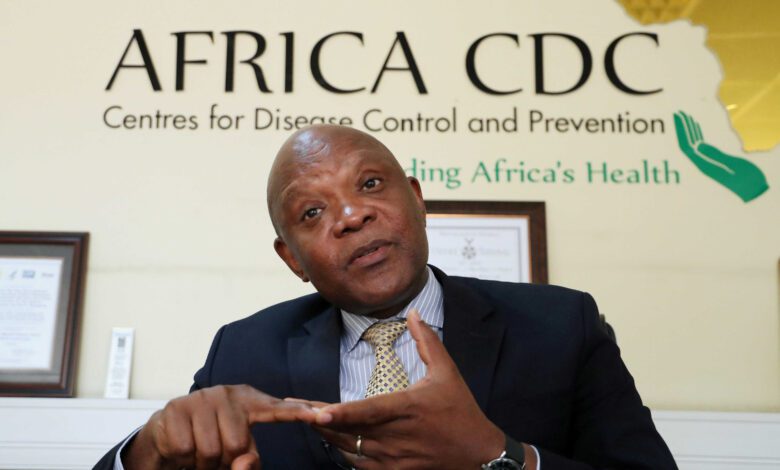
The Africa Centre for Disease Control (Africa CDC) says the African continent was faced with syndemics, a combination of emerging infectious diseases, which are increasing the disease burden across the continent, according to Dr John Nkengasong, Director, Africa CDC.
Nkengasong stated this in Abuja on Wednesday, day two of the Nigerian Conference of Applied and Field Epidemiology, (NiCAFE), 2021, themed “Building Back Better: COVID-19 and other disease outbreaks”.
The News Agency of Nigeria (NAN) reports that the conference, organised by the Nigeria Center for Disease Control (NCDC), is aimed at strengthening the country’s preparedness for emergencies in infection outbreaks.
“The African continent as a whole face what we call syndemics; a combination of emerging infectious diseases. We are dealing with this pandemic, but there will be another pandemic.
“Syndemics are exacerbating the disease burden across Africa. Emerging diseases, non-communicable disease/ injuries/ maternal and neonatal conditions; and endemic diseases, ex HIV, Tuberculosis and Malaria,” he explained.
Speaking on the role of regional health institutions in the prevention, detection and response to infectious diseases outbreaks, Nkengasong disclosed that if the continent had been hit by the COVID-19 pandemic in January 2020, there wouldn’t have been a single country with the reagents to test for the virus.
“A continent of 1.3 billion cannot be that exposed. All countries in Africa now have diagnostics capacity,” he added.
He stated that from the COVID-19 pandemic lessons learnt and response in the continent, “ coordination and collaboration is key for a whole of Africa approach, with a critical role for National Public Health Institutes (NPHIs) in pandemic preparedness and response”.
In addition, he added, the development of continent specific guidelines and continental political leadership to guide the pandemic response were necessary.
Similarly, local diagnostic manufacturing of Personal Protective Equipment (PPEs), therapeutics and medical equipment was a health security challenge; vaccines-related innovation was critical for Africa’s health security, while there was an urgent need for the development of Africa’s public health workforce, he explained.
EFCC invites ex-governor Al-Makura, wife
The director further noted Africa’s limited health facilities, budget and workers, citing the need to have a new public health order for the continent to tackle infectious diseases’ threats, based on specific guidelines.
“Public health is local. You may think globally, but implementation is local”, he added.
Nkengasong stressed the importance of continent-wide coordinated efforts at the national level, recognising that global health security starts with national health security that fits into regional health security.
“Public health is about the pathogen, the population, the politics and the policy. Regional collaboration and cooperation are, therefore, crucial as this is the backbone of health security in Africa,” he said.
Also speaking, President, International Epidemiological Association, (IEA), Dr Akindele Adebiyi, highlighted enforcement as a key consideration in curtailing infectious disease outbreaks.
On disease exposure control and socio-economic factors in outbreaks, Adebiyi described disease exposure as the process by which the spread of disease was minimized by limiting contact between uninfected individuals and other individuals who were potential spreaders of a contagious disease.
He stressed that preparedness must involve true community participation: citizens’ involvement in planning, implementation and evaluation of public health interventions.