By Linus Aleke
“Lighten the yoke your father put on us”. – Elders of Israel told King Rehoboam.
“My little finger is thicker than my father’s waist. My father laid on you a heavy yoke; I will make it even heavier. My father scourged you with whips; I will scourge you with scorpions”.- Rehoboam, King of Israel, replies elders in 1 Kings 12.
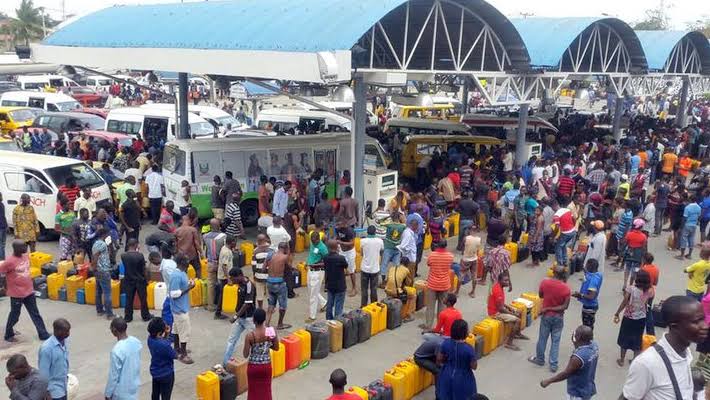
The above dialogue between the delegation of Jewish elders, led by Jeroboam, to the newly crowned King of Israel, Rehoboam, the successor of King Solomon, as chronicled in jewish sacred book, 1 King 12, has been likened to the situation in today’s Nigeria, as the excruciating pains, and agony that citizens have to go through on a daily basis, following the removal of subsidy on petroleum products, speaks volume, on the direction the incumbent administration is heading.
The detractors of President Bola Ahmed Tinubu, believe that he is putting additional load of pain on citizens, instead of applying healing balm and reliving them from the unbearable and avoidable agony, his predecessor, Muhammadu Buhari, plagued them with.
This group of pessimist, like every other groups, agreed that there is justifiable reasons to unyoke the country from the fraudulent apron of fuel subsidy that only benefit few legitimate oil racketeers, but argued that the vulnerable population should not be forced by the circumstances to take a quantum leap, from frying pan to fire.
Those who subscribe to this school of thought, regretted that the purchasing power of average Nigerian was better off under former President Buhari, even in the face of bad governance and lack of direction.
A disciple of the above thought and a construction worker, Mr. David Pam, said that he is already contemplating of resigning from his current employment as his take home can no longer take him home.
He said, “Before the removal of oil subsidy, I spend one thousand naira, daily on transportation to and from my office. But now, I am compelled to spend over three thousand naira daily, yet no mention is been made of salary increment. But if I resign now, how do I feed my family? The situation is dare. Aside transportation, prices of food and other household items had also gone up. Tinubu did not do well in removing this subsidy”.
Ms. Precious Adejo, a fashion designer, said, the removal of subsidy was good but the timing was wrong.
She posited that President Tinubu should not have welcomed citizens on board his administration with pain and agony, but unfortunately, that is the reality, and history will document it.
“What the President has done is comparable to a bride who starts rubbing cream, powder, and lip stick, on her weeding day before going to take her bath. It is just like eating food, before cooking it, or going to the university before secondary school. First thing first, the President ought to have put measures in place first, to lessen the pain on the vulnerable population before announcing the removal. It is now, that the government is beginning to talk of palliative. The issue of palliative sould have come before the removal,” she further posited.
Recall that president Tinubu had declared during his inaugural speech, at the Eagle Square on May 29 after taking oath of office as Nigeria’s 16th President, that “fuel subsidy is gone”.
READ ALSO: Nigeria felicitates OPEC at 63
He said the 2023 Budget made no provision for fuel subsidy and more so, subsidy payment is no longer justifiable.
Tinubu said his government shall instead channel funds into infrastructure and other areas to strengthen the economy.
He reiterated this stance, approximately 14 days after, while addressing Nigerians on the occasion of Democracy Day, on June 12.
Tinubu said: “…It is for this reason that, in my inauguration address on May 29, I gave effect to the decision taken by my predecessor in office to remove the fuel subsidy albatross and free up for collective use the much needed resources, which had hitherto being pocketed by a few rich. I admit that the decision will impose extra burden on the masses of our people. I feel your pain. This is one decision we must bear to save our country from going under and take our resources away from the stranglehold of a few unpatriotic elements.
Painfully, I have asked you, my compatriots, to sacrifice a little more for the survival of our country. For your trust and belief in us, I assure you that your sacrifice shall not be in vain. The government I lead will repay you through massive investment in transportation infrastructure, education, regular power supply, healthcare and other public utilities that will improve the quality of lives”.
But responding to the above policy statement, which, detractors of the administration had described as nebulous and juvenile action, coming from the elderly, a research professor of International Relations and Strategic Studies, Nigerian Institute of International Affairs (NIIA), Victoria Island Lagos, Prof. Femi Otubanjo, bares his mind on the topic under scrutiny.
He posited that citizens, are going to pay more for everything that they use, stressing that there will be job loss, which will lead to massive poverty, and poverty will lead to spike in crime.
According to him, “Let me first say that I am not an economist or in a position to fully analyse the subsidy removal, but it is obvious that some of these things are matter of optics. It is a matter of what we can see. Things can be instantly unaffordable, transportation cost for instance; which is central to all part of costs will go up. This is because if business owners have to pay additional 50 or 100 percent on transport, than they pay before now, they will transfer the cost to the consumers, who have borne this additional 50 or 100 percent increment. If business owners pay more on transportation of goods, they will factor it into the cost of goods and the end users suffer the consequences at the end of the day. There will be significant cost to the people. We are going to pay more for everything that we use, I don’t know whether the company that employs will be able to absorb the increase that will come. Therefore, we must look towards job loss, and job loss will led to greater poverty and greater poverty will lead to greater crimes. There is no short cut to all these”.
He expressed surprise at this kind of agonizing policy of government, stressing that alleviation is what Nigerians need now.
“What can government do about transportation? We cannot subsidize oil products but we can subsidy transport. We have to subsidize such thing for it not to be a disaster. We cannot leave people to the workings of capitalists. Capitalism is a vicious system that consumes and destroys,” he further posited.
The Government, he said, has to be able to come in to alleviate the agony imposed on the people by the removal of subsidy, arguing that even in most capitalist countries, the Government intervene.
“look at what is happening in the United States for instance, Biden is writing off students’ loan and renegotiating debts and so on, subsidizing, giving welfare and all of that. We don’t have a welfare programme here. In the advanced democracies, people get resources to live well, even when they have no job. So, when subsidy is removed in advanced countries, public transportation might not increase significantly. Secondly, citizens get their welfare check at the end of the week, and they know that they can go to the hospital and be subsidized,” he said.
He further argued that Subsidy is ever present in governance, insisting that no body should talk about removing subsidy totally.
Prof. Otubanjo, averred that it is the corrupt management of subsidy that has brought us where we are and we are not prepared for the removal.
He said: “Preparing for the removal means that we should have made provision for mass transport and other kinds of provision. Now, it is not late, we have to continue to work on alleviating policies, so that the suffering will be limited to a very short period. But in the short term we are going to face severe shocks and pains, there is no doubt about it”.
The National President, Natural Oil and Gas Suppliers Association of Nigeria (NOGASA), Mr. Benneth Korie, agrees with the removal of subsidy but frowns at the idea of government paying money to citizens in the name of palliative.
Mr. Korie, who made this proposition, in a chat with journalists in Abuja said: “I hear people talking about palliative, what do we give Nigerians for palliative and all that? I had read on the news, proposal of five or ten thousand naira, or whatever. To be honest with you, if we can save seven trillion naira paid annually on subsidy, it will be nice to take part of it to give to farmers, which is the agricultural sector so as to bring down the price of food. We want the price of food down. This is my own suggestions, when it comes to palliative, the issue of sharing money do not make too much sense. All of us will not get money, but all of us will get food. These are the areas i want government to look into, very important”.
Also, the Nigeria Labour Congress (NLC), says it has proposed a wage award to the Federal Government to cushion the effects of petrol subsidy removal on workers and Nigerians.
The NLC president, Comrade Joe Ajaero, who made this revelation, at the ongoing 111th Session of the International Labour Conference (ILC) in Geneva, Switzerland, posited that the proposal was part of the agreement reached with the government during the negotiation on the removal of fuel subsidy.
Reiterating that the agreement NLC had with the government was not minimum wage, the President said: “The agreement we had with them is wage award, and it must be understood clearly. We have proposed to them a wage award, which could be implemented immediately without waiting for the statutory period for the minimum
What we are going to do is to look at the rate at which this wage award will be, whether it will be N100,000 or N20,000.
This will not stop the review of the minimum wage, which will be due by early next year. It is good we draw this demarcation”.
Expressing frustration over the sudden removal of subsidy, Comrade Ajaero, averred, “We will ensure to review minimum wage statutorily because they have taken action by removing subsidy without providing anything. That is why they are talking about minimum wage’’.
In conclusion, I invite the Government and other critical stakeholders in the removal of subsidy ecosystem, including the vulnerable population to take a minute silence and ponder on the thought of English essayist, journalist, and critic, Mr. George Orwell, as captured below and harvest the useful lessons therein, “Of pain you could wish only one thing: that it should stop. Nothing in the world was so bad as physical pain. In the face of pain there are no heroes”.