ECOWAS cannot surmount challenges of W’ Africa- Otubanjo

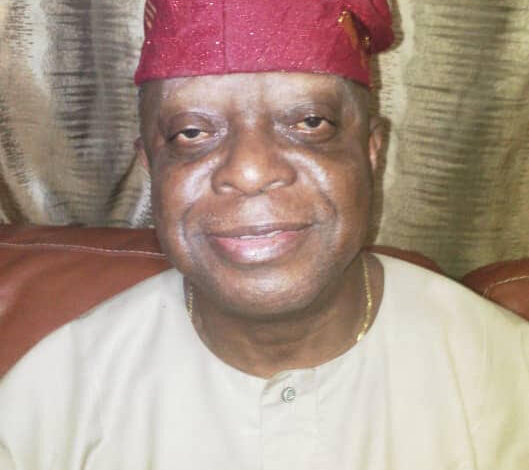
A research professor of International Relations and Strategic Studies at the Nigerian Institute of International Affairs (NIIA), Victoria Island, Lagos, Femi Otubanjo, in this interview with Linus Aleke, says the regional bloc ECOWAS cannot simply confront the myriad of challenges currently confronting her. He also talks about other sundry issues
West African region is home to the majority of people living below the poverty line, and terrorists and other criminal elements find the region safer for their nefarious activities, there is also the resurgence of coup d’état, in the sub-region, what then can we say is the achievement of ECOWAS in the face of all these negative indices?
Firstly, we ought to have a broad understanding of international institutions, like ECOWAS. There are so many of them in the world suffering from the fact that they do not have powers of their own. The powers they exercise are the ones that the member states allow them to administer, or use. If you look at the United Nations, for example, all these negatives about ECOWAS are also prominent in the United Nations. War is still going on, there is an ongoing war between Russia and Ukraine. This is happening, 77 years after World War II, with the presence of the United Nations. There have also been several wars in-between. The Middle East wars, the American wars in Vietnam, Iraq, and Afghanistan, etc. It has been a continuous stream of violence, war, and of instability across the world. Does that mean that the United Nations should not exist anymore? No, we must also look at these things, this way, if these institutions do not exist, would these negatives be better? It is just like this, if we think education is expensive, let us try illiteracy. That is the general framework in which, we must understand ECOWAS. ECOWAS has limitations of power because it is only able to exercise the powers that member countries extend to her. The truth of the matter is that international institutions are not supranational, they are not above nations, they are inter, and they are product of negotiations, and of compromise. Now, the ECOWAS treaties do not talk about a common military force for example, it talks of aspiration to do many things, to have a common currency, to ease trade across all frontiers, to remove barriers to the movement of people and trade, etc. Those are general ideals and aspirations, some of which, it has not fully achieved but has continued to work on the common currency, and free trade zone, If we look through the EU region, you find countries that have been there for centuries, that have developed their systems over a while. You come to West Africa, you find countries that just started the journey as sovereign nations in the 60s. Even the oldest of them, Nigeria, and Ghana, are just above 60 years old as sovereign countries, with years of struggle for democracy, military rule, and autocracy, and so on. We are not, totally, out of the instability that was created by our foundation. In Nigeria, we became independent in 1960, and by 1966 we were already under military rule. Ghana has had several military regimes, and Togo and other countries of ECOWAS have had instability and authoritarian rule. The member states, themselves, have not been able to resolve their internal problems, how do they begin to think about international problems? They cannot do what we are expecting them to do. When we have a judgement in the ECOWAS Court of Justice and we bring it to Nigeria Police Force who is going to enforce it when our courts are in tatters? The Nigerian judiciary can continue to adjourn a case for twenty years. We are talking about the development of each of the member states and the fact that we a dealing with a collection of poor countries which are still attached to their colonial masters, like the French member states and they are in the majority. They are closer to France than other West African States, and they get their support from there. Nigeria can, hardly, give them the support they need, because we are also looking for developmental support. We are talking about a collection of underdeveloped countries. The key point here is about the capacity of the member states. If we put together the capacity of member states in terms of economic resources, capabilities in terms of developmental milestones, GDP, etc, it probably does not amount to one country in Europe. What is the GDP of all West African States? When we are looking for results, we are looking for the resource capacity of countries. The United States alone can fund a war several thousand kilometres away from its homeland because it has the resources, it has the military capabilities. It can carry its troops across the world, via the sea and the air and if it was to go into alliance with countries of Europe who have similar capabilities, the resources would be quite eminently different from our situation here, where no country can be a regional power, not to talk of being a continental power, talk less of a global power. Nigeria, which is the biggest country in Africa, is handicapped.
What can be done to stop Western powers from further polarising ECOWAS member state along colonial affinity?
I am not sure that anything can be done. In global politics, it is about intrigue and self-interest. France is still the dominant economic actor in Francophone West Africa; they serve as Central Bank for these countries. A lady lost her job recently for daring to point out these facts. For these countries to even spend their currencies, or borrow their own money, they have to go through the Central Bank of France, and get approval and all that, so, they are just nominally independent countries. Now, for them to detach their currencies from Paris, will require a revolution. The aspiration for a common currency assumes that France will be a willing partner in allowing new currencies to be created that will be aligned with other currencies of other member states. We first have to untie these countries from the apron strings of France. That is a major problem for West Africa and ECOWAS. It has been suggested that the problems in Nigeria may not be unrelated to the unwillingness of France to give up on its West African colonies, because Nigeria constitutes a major threat and another source of hegemony in the power game of the sub-region. Nigeria can impose itself on these other countries and the more Nigeria is incapacitated, the more it will not have the attention span for other things other than to fight to stabilise itself. So, we are, constantly, trying to stabilise ourselves, and because we are doing that we have no time for West Africa. In fact, at a point, we had to close our borders. Can you imagine Nigeria the giant of Africa, closing its borders to fellow ECOWAS member countries? That in itself, is like tearing up the ECOWAS Treaty. So, France constitutes an impediment to the progress of ECOWAS. Let us not put it in any other way. How do we now get rid of France? France has benefited and has continued to benefit from its colonial history and its relationship with these countries. We saw what has been done in Mali, how desperate they are to cut off their relationship with France, and how they have brought in mercenaries to be able to fight off Jihadists. France is only around to exploit the situation. The reality is that we are faced with a neo-colonial situation that is very strong. The strongest area of neo-colonialism is West Africa and it is within West Africa that we have the largest number of former French colonies Now, how do we take away France from the equation, especially, when we have not been able to solve our internal contradictions and they may not even want us to solve it by continuing to aid insurrection, terrorism, banditry, and other violent extremists in our region. Developing countries, particularly, African countries have a problem. If we have nationalistic or radical leaders, who want to untie us from our past, they will overthrow the leader. We have seen it, Thomas Sankara and others who were talking nationalistic stuff. Even, the people in Mali that are still making noise, must be alert because these hegemonists don’t sleep. Their self-interests are so overpowering that if you try to protect your own country against them, they will get rid of you. They don’t care about us, except to see us as sources of income, and sources of raw materials. You find that they are here in large numbers in Nigeria, protecting the regime because of uranium. They are there in Chad, everywhere you see them, and there are possible resource opportunities. And they will not allow that country access to their wealth, except corrupting the leaders, deciding who becomes leader there; they also can overthrow and kill. We need to ask ourselves how Idris Debi was killed in Chad, was it because he was becoming too ferocious towards Boko Haram, which was been used to destabilise Nigeria? There are too many complications in the international power game, to make ECOWAS viable because they are not going to let African leaders have that independent action that will free their countries from their iron grip that is where we are.
Some analysts had observed that the only way Francophone West Africa can extricate selves from the iron grip of French power is through military rule, do you share this sentiment?
How can anybody say that? What they mean is that they are looking for radical regimes and that most likely those regimes should come from the military. Don’t forget that we are not talking of one country, they are about ten or twelve countries. Are they going to organise a synchronised coup in all of the states? Mali and Burkina Faso, have staged coups that appear to be anti-France, but do we know how it is going to end? The problem with us is that we are the poor part of the world. Poverty is a major factor in our political situation, they can easily arm one little General somewhere to confront the incumbent regime. They can stage a coup themselves, whether successful or not against the government that is trying to change the situation of the relationship between them and West Africa. So, they have an upper hand and I don’t know when or how we would be able to get rid of this. There is no doubt in my mind that French policies are aimed at keeping these West African countries under their tutelage. They do not intend to give up and if Nigeria attempts to play any hegemonic role or become the leader here, they will make sure that Nigeria is unstable. The whole idea of the coup is akin to living in a dreamland. Are you going to have over 10 generals speaking one language? No, that is not going to happen. The coup in different countries have different origins and causes and they are not necessarily all anti-French. Burkina Faso for instance is leaning towards the eastern bloc now, does this move not support the hypothesis of those who advocate for the military coup in Francophone West Africa as a means of dismantling the relationship with France? When we are playing an international power game, and we want to look towards the east. It is like taking away a baby’s food let us call it a dog. Are we trying to take away food from the dog? When it is about to eat, even a chicken will fight with so great aggressiveness. So, let us not deceive ourselves that it is the only solution to untie Francophone countries from the French. There is no easy solution, if we say we are going to go towards the east, we make them more ferocious, in terms of resisting the attempt. We have just seen the beginning of what is happening in Mali and Burkina Faso, we have not seen the end. The French will not give up on their interest in those countries. France will fight to put someone friendly to their aspiration and interests. They have all kinds of means to achieve this, including staging a coup if it becomes necessary. Do you know that our political and economic problems today started with Murtala Mohammed, saying that Africa has come of age? That so-called radical speech that he made led to his assassination. And since then, we have been in an economic war; our Naira has been weakened to the point that we are now in a desperate situation. These people are smarter than we know, they are more vicious than we know, and we must not joke with the fact that there is an easy solution to getting rid of neo-colonialism. We are still strongly tied to them because they can change leaders, they can throw up the secessionist movement somewhere and terrorism in another place and incapacitate the government with those problems to the point that it will not have time to face economic problems.
Beyond the invisible hands of the Western powers in the affairs of African States, what can ECOWAS do to make coups unattractive in the region?
I don’t know what they can do, if you are a scholar and you look at history and experience, you will see what had gone on, and what kind of leadership we have across Africa. Are there leaders that can stand up to their responsibilities? In Cameroon for instance, the leadership has become a kind of chieftaincy forever, we have Chad that is from father to son, and we now have Mali and Burkina Faso.
How many of these countries are democratic countries that can fight for democracy and if a coup takes place, what can they do to prevent it or undermine it?
Look at how long it took them to get rid of Yahya Jammeh in Gambia, the smallest country in West Africa. We have a problem with our own internal democratic culture and because of that, there is no unity of purpose on how we deal with instability and illegal regime change.