Edo needs competence, not political experiments- Ifaluyi-Isibor, PDP Reps candidate


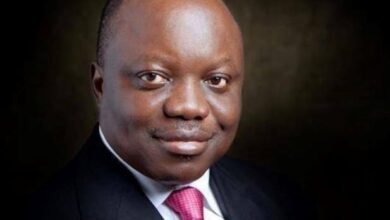
An ex-Edo State Commissioner for Digital Economy, Science and Technology and Peoples Democratic Party candidate for Egor/Ikpoba-Okha Federal Constituency, Ogbeide Ifaluyi-Isibor, says he is seeking election to the House of Representatives to provide competent and quality representation. He says his experience in government, exposure and record in digital transformation have prepared him for the job. David Lawani monitored the conversation on Arise Television’s Prime Time
How do you assess Edo State today?
It is a question that bothers the average Edo man and woman because Edo has been in the news frequently, for both positive and negative reasons. People worry about the kind of leadership we have today because the quality of life depends on the quality of society, and the quality of society is directly proportional to the quality of leadership. We therefore have to be deliberate in our leadership selection process. If we keep putting anyone into elected office, we will remain below our economic, social, political, and moral weight.
Do you think Edo currently has the right leadership?
It appears the people are not enthusiastic about the leadership we have today. They are calling for more hygiene in politics—where the utterances of public office holders are reasonable, where leaders are held accountable by the people who own the power, and where public funds are deployed for the benefit of the people. We need competent people with the capacity, courage and capability to occupy public office.
You have described your campaign as a “rainbow” candidacy. How will that support translate into votes?
Politics should be centred on the people. In a democracy, the people own the power and give that power through their votes to those elected to deploy resources for their benefit. People have interests, and it is legitimate to have interests, but unguarded comments can also create crises that ultimately affect governance. My supporters include members of the APC, NDC, and ADC. They believe I am competent and tested. I served in the previous administration, and they saw what I did. They see me going to markets, motor parks and other places to interface directly with the people who have the votes. There is a party in power today that is unfriendly to the opposition, but the people are watching. We saw recently how voters stood up and ensured their votes counted. That is the energy we are building. My contestants have been campaigning for weeks, yet none has published a manifesto. They are contesting for the same office, but I do not regard them as opponents because they have not brought ideas to the table.
What did you achieve as Commissioner for Digital Economy, Science and Technology?
I am excited when asked about what I achieved because people still contact me and refer to those achievements in supporting my candidacy. We laid 2,000 kilometres of fibre-optic cables connecting all 18 local governments. Edo developed a digital policy as a subnational government and established a Tier-3 data centre. We also made government paperless, meaning official correspondence and memos were handled digitally. We received several recognitions and awards for those achievements.
What will be your priorities in the House?
My primary focus will be young people. My constituency has an estimated population of more than 700,000, with about 60 per cent between the ages of 13 and 45. I intend to deploy technology, improve digital transformation and inclusion, and build digital skills among young people. That is one of the greatest forms of empowerment because it gives a young person a globally marketable skill.
What about constituents concerned about jobs, healthcare, roads and electricity?
My manifesto contains measurable timelines. But first, I had to understand the actual job of a legislator and the extent to which I can deliver. The Constitution clearly defines the roles of legislators and executives. A legislator cannot simply promise to build roads like a governor. However, there are other needs. A lawmaker can identify problems, develop legislative proposals and provide oversight. Constituents also need better schools, water, electricity and healthcare. During my campaign, I visit rural communities and urban centres to understand their specific needs. Some need transformers; others need medicines for primary healthcare centres or opportunities for their young people. I do not make promises I cannot fulfil. I explain what my role will be and what I can realistically do.
How will you avoid making promises beyond your constitutional powers?
That is why I am careful when I interface with the people. I ask them to question me. I want to make measurable promises that I can achieve. I will not tell them I am going to build a particular road because that is not my primary assignment. But as a representative, I can take their case to the governor or the relevant federal minister. It is a double-edged responsibility: I can engage at the federal level and collaborate with the state government.
Can the PDP still provide effective opposition?
The PDP has gone through glitches, and we have seen elected officials leave the party, giving the impression that it is weakening. But the grassroots structure remains. In my federal constituency, the PDP is still the main opposition party. Many members of the newer opposition parties came from the PDP. If I did not believe the PDP had an organic structure in my constituency, I would not have contested because I understand the importance of political structure.
Can opposition parties unite ahead of 2027?
Nigeria is in dire straits. The average Nigerian is bleeding and is concerned about the quality of life, what is in his wallet and what is in his bank account. The opposition may appear fragmented because we have multiple political parties, but ultimately the people will decide. Nigerians are not happy, and the opposition has not done enough to hold the government accountable. Some opposition members have become too docile when they should be speaking for the people. Unfortunately, many opposition politicians are more focused on personal interests. One wants to be president, another wants to be president, and everybody wants the same office.
What do Nigerians want?
They want change. I would have preferred a united opposition front to challenge the APC, but even if that does not happen, Nigerians understand that they have choices.
What is your message to the people of Egor-Ikpoba-Okha?
This is a face the people know and a voice they know. I have always stood up and spoken for them, and I understand the experiences they go through. We have had poor leadership in the National Assembly for a long time. This is an opportunity to elect someone who is competent, capable and courageous; someone who understands the role of a legislator and knows how to play it. I was a commissioner before, and many people believe I served very well. Now is the time to have the best representation in the House of Representatives from Ikpoba-Okha Federal Constituency and, indeed, Edo State. We will show them how to provide leadership and serve the people at the highest level possible.