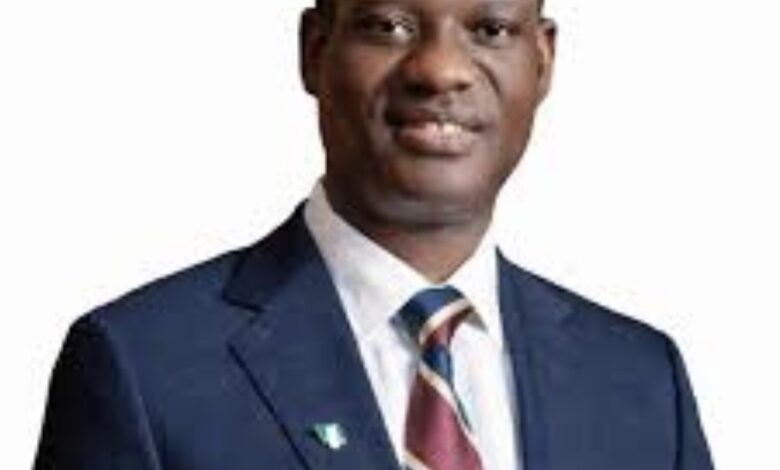
The Minister of Finance and Coordinating Minister of the Economy, Taiwo Oyedele, has defended the Federal Government’s 30-day petrol discount initiative, insisting that it is not a return to subsidy. He said the measure was designed to protect Nigerians from sudden price volatility while ensuring that transporters and consumers benefit. Oyedele also rejected calls for cheaper petrol through subsidised crude, arguing that such a policy could cost the country trillions of naira and reverse economic gains. He spoke on Channels Television’s Politics Today. David Lawani monitored the conversation
Was the government’s position on petrol subsidy misconstrued?
Let me start from the first principle: why did we put out the information and hold the press briefing? Politicians are politicians, and many tend to say what they think people want to hear, even when they know it is wrong. When this subsidy matter came up, we thought it was a joke because there is a level of knowledge you expect from certain people. But we saw it gaining momentum. Other people were jumping on it, and some were changing their positions. Mr President remained consistent that this was the wrong thing to do. The essence of our press briefing was to demonstrate to Nigerians, with data, why bringing back subsidy in the way proposed would be dangerous. Some people tried to be clever by calling it a production subsidy. When you say production, people think it is a good thing. But a production subsidy reduces the cost of production so that a producer can compete at market price. That is not what was being proposed. What they were effectively proposing was a consumption subsidy through refiners. They did not explain how it would be controlled or how crude prices would fit into the pump price. The pump price of PMS is highly sensitive to the exchange rate. If the Naira was N500 to the dollar, for instance, one litre of PMS could be around N400. Anything that affects the exchange rate therefore affects the pump price. Investors always ask whether Nigeria will reverse its reforms. Before the reforms, foreign exchange was scarce, reserves were dangerously low, companies were exiting, and even ordinary international payments were becoming difficult. We had to recognise the real value of the Naira. If anything creates panic and causes foreign exchange to leave Nigeria, the Naira will crash. Our estimation is that, within months, the exchange rate could reach N3,000 to the dollar, while the PMS price could rise significantly. We needed to warn Nigerians with data. If the subsidy is returned to the level it was before the reform, it could cost about N20 trillion annually. If the price is reduced to N500, as some people have proposed, it could cost about N16 trillion. Those figures are almost equivalent to the entire net distribution of the Federation Account for 2025. Subsidies will not solve the problem; they will only hide it until it returns with full force. We saw what happened before—in salaries, pensions, schools, healthcare and infrastructure. The World Bank has acknowledged that poverty is reducing and that spending on infrastructure, particularly roads, is increasing. We should not reverse the progress we have made just when we are getting to the point where Nigerians should begin to see the results.
How much crude does Nigeria currently produce?
It is more than 1.3 million barrels per day. We are now at about 1.8 million barrels per day. Dangote, for example, has a refining capacity of about 700,000 barrels per day.
Can Dangote get all its crude from Nigeria?
Let me be straightforward: this government is not bringing back the subsidy on fuel products. If we produce 1.8 million barrels per day, that crude does not belong entirely to Nigeria. Under production-sharing contracts and joint ventures, the barrels are shared, and the ratios vary. There is also the cost of producing the crude. You take cost oil, royalty and other contractual obligations before you get to the profit oil that is shared. The long and short of it is that whatever is left for Nigeria has been almost entirely committed because of the previous subsidy regime. Before Mr President introduced the reform, the NNPC, which held our crude on behalf of the country, had less than 100,000 barrels of free crude left. Because we had subsidised almost all our revenues, the government started printing money. That was not enough, so we began using future crude production to secure borrowing to subsidise current consumption. That was a gunpowder waiting to explode.
What has changed since the subsidy reform?
The government has increased production, reduced oil theft and renegotiated some commitments that had taken our crude away. Many Nigerians remember Tony Elumelu expressing frustration that we could not account for even 20 per cent of what we produced because of oil theft. He later said the situation had improved significantly. But we are still not at the point where we can give Dangote 700,000 barrels of free crude. Those saying we can simply discount crude to the cost of production do not understand the situation. Dangote imports crude, and we need to establish that fact.
How much free crude does Nigeria currently control?
I cannot give you the specific figure because I do not have it, but I know it is less than what Dangote needs. Even if we had 700,000 barrels available, Nigerian crude is predominantly sweet crude, while Dangote also needs some heavy crude for an optimal refining mix. Today, we do not have up to 700,000 free barrels to give anyone, including Dangote. That is why the Naira-for-crude arrangement was introduced. It was intended to help provide stability, and it has worked. As production increases and more barrels become available, we will reach a point where Dangote and other refiners can get sufficient crude. I personally hope we get to a point where all the crude Nigeria produces is refined here and we export only refined products.
Are we still importing part of the petrol we consume?
Yes. We are not consuming only what is produced locally. Dangote also exports some products because it is a private business. We cannot dictate that it must sell 100 per cent of its products domestically. Dangote has helped the country enormously by ensuring availability at a very difficult time globally. We no longer have to queue for five hours to buy fuel. So, on one hand, we are exporting some products, while on the other hand, we are also importing.
What is Nigeria’s daily PMS consumption and how much is locally refined?
Our consumption in recent days has been close to 50 million litres of PMS per day. There were months when Dangote supplied about 70 per cent of that, and months when it supplied less. We complement local production with imports. Generally, we have been consuming more locally produced PMS than imported PMS. Before Dangote came on stream, we imported virtually 100 per cent. We were also importing poor-quality products. We have now moved to a situation where more products are produced locally, and quality standards have improved. The NMDPRA recently commissioned its first laboratory as part of measures to ensure quality standards for both imported and locally produced products.
What is stopping Nigeria’s refineries from operating optimally?
What worries me is that we sometimes turn national policy issues into jokes. People say that if we refine locally, petrol prices will automatically fall. That was the same argument used to justify spending billions of naira trying to rehabilitate refineries that produced nothing. There are countries with more than 100 refineries. Are they necessarily selling petrol at lower prices? Refining is a business; it is not magic.
Can petrol really sell for N400 or N500 per litre?
You cannot cut the price of petrol to N400. Not N500, not N800 and not N1,000. It is simple arithmetic. Refining is one of the businesses with the smallest margins. It survives largely on volume. Nigeria is already among the 25 countries with the lowest petrol pump prices in the world without subsidy. That is because, when Mr President introduced the reform, we deliberately removed taxes and levies. If you pay N1,400 for a litre today, without those waivers you could be paying at least N1,800. The savings are between N400 and N600 per litre. The government has introduced seven measures and is considering another 10, making 17 measures to address the situation. These have saved Nigerians about N3.3 trillion in the first nine months.
What is the arithmetic behind the cost of locally refined petrol?
The fact that crude is beneath our soil does not mean it is free. There is a cost of producing it. International oil companies have contractual entitlements. There are royalties and profit-sharing arrangements. So, having 1.8 million barrels per day does not mean all of it is available for Nigeria to give to refiners. If the crude available to the government is sold below market price, you lose revenue that should go to the treasury. That creates market distortion. At one point, Nigeria’s consumption was close to 90 million litres per day. Once you create a price differential, people will exploit it. You will end up subsidising neighbouring countries and reopening opportunities for corruption.
How does the government arrive at the N1,350 benchmark?
When you refine petrol, the major component is crude oil, and that crude has to be paid for. Then you have freight, insurance and financing costs. Dangote takes whatever crude it can obtain at the prevailing price. Freight costs have increased, insurance costs have increased, and financing costs are also high. The important point is that Nigeria does not have enough free crude to meet the requirements of local refineries. Even if we did, selling it below market price would amount to a subsidy. Consumption would rise, neighbouring countries would benefit, corruption would return, and the treasury would be depleted. We have to be honest about what we want for Nigeria.
What happens when the 30-day petrol discount ends?
Let me explain it clearly. A margin discount is not the same as selling below market price. When you buy refined products, the retailer adds its costs and profit before selling to consumers. NNPC Retail has historically played a role in distribution, availability and affordability. What happened was that NNPC wanted to run a promotional discount around Nigeria’s 66th anniversary. I asked them to calculate their profit and limit the discount to that profit so that it would not become a subsidy. NNPC Retail’s volume is relatively small compared with national consumption. So I asked why it could not use the promotion to attract more customers and potentially remit more dividends to the Federation Account. The price after the discount remains market-reflective because NNPC is buying the product from Dangote at the prevailing price, adding its costs and selling it. For this period, it is simply removing its own profit element. That is why we call it a margin discount. It is a marketing strategy, not a subsidy. The Federal Government simply made it more targeted. We asked NNPC to prioritise transporters and limit the initiative to 30 days. If something happens internationally and prices rise significantly, the situation can be reviewed. If prices fall, the intervention will no longer be necessary.
Is the initiative politically motivated ahead of the election?
How does that add up? NNPC wanted to celebrate Nigeria’s 66th anniversary, and I saw the advertisement. We need to respect the average Nigerian as being intelligent enough to process information. NNPC is owned by the government. If something is right, why should it matter whether it is done before or after an election? The government has introduced or is considering 17 measures. Why is it only this one that people say is politically motivated?
Does the government want to control petrol prices?
No. As a matter of economic principle, that is not what we intend to do. For most of our history, we controlled prices by saying PMS must not sell above a certain amount. One of the consequences was market distortion. Look at Venezuela. It has one of the largest crude oil reserves in the world but remains one of the poorest countries because of policies that suppressed prices and distorted the market. When you suppress prices, markets cannot function properly. When markets cannot function, you cannot grow.
Will government monitor petrol prices?
Yes. We want to monitor prices and ensure stability. If PMS sells for N1,500 today because of an international shock and N1,300 tomorrow because the situation changes, transport operators will increase their fares based on N1,500, but fares may not fall as quickly when petrol falls to N1,300. If you maintain N1,400 today and N1,400 tomorrow, consumers are protected from that volatility. That is the essence of price modulation, not price control. Price control says you cannot sell above a particular amount, and the government bears the cost when the price rises. Price modulation allows suppliers to recover legitimate costs over time while protecting consumers from sudden volatility.
Are you simply moving costs across time?
We spoke to refiners, and I commend Aliko Dangote for agreeing to participate. The NMDPRA is also discussing the issue with importers. If you allow unrestricted volatility, consumers could pay N1,500 today and N1,300 tomorrow. They have paid N2,800 over two days, while the price changes create uncertainty for everyone. Instead, if the price remains at N1,400 on both days, consumers are protected from volatility. The supplier is also protected because legitimate costs can be recovered later.
What do you say to Nigerians who are still angry about the economy?
It is wrong to say the government is talking only about macroeconomics and has forgotten the average Nigerian. Every aspect of this reform has been about the average Nigerian. When we presented our scorecard, we provided the data. The largest area of federal government spending was salary increases and wage awards, which amounted to twice the savings from the subsidy reform. There has also been NELFUND funding and discounted credit for small businesses. The issue is that we need to accelerate the impact so Nigerians can actually feel the improvement in their living standards. We want to get to a point where, whatever the right price is, your income is higher than that price. That is how societies are built. This has always been about the Nigerian people. We need to accelerate prosperity so that Nigerians can feel the benefits and we can all be happy together.