By Olusegun Olanrewaju
The national power grid yesterday begun a gradual recovery process after it collapsed for the fifth time this year resulting in a nationwide power outage.
That has marked over 200 such outages that had been recorded crippling businesses nationwide in nine years.
Nigerians are once again groaning over the latest collapse with its attendant devastating effects on businesses.
This year alone, the national electricity grid has collapsed throwing the country into a widespread blackout for the fifth time.
Two such cases were recorded twice in March and April.
The latest incident happened when the grid reportedly broke down on Sunday around 6.49pm, leading to the shutdown of the outgoing electricity feeders of some power distribution companies.
Power distributors in Lagos, Kaduna, and other parts of the country, said they had not been able to receive the bulk electricity from the national supply line.
Since the March and April incidents of collapse this year, the power generation system in the country has continued to fluctuate due to gas constraints, water management challenges, and gas pipeline vandalism, among others.
A statement by Kaduna Electric Company said, “We regret to inform you that the power outage being experienced in our franchise states is due to system collapse of the national grid. The collapse occurred at about 18:47pm this evening, hence the loss of supply on all our outgoing feeders.”
It added, “Power supply shall be restored as soon as the national grid is powered back.”
In Lagos, Eko Electricity Company, in a statement, said, “We regret to inform you of the ongoing system collapse on the national grid. This has affected our entire network and impacted our ability to deliver optimum service. Please, bear with us as we are working with our TCN partners on a swift resolution.”
On its part, the Abuja Electricity Company said: “The current power outage is due to a system failure from the national grid. The system collapsed at about 6.49 pm today, June 12, causing the outage currently being experienced. We appeal for your understanding as all stakeholders are working hard to restore normal supply.”
Also, the Head of Corporate Communications, Enugu Electricity Distribution Company (EEDC), Emeka Ezeh, said the grid collapse threw five states under the Disco’s franchise area in total blackout.
He said in a notice he signed, “The Enugu Electricity Distribution Company Plc wishes to inform her esteemed customers of a system collapse which occurred at 6.49pm this evening, Sunday.
“As a result of this development, all our outgoing feeders are out and this has affected supply to our customers in Abia, Anambra, Ebonyi, Enugu, and Imo states.”
•Suffering
While the nationwide power outage plummeted, Nigerians groaned that it had ruined their businesses and impoverished them.
A soft drinks seller, Stella Archibong, lamented that her business had collapsed.
Archibong, who has a shop in the Iyana-Ipaja axis of Lagos, said, “There are no sales because there is no electricity everywhere. I am not the only one, a lot of us who run small businesses are beginning to fold up. This is devastating.”
She added that, for a small business owner like her, Nigeria’s power crisis has become a crippling inconvenience that has forced her hand to rely on diesel generators, increasing her expenses and drastically reducing her profit margin.
The trader also noted that, amid a nationwide scarcity and rise in oil prices, getting fuel to power her generator had become a rather difficult task in recent weeks, as she needed to find a petrol station that would sell diesel to her at the rate of N700 per litre, instead of the official price of N300.
Vol. 3 Edition 56
“If the drinks are not cold, nobody will buy them from me. I have not been making sales because diesel is expensive now,” she explained, adding, “Some drinks got damaged in the fridge because there is nowhere to buy diesel for N300 per litre.”
Like a national pastime that the problem has assumed, Nigeria’s epileptic power supply has forced many small businesses to close shops abruptly.
“Businesses are often left in tatters when the epileptic power supply is accompanied by nationwide fuel scarcity,” she added.
A report summarised the nasty experience people usually witness in the wake of a regime of power grid collapse in the country. Simply entitled, ‘No Power, No Work’, it noted that generators used to power businesses at a commercial complex become very useless.
While Lagos experienced blackouts for hours, traders relied on generators to sustain their business.
A trader complained about the high cost of running a generator to sustain her business.
“I charge my customers depending on the price of petrol; those who can afford to pay, I render my service to them. A litre of petrol is sold at N250, and we have to run the generator for hours,” she says.
Also, a frozen food vendor said, “We have been begging customers to buy chicken from us before it is rotten.
Even office workers are not spared agony because of its crippling effects on employees working from home.
Many groaned that they had to struggle to find means of charging their devices and also grappled with erratic internet connections.
•Reactions
Many Nigerians have taken their turns to complain about the power outage and the suffering brought in its wake.
Peoples Democratic Party (PDP) presidential candidate for the 2023 elections, Atiku Abubakar, says the latest collapse of the national grid was “a metaphor for everything that has gone wrong in Nigeria”.
Atiku, who wrote on his social media handles yesterday evening to react to the development, went political.
He said he expected Nigerians to do the needful by voting out the ruling All Progressives Congress (APC) in the 2023 presidential election and enthrone a pathway for a New Nigeria.
He wrote, “The darkness that has enveloped the nation in the last couple of days with the collapse of the national grid is a metaphor for the collapsing state of our nation: collapsing unity, collapsing security, collapsing economy, collapsing education, collapsing well-being, and collapsing value of human life and dignity.
“I expect that Nigerians will collapse the ruling APC in kind via the ballot and enthrone a viable pathway for the New Nigeria of our dreams that will be united and stable, prosperous and awash with opportunities; secured and inclusive. As One, we can get it done. -AA”
Also, Nigerians have been taking to social media to voice their frustration on the matter.
For instance, on May 12, 2021, many of them took to social media to lament the frequent occurrence of the system collapse and resulting blackout.
One of them opined on Twitter, “Having and operating a spinning reserve should be the most elementary thing to achieve in Nigeria’s complex power sector.
“It would have been better if we had just poor transmission capacity to contend with, this indicates far more trouble than anticipated”, he added.
Another demanded that President Buhari should provide a ‘spinning reserve’ to prevent future recurrence.
2 die, 5 injured in Lagos-Ibadan expressway accident
Others called out the Buhari administration to do something urgent to reverse the ugly trend.
Even though officials of Discos apologised for the power outage, this did not go down well with Nigerians.
One tweeted, “It is not only the national grid that has collapsed, but it also is everything that has collapsed in Nigeria, and nothing is standing.”
“Nigerians are suffering from another collapse of the National Grid. Plus economic hardship from corruption caused by National Greed. Yet we are still managing to survive cos we are a special breed,” another wrote.
•Explanations
Following the collapse and its attendant effect on businesses and the economy, the Transmission Company of Nigeria (TCN), offered no coherent explanation.
Grid data released by the national system operator showed that as of 7am yesterday, the grid had recovered to 623.20 Megawatts with seven plants in operation.
It was gathered that, on Sunday, the nation’s largest power plant, Egbin Power in Ikorodu, Lagos with 1,050MW capacity, was out as generation to the national grid failed to improve.
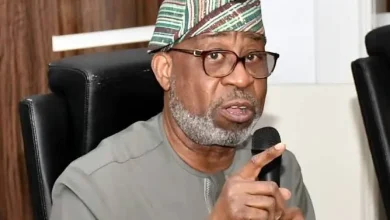
Minister of Power, Abubakar Aliyu had earlier attributed the low electricity supply across the country to gas supply challenges.
In a statement by his media aide, Isa Sanusi, the minister explained that the “dip in electricity generation is as a result of the partial shutdown of the Oben gas plant to address the repair of critical gas processing equipment”.
According to the government, the “incident, unfortunately, occurred at a time when other power plants on other gas sources are undergoing planned maintenance and capacity testing.
Sanusi said, “We wish to notify the public that Seplat Energy Plc has mobilised equipment, material, and personnel to the site, to expedite the restoration of normal gas supply to the affected power plants.
And so, on a day the country was neck-deep in celebration of Democracy Day, the national electricity grid collapsed again. Power distributors in Kaduna, Lagos, and other parts of the country said they could not receive bulk electricity from the national supply line.
In the wake of frequent collapses, there have not been genuine-sounding official reasons why power outages due to grid collapse are frequent.
On March 14, the national grid experienced a partial collapse leading to a power outage in parts of Nigeria, including Lagos, Ibadan, Kaduna, and Abuja.
On April 9, the Buhari regime responded. The Minister for Works and Housing, Babatunde Fashola, said the country suffered extensive power outages because some people vandalised Odukpani–Ikot Ekpene plants “resulting in a sudden loss of about 400MW generation”, which led to a cascade of “plant shut down across the country.”
Police kill bandit, recover AK47 rifle, 9 motorcycles on Kaduna-Abuja Highway
The minister added, “The immediate cause of national blackout (system collapse) was an act of vandalism on a transmission tower on the Odukpani – Ikot Ekpene 330kV double circuit transmission line, resulting in a sudden loss of about 400MW of generation. This consequently led to a cascade of plants shut down across the country.”
Also, the Minister for Power, Abubakar Aliyu, had said in April that the government would restore power and investigate the cause of the blackout.
“A detailed investigation into the immediate and remote causes of the recurring grid failure is currently ongoing by the Nigerian Electricity Regulatory Commission (NERC) and System Operator of the national grid,” Aliyu said, adding, “We wish to assure Nigerians that the Federal Government is working assiduously to deliver on the much-needed reforms and investments.”
Amid the promises, “many Nigerians often languish in perpetual darkness, with no electricity supply for days and sometimes weeks, pushing more people into poverty amid the global slump in food supply and skyrocketing food prices largely blamed on Russia’s invasion of Ukraine”.
•EEDC restores power supply to South-East
Meanwhile, there were signs of recovery last night on improvement in the power supply.
In Enugu, EEDC announced the restoration of power supply within all the states in the South-East, its coverage area.
A statement issued by the Head of Corporate Communications, EEDC, Emeka Ezeh, and made available to the News Agency of Nigeria (NAN) yesterday in Enugu, said power supply has since commenced in its outgoing feeders, following the restoration of the national grid.
Ezeh added, “However, due to the low energy allocation to EEDC, occasioned by the poor generation, some of our feeders are currently put on system load-shedding by the Transmission Company of Nigeria (TCN).
“We, therefore, thank our esteemed customers in Abia, Anambra, Ebonyi, Enugu, and Imo states for their support and understanding during the period we lost supply.
“EEDC is assuring them of our continued commitment towards providing improved services,” he said.
NAN recalled that on June 12 at about 6:49 p.m., there was a grid collapse leading to EEDC outgoing feeders being knocked out of electricity supply; which therefore affected supply to the entire South-East states.