Linus Aleke
In Christianson, opinions are divided on the existence of ‘hell fire’. While, some opined that God had prepared a place of perpetual torment, known as hell fire for Satan, his loyal demons, and rebellious humans, some believe that it is metaphorical, but few others posit that God cannot be too wicked to evolve a place of eternal suffering for humans, apologies to the Jehovah’s Witness.
Hellfire, according to the Hebrew scripture is an alternate kingdom to heaven, where there will be constant weeping and gnashing of teeth by those that failed to keep God’s ordinance, during their earthly sojourn, alongside Lucifer and his army of rebellious angels.
Interestingly, hellfire and religious teaching about it is not the thrust of this intervention. Reference is only made to it to draw useful and relevant lessons, especially as it concerns the current socio-economic realities in Nigeria, with a particular focus on the scarcity of new naira notes and sharp practices by commercial banks.
It is regrettable that the Central Bank of Nigeria, as usual, blocked its ears and closed its eyes, while the commercial banks and its Point of Sale (POS), agents are subtly and brazenly spreading agony, sorrows, tears, and blood across the length and breadth of Nigeria.
Nigeria is about the only country on earth, where local currency is bought and sold openly like onions or foreign currencies in the foreign exchange market, be it official or parallel market, and the apex bank, the regulator, sits and pretends as if nothing is amiss.
Nigeria is a captured state- Ozekhome
It is common knowledge that commercial banks are selling the new naira notes to the highest bidder, and in this case, to the politicians who needs the new notes to defray election expenses, thereby creating a primary market for the commercial banks.
Allegations are rife on social media that commercial banks are said to deliver the new naira notes to politicians in their homes with bullion vans in the dead of the night, away from the prying eyes of the suffering masses and the regulatory authorities.
It is also, no longer secrete that commercial bank staff are also selling the new naira notes to the Point of Sale (POS), agents, who in turn metamorphose into shylocks, by demanding outrageous fees from their helpless customers in the name of charges.
This unfortunate scenario creates a secondary or parallel market for naira notes. It is common to hear Nigerians ask their neighbours and friends, how much naira is selling for the day.
Mr. John Onwu, not his real name, told our correspondent that he went to a First Bank branch, in Mararaba, to pay school fees through ‘remita’, and what he saw inflicted internal injuries on him.
According to him, “While I was inside the banking hall, the three cashiers attending to customers depositing money were sharing the cash they were collecting amongst selves while telling few customers who managed to find their way into the banking hall to withdraw money that their is no cash. In the process, one of the bank security, came in to plead with one of the cashiers to reserve N100, 000 new or old notes for her as she had promised one PoS agent in his area that he will bring the said amount to him at a given fee.
The cashier said that she had not even gotten enough for her client let alone made an additional N100,000 available. I was heartbroken because they would look at a customer in the face and tell them that there is no money to give them, while they are hoarding the cash to be sold to PoS agents”.
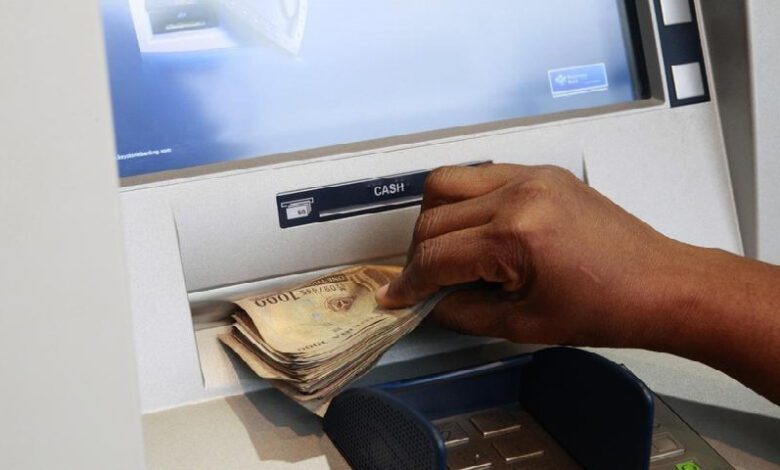
Narrating his own harrowing experience at the WEMA bank branch located in Sharp Corner in Mararaba, Nasarawa State, just a stone’s throw from the First Bank branch, spoken about above, Ms. Juliet Ene told ThisNigeria that she spent the whole day queuing to withdraw money from WEMA ATM but could not get a Kobo at the end of the day.
“When I arrived at the bank branch around 5:55 am, I was surprised to see an intimidating crowd already waiting for the bank officials to arrive and load their ATMs. I soon discovered that the crowd had organised selves into two groups and are issuing numbers following instructions from security.
“The first group is for those holding the bank’s ATM cards while the second group, where I belong, were those with other bank ATM cards. I got number 119, and after three hours of waiting for the officials to load the machines, it began to dispense by the aforesaid arrangement. Regrettably, the two ATMs paying those with other bank cards stopped dispensing barely an hour after it started, but the other three paying those with the bank’s ATM continued to dispense.
“Before we know what was happening, the bank marketers flooded the machines with account opening forms. If you open an account with them you would be issued an instant ATM card and be allowed to transfer money into it under the guise of changing your ATM PIN the bank officials will assist the new customer to withdraw the N20,000 withdrawal limit for the day.
“When the customers in queue raised concern, they disabled one of the machines and reorganised the queue. Shortly after that they reopened the third machine that they disabled and dedicated it to those willing to open a new account. Unfortunately, those of us who were unwilling to play ball with them stood under the sun hoping that they will load the two ATMs for non-WEMA customers till nightfall and nothing happened. The bank staff met us at resumption time and left us at the close of work without any success.”
The bank management is also worsening the situation by reprogramming the ATM to dispense N2000 or N4000 to each customer in the queue. What this means is that a customer cannot slot his card and withdraw the N20,000 daily threshold at once. He has to do that in trenches four or five times, just to attract charges.
A bank customer, Ms.Ngozi Nwoke, told our correspondent, “They don’t care if you spend the whole year trying to make a withdrawal so long as they make a profit through charges. Commercial banks are profiting through human suffering and man-hour loss to their customers.
“These are things that CBN should not allow, but what do you get when a former commercial bank MD is appointed as the Chief regulator? Nigeria had never had it this bad until Godwin Emefiele was appointed CNB governor by the PDP government and reappointed by APC administration”.
Mr. Leonard Abi, a civil savant advised the commercial banks to add up all the charges they spread three or five times for one customer to ease the queue and suffering by bank customers.
Polaris Bank, he said, programme its ATMs to dispense only N1,000, adding that commercial banks are doing all manners of unethical things because of profit.
“If you leave N10,000 in your account for one year without using it, you will not be surprised to discover that your account will be zero naira as the N10,000 would not be enough to service the hidden charges. That can only happen in Nigeria” he said.
He concluded that supermarkets and big pharmacy shops have also started rejecting bank transfers because of the dubious inclination of a few rouge elements that do fake transfers.
This, is, however, in addition to epileptic internet services in the country, which hinders e-transactions.
Meanwhile, trending videos on social media where bank customers strip selves naked in protest as well as those fighting at the ATM queue validates the personal experiences narrated above.
Now the big question is, does Nigeria have laws regulating the activities of the governors and the governed? Or are we living in Thomas Hobbes, “state of nature,” where the law is alien and lives, “solitary, poor, nasty, brutish and short?”
This question brings us back to the earlier inference drawn from the religious concept of hell fire and heaven and the divergent perception of the teachings.
But whatever our perception may be, it is imperative to infer that God may have decided to relocate the headquarters of “hell fire,” to Nigeria, to enable agonizing citizens to acclimatise to the excruciating pains that reminisce of sojourn in hell fire.
Go to hell has lost its derogatory potency in Nigeria because over 80 per cent of the citizens are already swimming in hell fire.
Nigeria is also the headquarters of people living in abject poverty on earth. The Nigerian Bureau of Statistics said many Nigerian households have slummed into multi-dimensional poverty.
Nigeria has no doubt become a symbol of hellfire and suffering on earth. Lawlessness reigns supreme. Constituted authorities brazenly violate court orders but expect citizens to obey the same laws. Regulatory authorities like CBN sleeps on their regulatory duties, while the entire citizens are plunged into hellish experience, and the higher authorities that should call her to order, also, chose to look the other way.
Nigerians now set alarms to wake them up at odd hours to go to the ATM galleries of commercial banks to queue.
In normal times, people avoid withdrawing money at the ATM very early in the morning or too late in the night due to fear of men of the underworld. But now people sleep in ATM queues, notwithstanding the security implications of such. Thank God, it is not raining season.
In conclusion, the Central Bank of Nigeria should wake up to its responsibility to reduce the suffering of Nigerians in the hands of commercial banks.