Cross Udo, Abuja
President Muhammadu Buhari yesterday expressed delight that some key threats within Nigeria’s Maritime Environment such as piracy, sea robbery, crude oil theft as well as illegal unregulated and unreported fishing are being effectively tackled.
He said over 220 vessels involved in maritime criminality within Nigeria’s Exclusive Economic Zone, up to the Republic of Togo between August 2018 and March 2023 were prosecuted.
Buhari also said that over 87 oil tankers involved in various crude oil and product theft have been arrested, the theft of over three million barrels of crude oil was prevented and 15 million litres of petrol and diesel were recovered.
This is as the President has inaugurated the new Office of the National Security Adviser (ONSA) and National Counterterrorism Centre (NCTC) in Abuja, as part of efforts to address evolving security challenges in the country, especially terrorism and violent extremism.
Speaking at the inauguration of the two world-class facilities, the President said it would serve as a major legacy to provide the incoming administration with infrastructure to effectively coordinate national security and counterterrorism efforts.
Buhari also used the occasion to outline significant milestones achieved by his administration on National Security, including gains in combating terrorism, armed banditry, kidnapping, separatist tendencies, crude oil theft, piracy as well as militancy in the South-South and cyber-security.
The President in a statement by his Special Adviser on Media and Publicity, Chief Femi Adesina, noted that his administration, since its coming, had invested heavily in stabilising and enhancing security across the country.
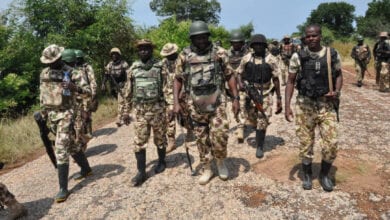
On the threat of terrorism, which was labelled as a major security challenge facing the country when he assumed office in 2015, the President said, “I can confidently state here today that we have achieved significant milestones in degrading the major threat and restoring normalcy to most of the hitherto securitized areas in the North-East.
INEC denies issuing directive to distort Abia governorship election
“These areas previously occupied by terrorists have been freed and Internally Displaced Persons are voluntarily returning to their homes.
“This was largely achieved through the valiant efforts of our Armed Forces and other security agencies, in collaboration with our regional and international partners but above all, the support and cooperation of the Nigerian citizens.”
Apart from the degraded threat of terrorism in the North East, President Buhari also expressed delight that the government has curbed the series of armed banditry and kidnapping cases in the North West and North Central zones.
He noted that these criminal acts had emerged as a result of the scattering of Boko Haram in the North East and the implosion of Libya in the Maghreb.
On separatist agitations, the President noted that agitators in the South East and to a much lesser extent the South West, who have been experiencing concerns of separatist tendencies, are being checkmated.
“Meanwhile, issues of crude oil theft, sea robbery, piracy, and militancy in the South-South are equally being addressed.
“Most of these threats have transnational linkages thereby reinforcing the need for regional and international cooperation as critical enablers to enhance our national security,” he said.
*Arrests 87 oil tankers involved in crude oil theft, recovers 15 million litres of petrol, diesel
On maritime security, President Buhari expressed delight that some key threats within Nigeria’s Maritime Environment such as piracy, sea robbery, crude oil theft as well as illegal unregulated and unreported fishing are being effectively tackled.
He said between August 2018 and March 2023, over 220 vessels involved in maritime criminality within Nigeria’s Exclusive Economic Zone, up to the Republic of Togo, had been prosecuted.
He commended the Falcon Eye maritime domain awareness project, domiciled with the Nigerian Navy and coordinated by ONSA, for providing high-quality real-time intelligence, leading to the arrest and prosecution of economic saboteurs.
He added that over 87 oil tankers involved in various crude oil and product theft have been arrested, the theft of over three million barrels of crude oil was prevented and 15 million litres of petrol and diesel were recovered.
On cyber threats, the President underscored the importance of protecting Nigeria’s cyberspace from all forms of intrusion.
To this end, he said in addition to receiving a regular briefing from the Cybercrime Advisory Council, the government had established the Nigeria Computer Emergency Response Team and revised the National Cyber Security Policy and Strategy in February 2021.
On the newly inaugurated top-grade facilities, President Buhari described the secure and hi-tech offices as a demonstration of his administration’s firm commitment to ensuring national security capabilities are kept abreast with the highest global standards.
He said the offices are designed to enhance strategic response to a broad range of current and emerging security concerns, noting that Nigeria exists in an interconnected world and therefore must be able to face and respond to both domestic and global security challenges.
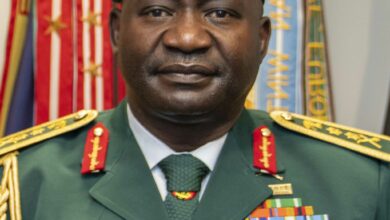
In his welcome address, Monguno said the dynamic nature of the global and domestic security environment necessitated the modification and expansion of some of the functions of ONSA.
He said while ONSA’s core mandate is to assess the security concerns of the country and advise the president on all matters bordering on national security, the changing nature of the security landscape over the last three decades in the country and across the world led to the broadening of ONSA’s mandate to accommodate the needs of emerging security threats.
In his goodwill message, the UN Resident Coordinator for Nigeria, Matthias Schmale, commended President Buhari and his government for championing the NCTC, saying ”this is no doubt part of your legacy that will enable Nigeria to continue to address domestic and regional security challenges”.
Schmale, who was represented by Kimaris Toogood, Peace and Advisor, Office of the Resident Coordinator (UN Nigeria), also commended the progress made by the Nigerian military to degrade the operational capacity of Islamic State West Africa Province and Boko Haram and to improve intelligence gathering on suspected terrorists.