By Cross Udo, Abuja
The Federal Government on Wednesday challenged state governments to take the lead in driving investment, tourism, and economic growth by transforming their natural and economic assets into viable projects that create jobs and attract capital.
Vice President Kashim Shettima said Nigeria’s economic future would increasingly depend on how effectively sub-national governments identify, package and market their competitive advantages to investors.
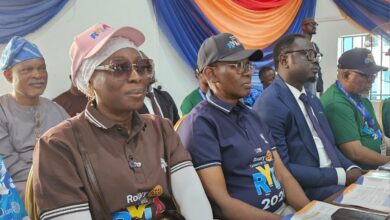
He spoke in Abuja at the Sub-National Government Economic and Tourism Information Roundtable and the unveiling of the National Compendium on the Economic and Tourism Profiles of the 36 states and the Federal Capital Territory.
Represented by the Special Adviser to the President on Economic Matters in the Office of the Vice President, Dr Tope Fasua, Shettima described the compendium as a strategic national tool designed to support investment promotion, economic planning and tourism development across the federation.
The Vice President said the initiative aligns with the Tinubu administration’s Renewed Hope Agenda, which seeks to position states as critical drivers of economic expansion, job creation and wealth generation.
According to him, Nigeria is endowed with vast human and natural resources but has yet to fully maximise their value because many opportunities remain poorly documented, underdeveloped or disconnected from investors.
“Nigeria is rich in assets, rich in talent, rich in culture, rich in enterprise and rich in natural endowments. What we must do is organise these assets, document them properly, present them credibly, and connect them to capital, markets, technology and investors,” he said.
Shettima noted that every state possesses unique economic strengths, ranging from agriculture, solid minerals and gas resources to manufacturing, technology, logistics and tourism assets.
However, he stressed that the real challenge lies not in identifying opportunities but in converting them into bankable projects that can stimulate economic activity and improve livelihoods.
“The challenge is how to convert potential into projects, projects into investments, investments into jobs, and jobs into shared prosperity,” he stated.
The Vice President said while the Federal Government would continue to provide policy support, infrastructure and international engagement, sustainable growth would ultimately be driven at the state level.
“The Federal Government provides direction, policy, infrastructure and diplomatic engagement, but the real engines of inclusive growth are the states,” he said.
He urged governors and development agencies to strengthen the ease of doing business, improve security, generate credible data and build institutions capable of supporting investors and entrepreneurs.
Shettima also highlighted tourism as a major but underutilised source of revenue, saying Nigeria’s rich cultural heritage, festivals, historical sites, beaches, waterfalls, wildlife reserves and other attractions could significantly boost economic activity if properly developed and promoted.
“Tourism assets do not market themselves. They must be mapped, protected, developed, secured and linked to private investment,” he added.
The Vice President further linked the initiative to the attainment of key Sustainable Development Goals, including poverty reduction, job creation, industrialisation, innovation and inclusive growth.
He said achieving those targets would require practical investments, reliable data and stronger collaboration between the public and private sectors.
Earlier, Minister of Information and National Orientation, Mohammed Idris, described the compendium as a timely intervention that complements ongoing economic reforms and provides states with a roadmap for unlocking investment opportunities.
Also speaking, Minister of Art, Culture, Tourism and the Creative Economy, Hannatu Musa Musawa, represented by Permanent Secretary Abdulkarim Ozi Ibrahim, said the initiative would help states showcase opportunities in tourism, hospitality, digital innovation and the creative economy to local and international investors.
In his remarks, Executive Secretary and Chief Executive Officer of the Nigerian Press Council, Dr Dili Ezughah, pledged continued support for research, documentation and strategic partnerships aimed at promoting economic transformation and national development.
The compendium, which captures the economic and tourism profiles of all 36 states and the FCT, is expected to serve as a reference document for investors, policymakers and development partners seeking opportunities across the country.