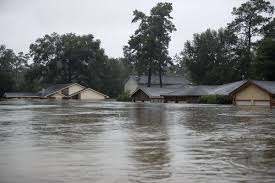
That flood which helped elect Huey Long governor and made Herbert Hoover president drove hundreds of thousands of blacks northwards and transformed American society and politics forever.
Despite being a perennial seasonal occurrence, Nigerians have, over the years, been caught pants down each time the rainy season approaches. In fact, despite the prevalence of hunger associated with floods, the plague also goes with it water-borne diseases.
This was aside from the loss of billions of naira worth of properties nationwide. As a result of the severity of flood disasters of that year, the Federal Government headed by former President Goodluck Jonathan set up the Presidential Committee on Flood Relief and Rehabilitation, which was chaired by business mogul, Alhaji Aliko Dangote to help mitigate the impact of the crisis.
Many had thought that the Federal, State, and Local Government authorities whose responsibility it is to ensure proper flood disaster management in the country would have put on their thinking caps and embarked on effective planning strategies to avert such future reoccurrences. Unfortunately, that was not to be.
The states most affected were Zamfara, Kogi, and Bauchi. In 2015, no fewer than 53 people died and 100,420 were displaced from the flood disaster, which greatest impact was recorded in 11 states of Kano, Katsina, Sokoto, Kebbi, Zamfara, Kaduna, Jigawa, Adamawa, Yobe, Gombe, and Bauchi. On top of this, along with Nigeria’s coastal areas, violent floods are becoming much more ferocious.
Despite the very bitter experiences of the past years, this year again, floods have continued to wreak havoc among the people. Only recently, there were reported cases of flood disasters in Niger and Lagos States.
In the case of the Lagos flood disaster, the incident took place in the affluent Lagos Island area of the State. It was reported that after very heavy rains that lasted for four straight days, hundreds of homes and roads were flooded in the State’s affluent neighborhoods of Ajah, Ikoyi, Lekki, and Victoria Island.
Besides the Niger and Lagos States flood disasters, there are other reported cases of similar magnitude in other states of the country. This development prompted the 8th senate in a motion to urge the Federal Government to release funds for the construction of drainages across the country, especially in Niger State where floods led to the collapse of a number of bridges.
The Finance Ministry, according to a statement by Femi Adesina, the Senior Special Adviser to the President on Media, was to release the intervention fund directly to the National Emergency Management Agency (NEMA) for immediate disbursement.
The benefiting states were Edo, Sokoto, Ekiti, Osun, Akwa Ibom, Kebbi, Niger, Kwara, Ebonyi, Enugu, Abia, Oyo, Lagos, Plateau, and Bayelsa. The tribulations, agony, and pains commuters are experiencing navigating from the Southern part to the North through Kogi state are indescribable.
Many now divert from Otukpa junction to Otukpo across the new River Benue Bridge through Nasarawa to Keffi. We expect quick intervention by Government this year, 2021.
It is good that the often Government intervenes to relieve the burden imposed by flood menace on the people. But such ad hoc interventions can only provide temporary solutions to the perennial crisis.