By Godwin Okoro
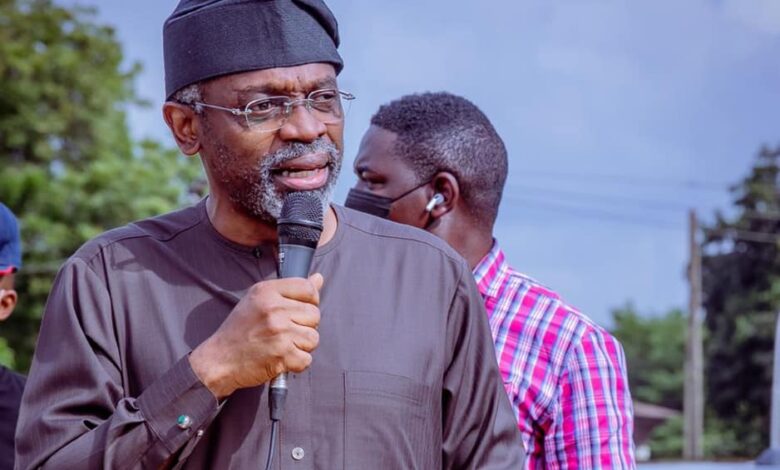
The Speaker of the House of Representatives, Femi Gbajabiamila, has made a strong case for investing in building young people for leadership roles in governance.
He said equipping young people and involving them in governance remained the only way they would be committed to nation-building and sustain the development of democracy.
Gbajabiamila spoke in Abuja on Monday at the opening of the Legislative Mentorship Initiative (LMI), a programme the speaker initiated to build the next generation of Nigeria’s public sector leaders.
This initiative is in line with his long-lasting vision of mentoring the younger generation from his over 20 years of experience in public service.
The programme, which will last for three weeks, draws young participants from the 36 states of the Federation and the Federal Capital Territory, 71 in all.
It has the theme, “Youth Leadership and the Future of Democracy: Harnessing the Power of Young People in Nigeria.”
Gbajabiamila noted that achieving the Nigeria of our dreams must depend on producing leaders with the right capacity and character to manage change by taking advantage of the technology-advancing world.
He explained that this would require building people, particularly young people, with knowledge of governance.
Gbajabiamila stated, “Whatever happens, Nigeria desperately needs leaders with the capacity and character to manage change. The consequences of the changes happening in our world today will depend on how we respond, the decisions we make, and the ideas we choose to invest in.
“The quality of our decision-making in politics and governance will define the course of our country. Whether we achieve progress, prosperity, peace, and security for all our people depends entirely on the capacity and competence of our political leadership.”
2023 elections will be won or lost in polling units, says Igini
The Speaker recommended three actions to be taken immediately, one of which is to consistently include young people in the political and governance process.
Gbajabiamila said a second action was to continue to improve Nigeria’s electoral processes to accommodate new ideas and allow the results of elections to reflect the wishes of voters.
Speaking on the course composition of the LMI, Gbajabiamila told the participants that they would benefit from lectures, case studies, simulations, group discussions/assignments, listening to seasoned leaders in public service, and gaining practical experience in the workings of government through internships.
The Speaker, who enjoined the participants to hold the opportunity the LMI provided jealously, called on them to take every aspect of the training seriously as they might become the policy or decision makers of Nigeria tomorrow.
“Never lose sight of the human element; every decision in government will, at some point or the other, directly or indirectly, affect somebody’s life.
“One day you might find yourself drafting legislation, implementing policy, or advising a decision maker on the available options,” the Speaker stated.
Prominent figures and representatives of foreign missions, as well as international development organisations, presented goodwill messages at the event.
They included the British High Commissioner, who was represented by the Deputy High Commissioner, Gill Atkinson; Country Director, Konrad Adenuer Stiftung, Marija Peran; Country Director, UN Women to Nigeria and ECOWAS, Beatrice Eyong; Director-General, National Institute of Legislative and Democratic Studies (NILDS); Dr Abubakar Suleiman; Executive Secretary, Nigeria Prize for Leadership, Dr Ike Neliaku; and the Founder, Albino Foundation, Ambassador Jake Epelle.