

Kassim Omomia
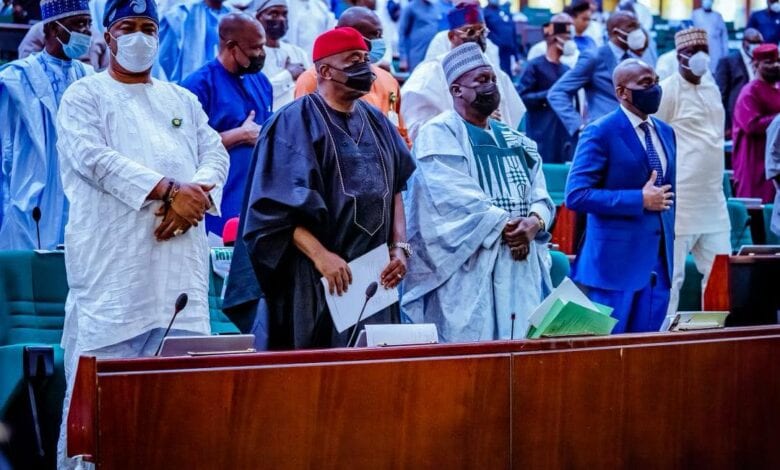
The House of Representatives is set to repeal the Public Enterprises (Privatisation and Commercialisation) Act, Cap. P38 law enacted in 2004.
In its place, the House is seeking to enact the Public Assets Reform Bill, 2021, which according to the 28 sponsors, is for improved efficiency and management of public assets in Nigeria.
The sponsoring lawmakers, include Ibrahim Misau (lead), Victor Kolade Akinjo, Benjamin Mzondu, Nkem Uzoma, ChukwuEgbo Gregory, Uju Kingsley C, and Francis Waive.
Debating the bill, Misau expressed concern over the failure of the past commercialization and privatization of government assets, which according to him, did not meet the desire of the Federal Government nor improve the economy in the manner the policy and program, as envisaged.
He noted that there are currently no government commercial assets that are being run to capacity or making an impact on the people and the economy of the country.
To this end, he stated that the new bill, if passed into law, will address the past anomaly and design a new method for the benefit of the Federal Government and the people of Nigeria.
Misau disclosed that one of the instruments in the new bill is that an offer for the sale of the shares of a public asset shall be by public issue or private placement, as the case may be.
‘’An offer for the sale of shares by public issue to Nigerians may be made at the capital market in many ways, including where the shares of an asset are not to be offered for sale by public issue of shares or private placement.
“The council may (also) approve that the shares be offered for sale through a willing seller and willing buyer basis or through any other means,” Misau added.
NHRC trains Military on mainstreaming human right
He also disclosed that the processes of privatization shall include all strategies of divestment of government shareholding in the following manner: liquidation; guided liquidation; private placement willing-buyer, willing-seller, or negotiated sale; asset sale; public offers; core investor sale; and re-capitalization.
Misau added that federal assets that will be commercialized or privatized under the Public Assets Reform Law are those which the government still has shareholdings or full ownership in, after the process which began with the Privatisation and Commercialisation Decree No. 25 of 1988 (amended 1999), which provided the legal backing for the Technical Committee of Privatisation and Commercialisation (TCPC), and lately, the establishment of the National Council of Privatisation (NCP) and Bureau of Public Enterprises (BPE,) by the Public Enterprises (Privatisation and Commercialisation order of 2004.


