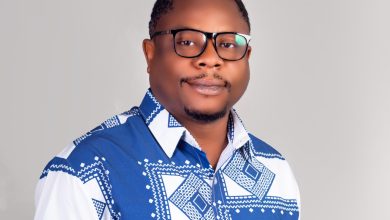
By Lemmy Ughegbe, Ph.D, FIMC, CMC
This is an unusual piece for my column because I am inextricably linked to the story, not as a distant commentator, but as one who lived through its pain and pursued its justice.
Still, I feel obliged to write it, hoping it will help galvanise the renewed quest for justice for Ochanya Elizabeth Ogbanje and, in doing so, bring me some measure of relief from the seven-year-old trauma that her story continues to evoke.
Seven years after 13-year-old Ochanya Elizabeth Ogbanje died following years of sexual abuse, Nigerians are once again demanding justice.
The renewed outrage is as much about her as it is about what our nation has become, a place where predators walk free, institutions fail the weak, and justice, even when promised, is endlessly betrayed.
I must confess that each time Ochanya’s name resurfaces, I am retraumatised. I live with post-traumatic stress disorder from her case and from that of another child, Keren-Happuch Aondodoo Akpagher, whose own story exposed the same institutional rot that frustrated the quest for justice for Ochanya. Yet, if being retraumatised is the price of keeping their memories alive until justice is done, I am willing to pay it over and again.
I expended my time and resources, often at grave personal risk, travelling repeatedly to Makurdi for the trial and pursuing every possible avenue to advance the cause of #Justice4Ochanya. Those years drained me financially, emotionally, and psychologically.
I am still traumatised, and even discussing the case reopens those wounds. If I, an advocate, feel this much pain, one can only imagine the depth of trauma and severe depressive disorder that her family, especially her parents, must be living with.
For now, I am simply trying to stay sane, holding on to the hope that justice, if and when it finally comes, will bring healing to them and to all of us who have carried this burden of advocacy.
Ochanya was a bright student at Federal Government Girls’ College, Gboko, in Benue State. Seeking better education, she moved in with her aunt, Mrs Felicia Ochija-Ogbuja and her family at Ugbokolo. What should have been a nurturing home became a chamber of horror.
She was serially sexually abused for five years, from when she was eight, by her aunt’s son, Victor and her husband, Andrew, a lecturer at Benue State Polytechnic. She eventually succumbed to complications from the repeated assault in October 2018.
Following her death, the police arrested Andrew and his wife, Felicia Ochiga Ogbuja, who was Ochanya’s guardian. Victor, the principal suspect, fled and has remained a fugitive since 2018. In 2022, the Benue State High Court in Makurdi, presided over by Justice Augustine Ityonyiman, acquitted Andrew of rape because Ochanya was not alive to testify, even though the court admitted into evidence a video in which she narrated how father and son violated her.
Ironically, on that same day, the Federal High Court in Makurdi convicted Felicia for negligence, for failing to protect the child from her husband and son, and sentenced her to five months’ imprisonment.
When she appealed, the Court of Appeal upheld the conviction, describing her conduct as “heinous” and “devoid of sympathy.” Yet, the Benue State Government, under Governor Samuel Ortom, ignored our repeated appeals for the Ministry of Justice to challenge Andrew’s acquittal, fueling public perception that he was shielded by political sympathy.
Despite numerous letters I wrote to successive Inspector Generals of Police through the Make A Difference Initiative (MADI) and multiple appearances on national television, demanding Victor’s arrest and watch-listing, the police took no action. Their silence was a verdict of disregard, a statement that Ochanya’s life did not matter enough.
The continued indifference of law enforcement agencies reflects a broader institutional rot and complicity. How can a fugitive remain untraceable for seven years in a country with biometric data and digital surveillance?
This is the same police that can track and arrest citizens overnight for criticising those in power. Reports even suggest Victor now lives in Lagos, pursuing a music career in a stark mockery of justice and an indictment of our system.
The silence of state institutions, from the Benue Government to the Nigeria Police Force and other relevant agencies, has been deafening. Their inaction turned them from duty-bearers into accomplices.
Those who stood by Ochanya’s family, including FIDA Nigeria, NAPTIP, Betty Abah, Ukan Kurugh, old students of FGGC Gboko, and other advocates, bore the brunt of hostility and exhaustion. I was in Makurdi for nearly every trial date, leading awareness processions, granting media interviews, and sustaining the #Justice4Ochanya campaign.
I later led a similar crusade for Keren-Happuch Aondodoo Akpagher, the 14-year-old Benue schoolgirl who also died following health complications from sexual assault in Abuja. In that case, too, the pursuit of justice came at a heavy personal cost.
I am presently defending a ₦500 million defamation suit filed by Premiere Academy, Lugbe, Abuja, after I publicly identified the school as a prime suspect based on a formal complaint by Keren’s mother, Mrs Vivien Vihimga Akpagher.
Still, despite our sacrifices, institutional apathy prevailed. The case dragged on while the system’s indifference became as cruel as the crime itself.
For many of us, the scars of these cases will never fade. I remember sitting before cameras and microphones, explaining again and again what should have been self-evident: that a child’s body is not a battlefield for adult lust. I remember unanswered letters, ignored petitions, and the fatigue of watching yet another case of child abuse reduced to hashtags and headlines.
But silence is not an option. As long as predators roam free and the police look away, advocacy must continue.
If Nigeria cannot secure justice for a 13-year-old girl whose name became a national symbol, what hope is there for the countless nameless victims whose stories never trend? There are so many Ochanyas across our country.
Justice for Ochanya is justice for every vulnerable child, for girls in boarding schools, for house helps behind closed doors, for students groomed by those in authority. It is also a matter of justice for our collective conscience.
Until Victor Ogbuja is found, arrested and tried, Nigeria remains on trial.
To the Nigeria Police, act now. Seven years is already a lifetime of betrayal. To the citizens, keep speaking because silence is complicity. And to Ochanya, though your body rests, your spirit continues to summon us to action. May your memory forever disturb the comfort of those who failed you.
To re-live the horror of your deaths, Ochanya and Keren-Happuch, is to reopen wounds that never truly healed. Each reminder of your pain confronts us with the truth that power shields the guilty and abandons the innocent. Those who should be ashamed walk tall, confident that their connections will protect them. In a system rigged by privilege, accountability is an illusion.
How does a nation explain a Federal High Court convicting Mrs Felicia Ochiga-Ogbuja for negligence and obstruction of justice while a Benue State High Court frees her husband, Andrew Ogbuja? Justice Ityonyiman claimed he could not choose between conflicting medical reports, yet the world heard Ochanya’s own testimony on television before she died.
And what of the Nigeria Police Force that would not find Victor, but hunts down activists for criticising the powerful? How can it be blind to fugitives and yet ruthless toward the innocent?
This contradiction encapsulates everything that is broken about our criminal justice system. It is not blind; it merely looks away when the guilty are well placed.
So, can the system, just this once, prove us wrong?
Until that day, we will not stop demanding justice, not only for Ochanya, but also for Keren-Happuch, and for every child betrayed by the silence of those who should protect them.
May their innocent souls disturb our comfort until justice finally comes.
Postscript: When Justice Trends Again
Hopefully, this time, justice will not be deferred. The renewed public outcry over #JusticeForOchanya has drawn the attention of many influential Nigerians. Celebrities such as Tiwa Savage, Ayra Starr, Hilda Baci, Imisi, and Mercy Eke have spoken up, while Senator Natasha Akpoti-Uduaghan has pledged to champion the cause in the National Assembly. Their voices matter, not merely for visibility, but for the moral weight they add to a cause that has suffered from years of institutional neglect.
Yet, amid this surge of advocacy, a troubling development has emerged. Certain individuals, hiding under the banner of activism, have begun exploiting public sympathy for financial gain. Multiple GoFundMe accounts have been launched in the name of “Justice for Ochanya,” with donations reportedly reaching hundreds of dollars, yet with no apparent connection to her family or the legitimate advocacy groups that have pursued her case for years.
This is not activism; it is exploitation. To profit from the pain of a child’s death is both immoral and criminal. Nigerians must be vigilant. Real advocates do not enrich themselves from tragedy; they bear the cost of justice, often at great personal sacrifice.
True solidarity means amplifying the call for accountability, not monetising grief. Let us therefore channel this renewed energy into lawful, transparent, and coordinated advocacy that honours Ochanya’s memory and protects the integrity of the justice movement.
And as we rise again for Ochanya, let us also raise our voices anew for Keren-Happuch Aondodoo Akpagher, another bright young girl whose life was cut short and whose family is still waiting for justice. The causes are intertwined; both cry out against the same culture of impunity, institutional neglect and a conspiracy of silence.
Justice for one must be justice for all.
#JusticeForOchanya #JusticeForKeren
*Lemmy Ughegbe is the Executive Director of Make A Difference Initiative and Men Against Rape Foundation
lemmyughegbeofficial@gmail.
WhatsApp ONLY: +234 806 971 6645