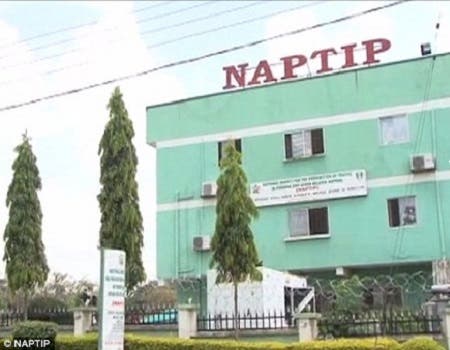
The National Agency for the Prohibition of Trafficking in Persons (NAPTIP), working with the British High Commission, has cautioned Nigerians against fraudulent foreign job offers increasingly used as a front to traffic victims.
The alert was delivered on Monday in Abuja during a survivor-focused programme titled: “Confronting the Global Scam Centre Crisis: Perspectives of Nigerian Survivors.”
NAPTIP and its collaborators said traffickers entice unsuspecting Nigerians with attractive job opportunities abroad, only to move them to countries including Myanmar, Laos, Cambodia and Thailand, where they are forced into organised cyber-fraud schemes.
They urged Nigerians to exercise caution, stressing that credible employers do not recruit via social media, request advance fees, or arrange employment travel using tourist visas.
The warning comes in the wake of a recent trafficking case involving Nigerians trapped in Thailand.
Authorities disclosed that a joint rescue mission involving NAPTIP, the Ministry of Foreign Affairs, the Nigerian Embassy in Bangkok, and the British non-governmental organisation EDEN secured the release and return of 23 victims.
The operation involved cross-border coordination near the Thai-Myanmar frontier and support visits to victims held at Bangkok’s Immigration Detention Centre.
Speaking at the event, British Deputy High Commissioner in Abuja, Gill Lever, said the UK is working closely with Nigerian authorities to ensure survivors receive trauma-informed care and safe repatriation.
“We are here to listen to survivors, who have shown remarkable bravery in sharing their experiences. Their courage will help prevent others from being harmed, and we stand firmly with Nigeria and our African Commonwealth partners in confronting this rapidly evolving threat,” she said.
Lever described the scam-centre phenomenon as a global security challenge, noting that criminal networks defraud victims of more than $64 billion annually, with British citizens losing an estimated 11.4 billion euros to scams in 2024.
Director of Public Enlightenment at NAPTIP, Mrs Kehinde Akomolafe, who represented the agency’s Director-General, said survivors’ accounts highlighted the harsh realities of trafficking linked to scam operations.
“This is trafficking, whether it happens in a factory, a brothel, or behind a computer screen. Survivors are victims, not criminals,” she said, reaffirming NAPTIP’s commitment to protecting Nigerians.
Some survivors described being confined in secured facilities and compelled to work long hours daily running online romance and investment scams, while enduring abuse and severe emotional distress.
One survivor said victims were beaten, electrocuted, and deprived of food, while another recounted the death of a fellow captive following repeated torture.
“I was promised a good job and a better life, but instead, I was trapped and forced to live in constant fear,” one survivor narrated.
According to a 2026 report by the United Nations Office of the High Commissioner for Human Rights titled “A Wicked Problem,” at least 120,000 people are currently trapped in forced scam operations in Myanmar, while over 300,000 victims are affected across Southeast Asia.
The report stated that victims originate from no fewer than 66 countries and that between 2020 and 2025, about 74 per cent were lured with promises of well-paid jobs before being trafficked.
Stakeholders at the forum called for stronger cross-border collaboration, intensified awareness campaigns and a shift in public perception to protect victims and ensure traffickers face justice.