N’Assembly APC lawmakers shielding Buhari’s inadequacies – Urhoghide

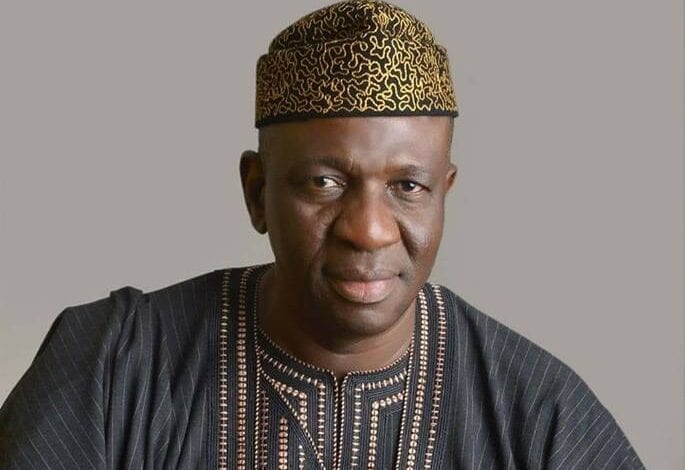
Chairman, Senate Committee on Public Accounts and Senator representing Edo South in the National Assembly on the platform of the Peoples Democratic Party (PDP), Matthew Urhoghide, speaks on security challenges, Petroleum Industry Act, among other national issues, in this interview with Mudiaga Affe
The level of insecurity has assumed a threatening dimension, but there are insinuations that the legislative arm is not doing enough to push the executive to change the narrative, why?
I’m a lawmaker representing a segment of the Nigerian population which is Edo south senatorial district and even though I don’t come to have the usual consultations, it is palpable in the air what their thinking are. It is the summation of their thinking and those of our different senatorial districts when we exchange views as colleagues that we feel the pulse of the country.
No segment has said it is satisfied with the security situation of our nation. We have all been talking the same way: that there is no security in Nigeria; no security of lives and property. If somebody wants to commit suicide, the person should go on a mission to Abuja-Kaduna by road, you will have a 50 per cent chance of not returning. If you go from Benin to Auchi, there is a 50 per cent chance of being kidnapped.
The security situation in Nigeria is bad, whether PDP or APC, man or woman, north or south. There may be a preponderance of more in the north because of banditry and others. The same thing is happening in the south, where our women are being raped and farms are being destroyed.
Now, security is an essential component to determine good governance because section 14(2) B and C of our constitution is very clear that the primary purpose of any government is the security of lives and property. I have sworn in the second schedule that I will uphold, as a member of the Nigerian senate, provisions of our constitution.
As lawmakers, we have sworn to an oath to uphold the provisions of the constitution. I will never compromise any thing that has to do with the security of lives of the people. So, if the executive is charged with the responsibility of eliciting and ensuring that, I should be able to talk to the executive that he is not doing his job well. That has been argument in the Senate, I don’t want to know the sentiments whether APC or the president. If he is doing his job, I will stand and praise him to the hills but if he is not doing it, I will tell him to his face that he isn’t doing it.
So, will you say the executive is trying its best in this regard?
For me, let’s go to section 143 and jacket the President in there. There are 11 sub-sections, the last is impeachment, but let us follow it step by step. The first is to write to the President that we observed that he has fallen short of expectations of what is required of his office in terms of securing lives and property.
We have invited him to come and explain and he has blatantly flouted those orders and APC is happy. They want to protect and guide him because they know his inadequacies. He doesn’t know the details of these things, but those who are overtly sympathetic with him don’t want to expose him so that people will not know his shortcomings.
So, if you write the president and he is not able to explain, then you go to the next step of constituting a committee and collecting signatures. If the president gets to know we are collecting signatures or getting the right numbers, then he knows he has to sit up. But the APC and the leadership we have in the National Assembly are protecting him. Each time I say let’s visit section 143, it is not to say let’s just remove him. Let him know that we are acting according to the provisions of our constitution.
The 1999 Constitution is about one man, the President and that is why some of us believe it is not a good document for us. The power for the President is too weighty. I have been in the senate and can see all these nepotistic tendencies of his. They are too clear. A greater majority of people nominated and brought for confirmation are from the North West, and when we confirm, the chairman will be from Katsina and a floor member will be from Edo State.
Are you insinuating tribal sentiment in Buhari’s appointments?
When we are looking at his tribalistic tendencies, I should be able to say so or quit the senate. It is not that I dislike him (the President) but we have never had the privilege of seeing him in the saddle presiding over the governance of our country.
Again, if APC says that PDP did wrong for 16 years, does that mean that it will want to plunder this country for another 16 years. That is wicked. To want to remain in power for another 16 years, it may not be PDP or APC but let it be someone who means well for Nigeria. That is my position on the executive occupation of the governance of this country.
The Petroleum Industry Act has continued to elicit negative responses from the south, particularly Niger Delta stakeholders, as a senator from the region, what went wrong in the process of enacting the law?
I’m privileged to be a member of the Senate Committee on upstream petroleum. My committee was one of the three committees charged with the responsibility of addressing the issue when the new act was a bill. We considered the provisions that make up the bill.
I explained how we came to this three per cent and what the actual fiscals are in terms number of the amount of money it translates to and the 30 per cent that is being proposed for the frontier basins and of course, the new acreages that are being thought of within the frontier basins and know what the 30 per cent of oil profits means for Nigeria National Petroleum Corporation (NNPC) and what it is going to be used for, and the amount it is in terms of dollars every year.
The law has not been definite about who makes up the membership of the host communities. I watched on the television some of the mistakes regarding these terms and people are saying the National Assembly gave 30 per cent to frontier basins and three percent to host communities.
It only means there is no clear understanding in the public space. The 30 per cent of the profit of oil that accrued from NNPC will be the commercial entity that will be set up. NNPC will also be involved in business with other international and national oil companies and any other one that is doing a joint venture with any subsidiary that probably would be set up by the government.
Today, we have many subsidiaries such as subsidiaries for exploration in NPDC. So, if NPDC is still going to remain and continue to function under NNPC Ltd which is going to be set up, then in which case what NPDC will accrue to NNPC Ltd by way of NPDC and those doing joint venture like Seplat, all that they get from their activities on crude oil.
Remember, we have oil and we have gas. What the law says is that what comes to NNPC Ltd from profit oil or profit gas, they will commit 30 per cent of it. What it translates or what it projects to is that NNPC Ltd is committing 30 per cent of profits oil will amount to about $320m a year. And if we are going to invest it, what do we mean by frontier basins.
They are pockets of places scattered around the country where there is prospective oil. These frontier basins are not limited to chad basins. We have over six basins, including the Anambra basin, and there is one in Kwara and Gombe. For instance, the Anambra basin is in Anambra and we have been hearing of crude oil in the state. Also, there are crude oil deposits in Ebonyi State. So, these states put together is called the Anambra basin.
First, the misconception that it will be used in the north is not correct. There are new areas where frontier basins have been existing that were not being explored for oil before now. Those are what we call the new acreages that are opening within existing frontier basins and that is what the money will be used for. Again, that money is an investment and not a commitment; it is a business venture, the NNPC Ltd.
So, what aspect of the PIA favours the Niger Delta?
When the three per cent was settled, we too from the Niger Delta were looking at other provisions, for instance, gas flaring. To date, areas where you have gas flaring hardly see the night. It’s all day and we know what this means to the health of those people and the attendant environmental degradation.
So, we came up with a suggestion that all proceeds derived from gas flaring will go to host communities (100 per cent). Initially, they said no that we are going to use it to develop gas infrastructure particularly, the mainstream that is pipelines but we said no. And we said we want to use it for environmental regeneration and the welfare of our people. So, these are silent facts of the Act that people don’t talk about. 100 per cent of the proceeds from penalties from gas flaring will go to the host communities for us to remediate the environment and welfare of our people.
Do you think the PIA could be amended anytime soon?
Any law, no matter how new it is, once it is signed into law, somebody will call on the amendment to the PIA when we resume. It will go through the first and second reading, then to the committee for further legislative action and public hearing. And if it succeeds, it goes through a third hearing and once it passed, it goes to the president for amendment. So, we are expecting that because of the hues and cry in the Niger Delta.
The president will probably send it back to the National Assembly and it will go by way of substantive motion back on the floor to say that bill that was passed needs amendment and we can now reopen it.
The president has already signed it and it can only come as an amendment to the act. If he goes ahead too to sign the one that was passed which is a clear violation of the position of our constitution, then we will ask for an amendment immediately because where any law conflicts with constitutional provisions, the constitution takes precedence.