By Dayo Omoogun
As Nigerians bask in the euphoria of another Democracy Day celebration having successfully “fumbled and wobbled” (in Fanny Amun’s voice) through our fourth Republic over the last 27 years, the season provides us an opportunity to pause and reflect to take stock of the gains or the pains that have come about for Nigeria and Nigerians in the course of this odyssey.
Of course, there are several parameters by which we can measure progress or retrogression, or establish whether, like a rocking chair, we have been in a charade of “motion without movement”.
The general tendency at times like this, for most Nigerians, is to bemoan, curse, and rant about the many opportunities we have failed to harness to turn around our country’s fortunes for good.
However, that is not the whole picture, and we can decide to be intentional in the choice of our perspectives – whether our glass is half full or half empty! Certainly, there are some areas where there has been a huge difference, indeed transformation!
One such sector is telecommunications, where we have transitioned from a time when elites glibly declared that the telephone was not for the poor, when possession of a phone was a status symbol, to a time when the average Bose, Emeka, and Aliyu have active phone lines.
In fact, there has been a paradigm shift in the mentality of most Nigerians to the effect that the phone is a necessity, an essential life and business tool rather than a luxury.
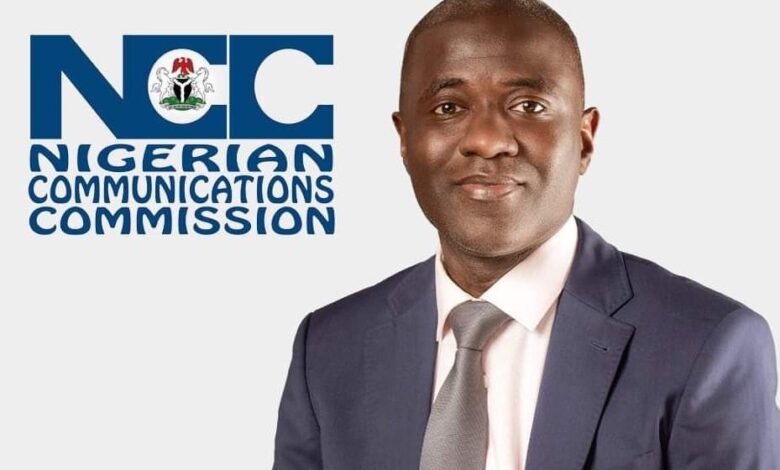
Let’s take a closer look at some of the achievements in the sector which the regulator, the Nigerian Communications Commission, has primarily facilitated.
As of today, official sources put the number of active phone lines in Nigeria at 185 million. For a country whose population is estimated at around 230 million, and whose population came from fewer than half a million at the start of this revolution a little over 20 years ago, you be the judge whether there has been a positive transformation.
On the data side, records show that Nigerians use an average of 45,800 terabytes daily, based on March 2026 figures. By the way, one terabyte is 1,000,000 megabytes or 1,000 gigabytes. Let that sink in.
It is important to note that this is one sector where the nation is not only recording growth but also development. Using various tools and policies, the Commission continues to ensure improvements both in quantity and quality.
The twin tools of Quality of Service (QoS) and Quality of Experience (QoE) assessments are being actively deployed to monitor provider performance and consumer satisfaction, and this feedback mechanism positions the Commission to take appropriate steps to minimise the incidence of poor service.
The Commission has remained steadfast in protecting and empowering consumers. Recently, at the Commission’s insistence, millions of consumers nationwide were compensated by mobile network operators for poor service when service quality fell below an acceptable threshold.
For many, it was a pleasant surprise, a total break with a systemic weakness that had become the norm, because many Nigerians have come to terms with being serially cheated, oppressed or defrauded with little or no chance of redress or recompense.
NCC also went further in empowering consumers by directing Mobile Network Operators (MNOs) and major Internet Service Providers (ISPs) to inform consumers in advance of any major network outages and planned service disruptions.
In the event of such outages, they are to provide further information, such as the cause of the outages, affected locations, and the estimated time for service restoration. This and a few other policies show clearly that the Commission does not trifle with consumers.
“Good regulation should be conducive to business and to customer protection”, says Jamie Dimon, the CEO of JP Morgan Chase & Co.
This balancing skill of harmonising the varied interests of stakeholders has been the hallmark of the Nigerian Communications Commission’s regulatory strategy.
In one deft move in 2025, the Commission addressed the demand from network providers and consumers’ cry for better services by approving a 50 per cent tariff hike and requiring telcos to commit to expanding their infrastructure to improve service delivery.
Following that intervention, over $1 billion was invested in network upgrades across 2866 sites, marking the end of a prolonged period of underinvestment in the sector.
This new investment trajectory has continued this year, with operators pledging to activate 12,000 new sites, over 3,000 of which have already been deployed.
Indeed, there has been a significant reduction in dropped calls, which the average consumer on the street can attest to, while the problem of sluggish internet is also being gradually overcome.
Once the remaining 9,000 sites planned for 2026 are completed and deployed, service quality will improve significantly.
The designation of telecommunications infrastructure as the Critical National Information Infrastructure (CNII) by President Bola Tinubu is a highly commendable step aimed at protecting investments and reducing service disruptions caused by vandals to the barest minimum.
The Commission is in the process of undertaking a comprehensive review of the National Telecommunications Policy of 2000 as directed by its supervising ministry- the Ministry of Communication, Innovation and Digital Economy, which means an even better operating framework is about to be introduced.
This piece is by no means exhaustive, but suffice it to say that the history of Nigeria’s telecoms sector would be incomplete without a positive mention of the Commission.
*Omoogun writes in from Abuja