

By Cross Udo
The Nigerian Financial Intelligence Unit (NFIU) has banned cash withdrawals for all federal and state accounts, effective March 1, 2023.
NFIU Director-General, Modibo Tukur, who disclosed this to journalists at a conference in Abuja yesterday, said the agency will trigger investigation processes on any public office holder who engages in cash transactions after the end of February this year.
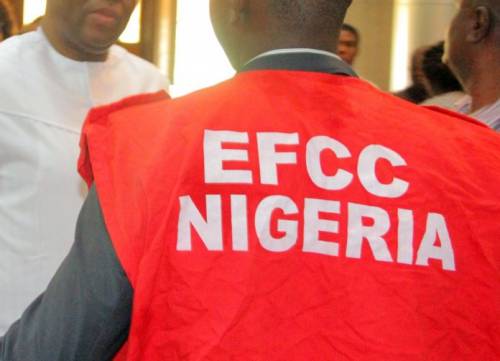
He said the NFIU will collaborate with the Economic and Financial Crimes Commission (EFCC), the Independent Corrupt Practices Commission (ICPC), and the Nigeria Police Force (NPF) in investigating government officials that withdraw cash from public accounts
According to Tukur, the directive to go cashless will help to curb corruption in public offices, as the country’s money laundering laws as well as other anti-graft laws will be fully applied to erring government officials.
The NFIU boss also noted that the decision is in accord with Nigeria’s full transition into a cashless economy started by the Central Bank of Nigeria (CBN).
He, however, stated that only the President has the power to grant a waiver to any official.
Giving details of the abuse of financial transactions in recent times, Tukur said despite the introduction of the cash withdrawal limits in the country, state governments have withdrawn a total of N701 billion in cash between 2015 and till date.
Also, within the same period, the federal government withdrew N225bn in cash while the local governments withdrew a total of N156bn in cash within seven years.
Tukur also said he had instructed all financial institutions to stop cash withdrawals from government accounts from March 1, 2023, adding that any government official who flouts the order will be prosecuted alongside his or her accomplices
He said the NFIU had told banks and government agencies at all levels to move fully online, as all transactions involving public money must be routed through the banks for accountability and transparency.
“As far as we are concerned, Nigeria will become a full non-cash economy by March 1, 2023, this year. As a consequence, any government official that withdraws even one naira cash from any public account from March 1, 2023, will be investigated and prosecuted in collaboration with relevant agencies like EFCC and ICPC.
“This is not reversible as we are only enforcing the law,” Tukur said.
•Omo-Agege laments inability to pass LG autonomy bills
Meanwhile, the Deputy President of the Senate, Ovie Omo-Agege, has lamented that the local government autonomy bills are the biggest challenge to the ongoing review of the 1999 Constitution.
Military begins payment of debarment allowance to pensioners
Omo-Agege disclosed this while speaking to State House Correspondents after meeting with President Muhammadu Buhari at the Presidential Villa, Abuja.
The DSP, who dismissed criticisms about the Constitutional Review process being “an exercise on futility” said state Houses of Assembly have failed to vote on the amendment bills on local government autonomy passed and transmitted to them for concurrence.
He, however, said that despite the challenge of the governors and their State Houses of Assembly holding back, the National Assembly is optimistic the bills will be passed
According to him, “I can tell you that at the National Assembly, we have fulfilled our part of that bargain, what is now left is to get the concurrence of 24 Houses of Assemblies of the states. That is also a Section 9 obligation, but this time, imposed on the State Houses of Assembly.
“As we speak, my mistake, if I knew this question was going to come up, I probably would have spoken with the Clerk of my committee before walking in here, but I know that notwithstanding the brouhaha over this, the states have been meeting and they’ve been taking positions on most of these bills.
“I don’t know how many right now, but the bigger challenge we have, frankly, it’s not so much all of the bills, it’s the bill dealing with the local government autonomy, both financial and administration, those are the two critical issues.
“But there are other bills, most of them have passed, we’ve gotten more than the required number of Houses of Assembly for some of those bills, but what matters to us, which is the priority to us, which is a big priority of Mr. President, is this issue of the local government autonomy and that’s where we’re having challenges and that is because of the position of some of the governors, who believed that they should not be in support of this.
“But my personal view, not speaking for the National Assembly as a whole, my personal view, the obligation is imposed on the state Houses of Assembly and not on the governors and I would have expected that the state Houses will show some independence in making some of the decisions, but it does appear that… I can’t fault them for working with their state governors in taking these positions, but we believe that with time, we’ll be able to resolve this.
“The President of the Senate has reached out to some of the governors, most especially through my friend, the governor of Kaduna State, to reach out to his fellow governors. Kaduna for instance has already voted. Kaduna has voted and has transmitted. Of course, we won one, we lost one”, he said.
The National Assembly on March 29, 2022, transmitted 44 Constitution alteration bills to the 36 state Houses of Assembly for concurrence.


