Niger-Delta still much neglected – Ovie of Idjerhe Kingdom

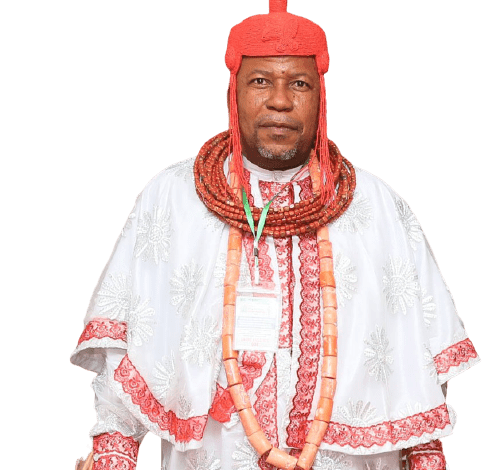
The Ovie of Idjerhe Kingdom in Delta State, Obukohwo Whiskey (Udurhie 1), speaks on the Niger Delta Development Commission (NDDC) and other issues concerning South-South, in this interview with Mudiaga Affe
There appears to be division among oil-producing host communities. How can this be resolved, or rather, what is the way forward?
There is no place around the world where you do not have the third force. Even in the media, it is there. Way back in 2005, what we had was HOSCON (Host Communities of Nigeria). HOSCON is like a youth arm of the Traditional Rulers of Oil Mineral Producing Communities of Nigeria (TROMPCON). The founder of TROMPCON, Chief Wellington Okrika, is also the founder of HOSCON.
As humans, we like turning things the way they will be of benefit to us. Chief Okrika was appointed as the first executive chairman of DESOPADEC in 2007, and by the time he finished his tenure in 2010, the person he handed to wanted to make the advocacy group his baby and changed the name from HOSCON to HOSCOM, but HOSCOM (Host Communities Producing Oil and Gas in Nigeria) is not an offshoot of any group.
HOSCON is an advocacy group for 16 states. We have interest up to Kaduna, Bauchi, Kogi, Abia, Imo, Enugu, and anywhere you have oil in pipelines passing through it. Those are the states we refer to as imparted states, while those that produce oil are called oil-producing states.
The faction is being sponsored by some persons in government to disorganise the Niger Delta people with their struggle, because they know that a united Niger Delta is a threat to the forces of government. The man who fought in the National Assembly is a health worker in Sagbama Local Government Area of Bayelsa State. He calls himself the National Chairman of HOSCOM. I know as a matter of fact that HOSCON is a legitimate group, but of course, anything called illegal makes more noise than the legal.
Are the challenges facing the region being addressed by the Federal Government?
As a former Director of Media and Publicity of HOSCON, I have had the opportunity of meeting President Muhammadu Buhari on one or two occasions. I also had the privilege of meeting with the Oba of Benin, Ewuare II, and the crux of these meetings had to do with the security and development of the Niger Delta, especially as it has to do with oil production. Of late, the issues that top discussion in the region is lack of development, and in most cases, outright disregard to laws that govern institutions in the region.
What are these issues?
A case in point is that of the Niger Delta Development Commission (NDDC). In the year 2000 when that agency was to be established, I was the first media consultant to the Senate Committee on Niger Delta under the late distinguished Senator Fred Brume. By that position, I cannot be an outsider about the establishment of the commission. It was my group that went round the nine states and booked appointments with the governors of the states. We met with the late DSP Alamesigha of Bayelsa State; Peter Odili (Rivers); Orji Uzor Kalu (Abia); Victor Attah (Akwa Ibom); Donald Duke (Cross River); James Ibori (Delta); Lucky Igbinedion (Edo); Achike Udenwa (Imo) and Adebayo Adefarati (Ondo).
As someone who had been at the forefront of the struggle, I am not comfortable with what is currently happening in the commission. The NDDC is our general concern.
How has the commission impacted on your community?
The Idjerhe clan in Delta State is a major oil-producing community, and for two years, NDDC has not done anything here. As a patriot of this region, I will not sit down, no matter the threat by any agent of the government to allow that to happen. People must learn to wake up to their responsibilities. They should know that they have a social contract with the people to ensure that the right thing is done.
What are the right things you are referring to?
From the happenings, we are beginning to think that the Federal Government is collaborating with the commission to undo the Niger Delta people, and one of these days, they will wake up to scrap the commission. We will not take that; we will continue to speak. We are saying ‘no’ to sole administrator.
A group of Nigerians was nominated, screened, and confirmed by the National Assembly, and it behoves on the lawmakers to rise to the occasion by pushing for the inauguration of the committee that they have screened and confirmed.
North should retain presidency in 2023 – Senator Owie
Pius Odubu, who has already been screened as chairman of that body, is not an alien to the struggle of the Niger Delta. Also, Bernard Okumagba, who was screened as Managing Director of the commission, was a Commissioner for Economic Planning and later Finance in Delta State, and he cannot be called a Mr Nobody. I am using this medium to call on the National Assembly to urgently put their house in order and inaugurate the board.
But the commission is undergoing a forensic audit…
(…cuts in) It is now very clear that the forensic audit is not what they said it is. Nothing is going on there. As a major oil-producing region, nobody has come to my domain, Idjerhe, to say they want to verify the project of NDDC in the region. With over 50 communities in my domain, there are abandoned NDDC projects, so, if they are carrying out forensic auditing, they would have visited some of the projects, but they have not come here.
So, I can tell you that the exercise is designed to hold the whole region hostage. There is no probe of any kind that does not have a life span. As of the last count, it was gathered that the board would be inaugurated in April. This is past mid-April already and nothing seems to be happening.
In terms of development projects, how would you assess Federal Government’s intervention in the region?
Tension is rising in the Niger Delta, and as a royal father, I am concerned. Whatever we can do to stem the tide should be encouraged. If you go round the creeks of the Niger Delta, you will notice neglect. There is a Marine University in Gbaramutu that is being under-funded deliberately, and I think that is an invitation to crisis.
No royal duties for Prince Harry, Meghan
Workers of the institution cannot be paid, and those who are being paid are receiving half salaries. I want to call on the Federal Government to pro-actively address issues in the region before they get out of hand.
What roles do the royal fathers play in the governance of the nation?
Before the advent of the colonial masters, the administrative institution of this country was in the hands of the royal father. I want to canvass again that we need constitutional responsibilities for royal fathers in this country. They are closer to the people and they have the native authority over their people.
When you look at them critically, the governor of Delta State, for instance, is in Asaba. As the royal father of my kingdom, I have three Dukes that report to me. The farthest is 30 kilometres away, while the closest is 10 kilometres. There is nothing that happens in those areas that I will not get the report in less than 20 minutes.
But certain things will happen here, and it will take the governor at least two days to be aware, while the same information will get to the president in almost a month. So, if you give the traditional rulers constitutional responsibilities, the initiative will help in the running of this country. It will also enhance peace and security. The moment we have peace and security, development will be rapid.
What had been the challenges?
When I ascended the throne, there were lots of problems, but we had to address the challenges. Today, there is peace in the land. The government will not come down to the level of the royal fathers. The royal fathers can come down to the level of culture and tradition of their people.
As a trained journalist, what is your assessment of the media industry in the country?
I think very strongly that we are facing a crisis in the practice of journalism here, and we need to go back to the drawing board. Journalism practice and the media industry in Nigeria today need a lifeline. That many newspapers can no longer pay their members of staff, and many others can no longer print the number of pages you used to print, while others are going off the news stands, is an indication of the harsh economic weather.
Over 2,000 social media sites cannot be equated to one national newspaper, and that was the training I got as a journalist. As a thoroughbred professional, I know that the country will gain more to have newspapers flourishing.
Ethics and laws are guiding the profession, and not these publications on social media sites that do not have control. Social media has suddenly become the breeding ground for misinformation, mudslinging, and others, because at every point, there is no check. The traditional media needs the government’s support.