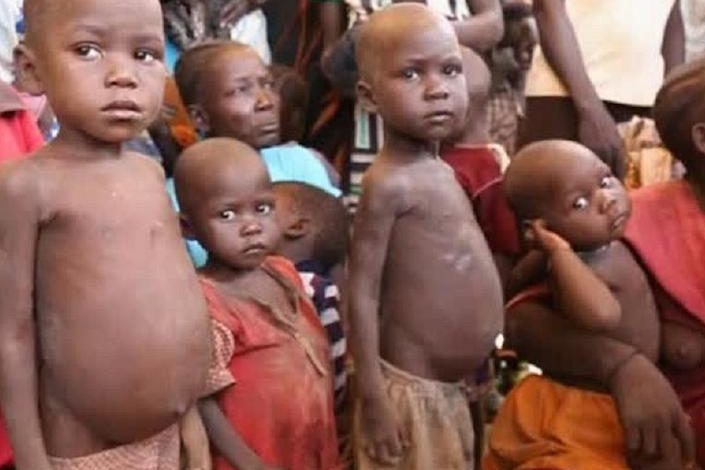
Nigeria’s child malnutrition crisis has reached catastrophic levels, with the National Association of Resident Doctors (NARD) warning that more than 35 per cent of children under five are suffering from acute and chronic undernourishment.
NARD, in a statement on Thursday, described the menace as one of the gravest public health challenges confronting the nation, stressing that the condition is directly fuelling child mortality, impairing brain development, and undermining Nigeria’s long-term human capital.
“Malnutrition contributes significantly to child mortality. It also impacts cognitive development, disease susceptibility, and national productivity,” the association stated, urging urgent government action to prevent further national decline.
The alarm comes against the backdrop of chilling revelations by Doctors Without Borders (MSF), which reported that more than 600 malnourished children died in northern Nigeria between January and June 2025 alone.
The charity said cases of severe malnutrition rose by 208 per cent compared with the same period last year, citing reduced foreign aid, rising food costs, and insurgency-driven displacement as key drivers.
Although programmes such as Ready-to-Use Therapeutic Food (RUTF), community-based management of acute malnutrition (CMAM), and Infant and Young Child Feeding (IYCF) counselling have shown success elsewhere, NARD noted that Nigeria’s implementation remains piecemeal, donor-driven, and unsustainable.
Doctors warned that unless government funding and policy ownership are strengthened, the crisis will continue to deepen.
The Federal Government itself has acknowledged the scale of the disaster.
In August, the Presidency admitted that Nigeria loses more than $1.5 billion annually to malnutrition through healthcare costs, low productivity, and lost future earnings.
Vice President Kashim Shettima described the situation as “a national crisis,” warning that nearly 40 per cent of Nigerian children are deprived of adequate nutrition.
NARD insisted that failure to address the nutrition crisis now would have irreversible consequences. “Every child lost to malnutrition is a blow to our collective future,” the doctors warned.
They urged a coordinated scale-up of nutrition programmes, aggressive food security interventions, and sustained budgetary commitment from all levels of government.