By Olusegun Olanrewaju, Francis Ajuonuma (Lagos), Deborah Onyofufeke (Abuja)
The beginning of every year offers a new platform for the appraisal of the past and probing into what items lay on the agenda for execution.
Nigeria will not be a stranger to this time-tested truism this year, 2023, which observers note, holds a lot of promise for the nation.
We begin with some salient observations and projections made by a cross-section of compatriots, including eminent human rights lawyer, Olisa Agbakoba, who periscope what lies ahead of the nation in the year, by way of challenges and must-dos.
On Friday, Agbakoba and a colleague, Collins Okeke, at a prominent legal services firm, Ikoyi, Lagos-based OAL, noted that Nigeria, as a country, being an ‘extremely-fragile state’, needs to confront the issues that mirror its indices depicting signals of a ‘failed state’.
Citing statistics, they noted that, in the year, the likelihood of conflicts and agitations is everywhere. “Feelings of marginalisation and exclusion, a rise in political and criminal violence, loss of control of borders, rising ethnic, religious, and cultural hostilities, weak institutions, food shortages, unemployment, inflation, crumbling infrastructure, deteriorating human development indicators such as infant and maternal mortality, and literacy rates,” they noted, a very likely.’
By subtopics, the issues that are either to rock the polity or chart its course forward, are legion.
*2023 general elections
The essayists noted, like other compatriots, that one of the highest happenings in the year will be the coming general elections slated for between February and March. Given the precarious nature of insecurity of the country in recent times, there is a consensus that the authorities and citizens may have their hands full with containment policies and strategies.
“These troubling realities make the 2023 general elections a defining moment for the country which, in turn, raises the need for a thorough and insightful search for who will succeed President Muhammadu Buhari,” Agbakoba, et al, noted.
They added, “The candidate who emerges as president must understand all the issues and have a clear vision of where to take the country. We have read and followed the manifestoes and issues of all the presidential candidates and are happy the campaign is issues-based, unlike previous elections.
“Nigeria is in a critical position, and we all need to put our heads together to solve the problems. A few of the big issues that should engage the presidential candidates…suggest policy issues address; matters of national unity, the economy, insecurity, etc. We hope that this will contribute to the political and economic transformation of Nigeria.”
The general elections, which promise to attract global attention, Nigeria being the largest nation with a black population in the world, will kick-start with the presidential poll to be held on 25 February 2023 to elect the president and vice president.
The coast is clear because the Incumbent All Progressives Congress (APC)-elected president, Muhammadu Buhari, is term-limited and cannot seek re-election for a third term.
Other federal elections, including elections to the House of Representatives and the Senate, will also be held on the same date, while state elections will be held two weeks afterward on 11 March. The winners of the election will be inaugurated on 29 May 2023, the nation’s former ‘Democracy Day’.
Party primaries had been held between April 4 and June 2022, with the Peoples Democratic Party nominating former Vice President Atiku Abubakar on 28 May.
The All Progressives Congress (APC) nominated former Lagos State governor, Bola Tinubu on 8 June 2022.
Other leading parties that will be contesting in the 2023 general elections include the rejuvenated Labour Party (LP) and hard-fighting New Nigeria Peoples Party, which have former Anambra State governor, Peter Obi, and former Kano State governor, Rabiu Kwankwaso as presidential candidates, and Yusuf Datti-Ahmed and Isaac Idahosa and running mates respectively.
Peoples Democratic Party (PDP standard-bearer, Atiku Abubakar’s running mate is Delta State helmsman, Ifeanyi Okowa, who was picked on June 16, 2022, and on July 8, 2022, APC presidential candidate, Bola Tinubu picked Kashim Shettima, while NNPP’s Kwankwaso chose a pastor, Isaac Idahosa, on July 14 as his running mate.
*Challenges
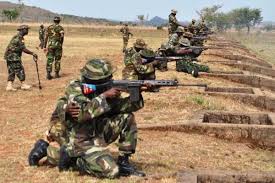
Some of the existential challenges confronting Nigeria in the coming year, according to a list, include disunity, disorder, and insecurity. There is little doubt that one of the big issues that will confront whoever becomes the next president of the country with how to arrest the nagging urge to disintegrate the country.
It is noted that the spectre of disunity, disorder, and insecurity replacing the nation, If not resolved, will ensure that, peacefully the incoming president will deliver on his mandate
According to a report, “the Index of failed states says Nigeria is in a low-grade civil war. There is insecurity, conflict, and agitation everywhere. The South-West is plagued by a surge in cybercrime, armed robbery, kidnapping, domestic crime, extrajudicial killings, herder-farmer conflicts, and banditry.”
The South-East, it is noted, has become a haven for killings, commercial crime, secessionist agitation, kidnapping, herder-farmer clashes, attacks by unknown gunmen, and banditry. The South-South remains threatened by militancy, kidnapping, and environmental agitation”
The North-East is the hotbed of a decade-long humanitarian crisis caused by Boko Haram and ISWAP.
The insecurity in the North-West is rooted in illegal mining, ethnoreligious killings, and banditry. These are some of the core problems rocking the federation, begging for action in 2023.
*The economy
The larger issues facing the country, economy-wise, in the year, are located in spiralling inflation, ‘technical recession’ complicated, according to a source, by high-interest rates, lending and exchange rates, unemployment, poverty, and structural defects.
Problems to be confronted in the year also involve budget deficit, chronic debt crisis, and shrinking revenue.
According to a source, the new president will be confronted with a massive debt burden of close to N80trn.
“This includes a current debt stock of N41.6trn in March 2022, Ways and Means borrowing at over N19.9trn, FGN debt Bonds at N5.1trn issued since April 2022, and a projected deficit of over N11trn to finance the budget of 2023.
“This excludes the bonds to be raised before 2022 runs out. Already the country is at risk of borrowing to pay interest on its debt obligations. The International Monetary Fund (IMF) has predicted that Nigeria’s debt service-to-revenue ratio would jump to 92 per cent in 2022 from 76 per cent in 2021.
“Added to all this is the admission of the Debt Management Office (DMO) that the country was unable to secure any foreign loan in the second quarter of 2022, leaving very little room for manoeuvring by the new government. How a new President should confront this problem this year will be herculean.
*Unemployment/poverty
The statistical estimates of the population of unemployed Nigerians as of the year, 2022, are put at over 20 million. The Nigerian Bureau of Statistics (NBS) defines unemployment as the number of Nigerians who either did nothing or worked for less than 20 hours per week.
At various debating sessions, many of the presidential candidates could not give lucid explanations as to how they would be able to curtail what has been termed the ‘alarming poverty rate in Nigeria
And, the NBS has disclosed that some 133 million Nigerians are ‘multi-dimensionally poor’, (63 per cent of the population). According to the NBS, “half of this poor population cook with dung, wood, or charcoal, rather than clean energy. Deprivations are apparent in sanitation, time to healthcare, food insecurity, and housing. Sokoto, Bayelsa, Gombe, Jigawa, and Plateau are the top poorest states. Sokoto leads with 90.5 per cent of people in the state being poor. It is followed by Bayelsa with 88.5 per cent poor people, Gombe with 86.2 per cent, Jigawa with 84.3 percent, and Plateau with 84 per cent”.
*How to battle poverty will be a crucial issue this year
Weak institutions: This is considered by experts as a very important issue. “It is generally agreed that a country with a weak legal, institutional and regulatory framework cannot develop economic opportunities. Unfortunately, Nigeria suffers from legal, institutional and regulatory failure. Any Nigerian President that comes into office will be confronted with weak institutions and impunity,”
This includes the high cost of governance that is too high, a weak and corrupt judicial system that impedes the development process.
*Foreign Relations
Over the years, experts note, Nigeria’s voice in global affairs has considerably been sliding down the hill, providing an opportunity for the marginalisation of Nigeria and the absence of a force to drive its role in African role and global affairs.
Nigeria needs repositioning in 2023 to be eloquent in world affairs as relates to issues of contemporary goals such as pandemics, terrorism, and the environment.
*Corruption/Transparency
Another big issue to be relentlessly tackled this year is corruption. It was observed that many candidates, running for public offices, in their programmes and manifestoes only set general principles, with no concrete solutions on how to combat Nigeria’s endemic corruption profile, which has placed the country second in ranking at a global index in the West Africa sub-region, after Guinea.
An international watchdog, Transparency International (TI), in a report, said, “It is Nigeria’s second consecutive year of a downward spiral on the CPI ranking; that the country’s score has dropped from 26 in 2019 to 25 in 2020 assessment, and further to 24 in the latest 2021 record.”
*Energy crisis
Nigeria will, no doubt, battle hard this year to arrest the crisis in the nation’s wobbling economic sector. It is, however, commendable that efforts are stridently being made by the government to combat the problem, which has been crippling the economy.
Despite this effort, however, bad news has been oozing from the energy sector, in what a source termed ‘torrents’. Already, some banks and regulators have moved in on five electricity distribution companies, “diesel and aviation fuel prices have risen four-fold, threatening businesses, and the cost of subsidising petrol is climbing even higher, despite an official increase in pump head price.
“The sole national electricity transmission grid crashed six times in 2022; from wheeling 3,900 megawatts, it recently fell to as low as 3 Megawatts. Battered by shortages and higher prices of diesel, lubricants, and electricity tariffs, the organized private sector has warned of further impending factory closures and job losses. Airlines have raised airfares.”
There have been multiple increases in aviation fuel prices, amid unending shortages. Fears of periodic shutdowns have been voiced and reports document that the oil and gas segment is in a tumultuous mess. The battle for management of the fuel subsidy regime reigns supreme and is likely to spin in the year.
Further policy actions are planned to curb the devastating effects of the prohibitive petrol subsidy bill, which is estimated, for this year alone, to reach N6trn as crude prices rise and the naira continues its free-fall swing.
A report said that subsidies gulped N1.59trn from January to June, last year, ‘well above original estimates.
It added, Crude oil theft is on an industrial scale; $1 billion in revenue was lost in the first quarter of 2022, reported Reuters. An average of 108,000 barrels of crude is stolen per day, says the industry regulator.
With this huge theft, Nigeria has been falling short of its OPEC production quota of 1.8mbpd. Gas supply – for industrial use and cooking gas – has been hit by shortages and prohibitive prices too.
This is disastrous, as the country is unable to cash in on rising oil prices fuelled by the Russia-Ukraine war to plug its revenue haemorrhage and meet high debt service. How will a presidential candidate deal with Nigeria’s energy challenge?
*Flooding
The devastating effects of flooding, caused by climate change, are expected. Last year, the nation witnessed an unprecedented rise in flooding which claimed hundreds of lives and billions of naira in property loss.
For instance, in the Federal Capital Territory (FCT) alone, the 2022 floods were said to have affected 24,714 persons.
The Federal Capital Territory Emergency Management Agency said flood affected about 24,713 inhabitants in three of the six area councils of the FCT in 2022.
Its Director-General, Abbas Idriss, stated in Abuja that the floods also damaged 131 structures.
*National Population Census
Another landmark issue that will be addressed, all things being equal, pertains to the issue of Nigeria’s population census. Already, the National Population Commission (NPC) has announced plans to conduct a national census in the country after 17 years of the last exercise.
The Federal Government had in April 2022 said it would carry out a national population census after the general elections in 2023. NPC said it is targeting to carry out the next one in April 2023, adding that it would deploy high technology in the conduct of the exercise.
*Upsurge of diseases (COVID-19, et al)
As usual, following a global persuasive trend, there could be harsh intervention policies in disease management, especially those in the infectious and epidemiological range, e.g COVID-19, Cholera, Meningitis, etc. However, the containment policy, learning from the past COVID-19 management, could now shift to prevention and national control measures.
Meanwhile, the Nigeria Centre for Disease Control (NCDC) has revealed that the new COVID-19 surge is not in Nigeria.
The Director-General of the centre, Ifedayo Adetifa, in an update made available to ThisNigeria, clarified that the sub-lineages of the COVID-19 omicron variants causing a surge in cases in China have not been detected in Nigeria.
Adetifa said the NCDC-led COVID-19 Emergency Operations Centre (EOC) is watchful and monitoring COVID-19 trends in China, the USA, the UK, South Africa, India, and other countries with a high volume of traffic to and from Nigeria.
He advised unvaccinated Nigerians who are up to the vaccination age to get vaccinated against the Virus as the vaccine is the most important intervention for preventing the disease, hospitalization, and even death.