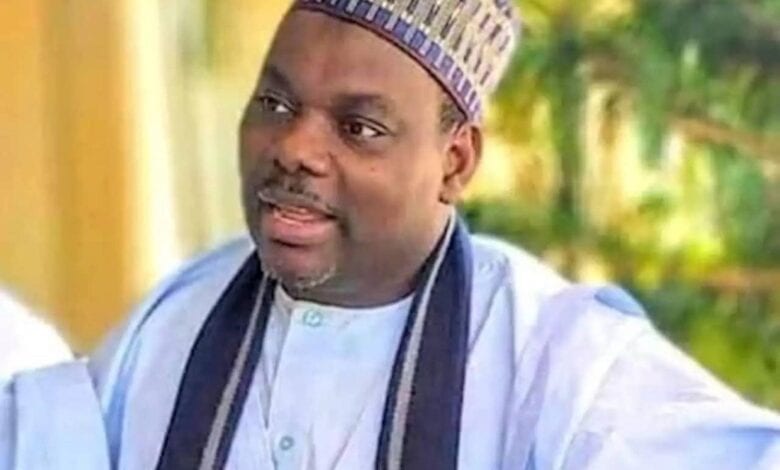
A chieftain of the All Progressives Congress from Kano State, Dr. Muazu Magaji, speaks on the southern governors’ Asaba declaration, among other sundry issues, in this interview monitored on AIT public affairs programme, Kakaki.
APC gives cows to members in Zamfara for Sallah
What do you make of the Asaba meeting of the southern governors?
I will say thank God and welcome on board, because there has been controversy on how the livestock industry will be transformed. And we have had from the Federal Government the policy of RUGA, which was basically a grazing reserve policy.
The Federal Government set aside funds under the vice president’s office, in conjunction with the governors, to assist any governor that wants to set up the infrastructure that will basically provide funds for this industry. We want to clearly understand that this is an industry that provides the needs of Nigerians and, therefore, it is important that we look at how agricultural industries around the world that are strategic to the citizens’ life are supported or subsidised.
In this case, we have two challenges; organising the industry in a fashion that it will eliminate the risk and all the conflicts that resulted in the open grazing, and secondly, supporting the industry that will formalise it, in such a way that its economic impact will be obvious, its multiplying effect from the economy will increase, and then, of course, the participants will become active players in the economy of the country. So, I think the southern governors have come together, they have passed this resolution.
And I heard from you now that the assemblies of the southern states have also ratified and agreed to come together on the decision of the southern governors.
Why do you think there is so much resistance to the proposals and demands made by the southern governors?
There are underlying reasons why this policy is shaking, and the circumstance and situation that resulted in that resolution did not emanate from an economic perspective or an analytic perspective of promoting the industry. It came as a reaction to the security situation. and then shortly after that resolution, the other resolution, which is restructuring.
Nigeria: Storm over restructuring
So, the belly of that resolution is hinged on some form of push-back and, therefore, people read meanings. Combining restructuring and open grazing ban kind of send mixed signals in the two resolutions. My take is simple; that both resolutions are important on their own account and we need to look at them independently and basically treat them independently. However, it is important that the restructuring agenda be also tabled at a very highest level in the country.
Bayelsa issues 14-day deadline for herdsmen to ranch cattle
Despite the opposition to the decision by the southern governors, the Miyetti Allah Cattle Breeders Association, seems to have concurred with the position of southern governors on the ban on open cattle grazing. Do you think that is the way to go?
I am also glad to say that the operators of the industry who have been very difficult partners in censorship have come to the table you see Miyetti Allah’s major interest is safe-guarding their cattle, their economic life, their culture and their social life. However, because time is changing, cultures must change, domesticating animals does not stop in cattle rearing.
They have come to understand that, as an economic venture, they will be better off if they embrace this idea of ranching and, in fact, the Miyetti Allah have now started a structured engagement with the cattle owners. The truth of the matter is, there are very few of the Fulani that own these massive herds of cattle. The cattle business is an investment made by many of the elites in this country.
The Fulani as cultural people just enjoy roaming around and looking after cattle and they take commission on transactions. So, they will even be better off if they embrace the idea of ranching because they have the skills. They become the business managers of ranching because they have the know-how of the rearing of cows, the behaviour of the cows.
I am telling you this is a golden moment for us because Miyetti Allah is on board, southern governors are on board, southern state assemblies are on board, prominent northern members are on board. I think it is extremely easy to get the rest of the governors on board. The Federal Government has an idea of how this should be done. We all need to come together and basically flesh out the meat of this idea and how it should be planned.
What should be the new norm in rearing cattle in the country?
I think it is a cost-benefit analysis. I have friends that have cows. I told you I have cows myself, but I have domesticated and ranched them. In fact, I embraced the modernisation of the industry so that people will understand. I have friends who have thousands of cows in the hands of Fulani, and the sharing formula is like is 75/25. It is an economic factor. The problem is that people are making a hell lot of money without spending money to feed their cows.
And I think the economy needs to be structured. It is an input and output thing. When you buy cows and just give to Fulani and they are just rearing and grazing them everywhere, they just grow. You do not even see these cows until many months after, or until the time for harvest. Then they will say, “take 200 and sell them in the market”. This is opportunistic business.
For me, it is exploitative because the amount of the help that the Fulani are giving, and the fact that you only buy cows, and you get a grown-up cow that is costing like 10 times more. Please we have to have a business model around us. Ranching means that the infrastructure will be built, people will get jobs.
Should government be responsible for the business of cattle rearing?
We are at inflection point. We are at the point where we want to change the model. Something must step in and demonstrate a role modelling of the new business model. I believe this is a private business. I also believe that when industries are getting set up in states, they are all business enablers.
What does restructuring of Nigeria entail?
For me, restructuring means asking the especially important question; Is Nigeria working? Has it worked; will it work? These three questions are especially important, the way Nigeria is structured has it ever worked, will it ever work, or is it working? Let me attempt to answer some of these questions. Nigeria was structured after independence as a parliamentary state. And between 1953 and 1960 was the time we took to negotiate our corporate existence as a people.
It took us seven good years, going back and forth, going to London, Lagos, London, Lagos and back to our communities discussing with very credible representation from all nationalities in this country. And we came to a consensus that we agree to co-exist in unity, but in diversity and that model led us to adopt regional parliamentary system. Which gave each region the sense of semi-autonomy, belonging to the federation and commitment to ownership of citizenship and patriotism. That was the only workable negotiated existence and document we agreed on. After the coup of 1966, unfortunately the country became a centralised government due to military intervention.
The military centralised the country, that was not our consensus. That was not our agreement, and the centralisation continued over time with various military regimes because that is their nature. That is how they rule, the command and compliance structure. But when civilian regimes returned, we negotiated a constitution which was different from what we agreed at independence, to the presidential system of government, which gives a president two cameral legislations and also state governments with their own orders; three arms of government, the presidency, the legislators, and the judiciary. We have tasted all the two, so now, we have two choices.
They are two systems that have been operated by Nigeria. Now the question is what worked and what are we comfortable with. What can we adjust in these two systems? What can we redesign so that this country will, in the modern times like we are talking about ranching, time has come for us to renegotiate the structure of this country and the ownership.
What is your view on devolution of powers and resource control?
I have discussed some these concepts; that if we are going to adjust these two systems, we must do it strategically and tactfully. For me, there are two major discussions on federalism -Fiscal Federalism and Political Federalism. Those are the overriding discussions every time the Nigerian elite speaks about federalism or restructuring, or the discussion is around how much of a resource will come to me, and how much political power will I have? But I have also advocated the third arm of this discussion, which is development federalism. In my view, that is the consensus between the physical and political. Development federalism recognises that each region of this country will have its own potential