Nigeria now exports its dysfunctional system abroad –Akinyemi


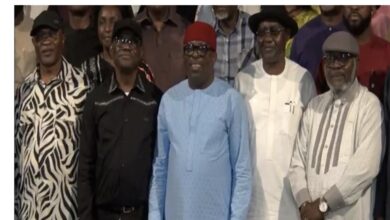
A former Minister of External Affairs, Prof Bolaji Akinyemi, says Nigeria now exports its dysfunctional system abroad. He further berated the roles played by the Diaspora Commission and Ministry of Humanitarian Affairs in the evacuation of stranded Nigerians in Sudan. In an interview on AIT breakfast show ‘KAAKAKI’, monitored by Linus Aleke, the octogenarian said the two institutions mentioned above are unknown entities in the foreign affairs ecosystem
In brief, what exactly is the trigger of the current Sudan crisis?
How brief can a brief history of Sudan be? Sudan had never known stability and so when there was a problem in that area called Darfur in the south. The government of the day recruited some thugs called Janjaweed, which meant Arabs riding on camels, to come and help them tackle the disturbance in Darfur. They did, if I could be sarcastic, a good job, in the sense of killing every man, woman, and child that they could see. They were not under any control, even the international community had accused them of offences against humanity. After they had succeeded in suppressing the disturbances in Darfur, it then became a problem for the government of the day under Omar al-Bashir, who was the president at the time. What to do with these thugs he had recruited, he then formed this rapid response force and put them in uniform. They never went through any training, they never went through any Sudanese military academy, nothing. You got your rank, depending on how brutal you are, in destroying a village, raping women, killing children or what have you. But he now decided that he will use them as insurance against the main Sudanese military from overthrowing him. So, it was like the rapid response force was a counterforce to the Sudanese military and so, they existed side by side and he was so certain that there was no way the two of them will cooperate to overthrow him. Well, he misjudged human nature because eventually they cooperated and overthrew him. When the International Criminal Court even issued a warrant of arrest on Omar al-Bashir. They overthrew him along with civilians, and I must emphasize that because the civilian factor is a recurring decimal in this issue. When they overthrew Omar al-Bashir, they set up a tripartite council, made up of the Sudanese military, whose General was chairman, the rapid response force, whose “General,” was vice chairman, and the civilian component whom at that time they gave the position of Prime Minister. Again, in 2019, they carried out another coup amongst themselves, threw out the civilian, and decided to rule by themselves that did not work, so they went back and brought in another faction of the civilian. But all this time, the civilians continued to demonstrate on the street that they wanted a full return to civilian rule and not just a mismatch of the military and civilians, where frankly the civilians have no influence. There was going back and forth, Sudan was never left alone. The countries surrounding Sudan, Egypt, UAE, Saudi Arabia, and Iran were all in there with their supporters amongst the factions of the Armed Forces. The US, EU, Britain, and France were also there and they also have their supporters. So, Sudan had never been left alone and the Sudanese have allowed themselves to be used. Finally, the immediate cause of what we are now seeing was that an agreement was reached that power will be handed over to the civilians. That the military will be under the civilians but subject to control by the civilians that the rapid response force will be integrated into the Sudanese Armed Forces. The Sudanese Armed Forces said they wanted the integration to take two years, the rapid response force said they wanted it to take ten year period. But it was all about the battle for power and control, which of the forces would control Sudan, its resources, and it’s gold. Who will control it, who will become the richest man in Sudan? That is what all this present fighting is all about.
What role can African Union play in this deadlock?
Please don’t get me wrong, I am not militarised civilian angling for terror or violence on the streets, but in a situation where those fighting have different objectives, from those that you want to intervene in the matter, there is no doubt that we are all acting out roles. You cannot have a war going on and have people not talking. So, the African Union must go through the process of making the usual noises, there must be a cease-fire, we must sit around the table and we must resolve this in the African way. The Secretary General of the United Nations, of course, must come out and ask for peace. But while, you are asking for peace, those doing the fighting know what they are fighting for. They are fighting for power and until one party is so sure it is going to be defeated, they are not going to listen to you, and they will be polite let me tell you something. When you have two people involved in a fight like this, whoever says, I am ready to negotiate, means he is losing on the battlefield. Whoever says no interference, leave this to the Sudanese, we would resolve it by ourselves, it means he is winning on the battlefield. So, that is the yardstick we use to judge who is up and who is down. But right now, there is very little that the African Union or any of the outsiders can do. Those who can supply weapons, believe me, they are supplying weapons to those they support. The rapid response force has been the mercenary in that area, if you pay them, they would do whatever it is you want them to do. Surprisingly, Saudi Arabia paid them to join them in fighting in Yemen. The European Union paid them and is still paying them to help them police the southern part of Sudan and the Sahara Desert where there is no law or order. They are paying them to help in policing that area to keep immigrants coming from Africa, south of the Sahara, from getting across to Europe. They are paying them and Egypt of course is paying the Sudanese Armed Forces, which they see as a sister union because it has structure, they know about their training, and even airlift of Egyptian Armed Forces were in Sudan, helping in the training. So, Egypt is involved there and they also, have an interest in Libya, it is a mess.
Does it then mean that there is no end in sight and what does that mean to the Sudanese people?
The Sudanese people have behaved like spoiled children, from the beginning of this crisis, I had been saying so. I had even asked what do you want, the civilians, they have never been united. Each time the military comes out with an offer and some of the civilians accept the offer another section of the civilians will be on the streets. I think the Sudanese love demonstration, they are always on the street. You will see the banners, league of medical people, league of journalists, league of students, league of this, league of that, and yet within the government, there is a faction of the civilians even with the agreement signed with the military, a faction of the civilians signed that agreement. And when you listen to the commentary across the waves I will say that we, non-Sudanese feel sorrier for Sudan than the Sudanese civilians. It is like they all have support for different factions and they are all happy about what is going on. Not every civilian though, some come on and lament about the human casualties, and the short supply of food and medicine, and you have others coming on to smile and support certain factions. You will not believe that there are civilians who support the rapid response force. So the civilians carry a measure of blame and responsibility for what is going on and I think that until the civilians themselves can get their act together and pursue a common objective. When you say poor Sudanese civilians, I will say that they brought this upon their heads.
What more can civilians do in a conflict involving the military and para-military institutions?
We have often made the mistake of saying, civilians got rid of the military junta. Civilians had never succeeded in getting rid of the military junta. Civilians aided by the armed force, either a section of the armed force or the general armed force have got rid of the military junta. So, that means that actually, the power is still in the hands of the armed force and the civilians are often making the mistake. We did this, we got rid of them, therefore, transferring power to us. No, you did not do it, it is not only the Sudanese who made this mistake, it has been done in Burma as well, and finally the military strikes back to let you know actually where the power is that we did this along with you but we still have power. The demonstration on the streets do not amount to power, they amount to influence and to that extent, the Sudanese civilians, and that is why I kept saying what do they want? They should have realized that the guns are still in the hands of this armed force and that what they should do is to negotiate cleverly, the exit of the armed force, out of power. Don’t humiliate them, give them a role to play and gradually phase them out over years, not over four years, that is the mistake that lady made in Burma. After the following elections she ensured that she voted out almost all the military representatives and the army said oh is that so, we will show you who holds the power now she is been locked up but I don’t know how many sentences had been imposed on her in Burma. The Sudanese are again making the same mistake and that is why I said until the Sudanese civilians get their art together. Truth be told, right now they have no role to play, it is a fight between those two factions. Now, assuming that one faction wins, the civilians still have to deal with that faction, both factions said they are prepared to hand over power to civilians provided the armed forces, whether unified or not are not under the direct control of the civilian government. Do a deal with them, accept whatever it is they are asking for, just to ease them out of power, and then as I said, gradually, they become comfortable being out of power but with their guns, then you move on to the next stage, which, is to bring them under your control. But this is not something you are going to do in an election period of four years or even two periods of eight years, you wouldn’t succeed.
What do you think would be the impact of this conflict on other African countries, especially as it concerns the proliferation of arms?
When Muammar Gaddafi was assassinated and the government of Libya was destroyed, we all know what happened, all elements who were armed when Gaddafi was there could not go up to Europe. So, what did they do, they came down South and started destabilising the government as they were moving along. They also have to confront the problem of climate change in the Sahara. So, they were not going to stop just in the Sahara, they were going to come down to where there is some form of agricultural produce available to them. And that was Nigeria and that was why we got Islamic State for West African Province (ISWAP), who came in and fought alongside Boko Haram. Right now they are in the form of mutual existence in Borno and part of northern Nigeria. That is also what is going to happen when the Sudanese sought themselves out or do not seek themselves out. Right now, there is evidence that some elements of the rapid response force who find themselves in the minority in the south are already moving into Chad and that is why the Chadian are so worried that it is not all the Sudanese who are coming across who are innocent civilians, that there are elements of the rapid response force amongst them. If they get into Chad, you know that Chad is fragile, Mali is fragile, and Burkina Faso is fragile, so, there will be consequences for us here, because already we have problems, whether you call them terrorists or bandits or kidnappers, whatever the name that you call them we already have problems in the northern part of this country. Just follow your news items, churches are blown up in Owo, and in the east, some communities were attacked. I don’t know who said that there is no part of the country where there is no instability. For the incoming government, this is an inheritance they will wish they did not have on their plate. So, we have direct problems, Sudan is not only a foreign policy issue for us, it has become a democratic issue.
What is your assessment of the federal government’s handling of the evacuation of stranded Nigerians in Sudan?
I will say that there are consequences for whatever views or actions that you take. Those consequences may not be limited, but eventually, those consequences do come on board. Practically, all Nigerians have to share the blame for what has happened over this issue of lifting or not lifting our students out of Sudan. Why do I say so, Nigerians have never been consistent and rational in the way in which they deal with the ministry of foreign affairs and the issues are clear. From about 1975, people have been agitating for a separate foreign affairs service that is not a ministry but a service by itself. But due to jealousy from the home service, this has never been allowed to mature. Even under the military, when I was the Minister, I fought this issue with the support of IBB, all the way to the cabinet, I still got defeated by the cabinet because all their ministers have been briefed by their permanent secretaries, why should we have a foreign service, it is just a ministry. The Ministry of Foreign Affairs is not just a ministry, you have not given it the capability for it to operate at crisis time. That is number one, number two, the Ministry of Foreign Affairs’ activities are abroad, they operate a foreign budget, they don’t operate with the Naira and yet you keep making their budget based on the naira. We have explained a million times that the naira budget does not help the ministry of external affairs and that is why the embassies are incapable of doing the things that they should do. This is not the first time we will be faced with this question of airlifting Nigerians from troubled areas. It happened in Ukraine, did we learn any lesson from that no, we never did, we moved on and I am sorry this also applies to the media. You don’t focus on the core issues in foreign affairs. So, when trouble then comes, you then expect the ministry to perform miracles, how would it perform the miracles? Thirdly, regarding this immediate specific issue you have raised, the Ministry of Foreign Affairs in Cairo, does not know anything about the Diaspora Commission, probably, never heard of it, it does not know anything about the Ministry of Humanitarian Affairs, it knows the embassy of Nigeria that takes its instructions and that is under the order of the ministry of foreign affairs in Abuja. So, when it wants to deal with Nigeria’s issue, it is waiting for the embassy to approach it, now if instructions coming from home are dysfunctional, Diaspora Commission says one thing, ministry of humanitarian affairs says another, do they know what to do when they get into Cairo, do they know who to talk to, that we have a problem, they don’t. So, we export from Nigeria our dysfunctionalities into other countries and this is the result. Sooner or later your embassy would have to get involved and by that time, there would be massive criticism and usually directed at the wrong source, no funds, you are given responsibility but no power, or the powers are shared amongst institutions that are not recognized on the foreign field. And then, the military, how equipped is your military to operate abroad, I have listened to some of our commentators, say I would have been proud to see Nigerian troops go in there, rescue our people, bring them out and that is what it means to be a giant of Africa. That is not what it means to be a giant of Africa, evaluate the strength of your armed force with those you are comparing them. You are comparing them with the United States, Britain, Japan, and even Saudi Arabia. Look at the resources that are available to the military, I say this because I suppose I have been a victim of this. When I was a minister, I was advocating for a brigade of paratroopers to be trained for the Nigerian Army, so that it will be an interventionist brigade. They said that I was out of my mind, I called for the black bomb, and they said I was out of my mind. I asked for a budget that will make you the giant of Africa, from the Armed Forces, they said that in a country where people are hungry, that has no life, that has not solved its domestic problems, this professor, wherever they got him from, is out of his mind. But when problems come, you expect your armed force to operate like magic, but you have not armed them, you have not provided the resources. Where are the Nigerian Air Force planes? The Charlie that is what they call the C-130 Hercules that are parked at the airport in Lagos. How serviceable are they? When was the last time they flew them? Now that there is trouble, you expect it to fly and take those people out, if you have invested in an air force that has the airlift capability of the C-130, we would not be talking about what we are talking about right now. We are all responsible for the state in which Nigeria finds itself, it is not just the government of the day that we are going to blame for this.