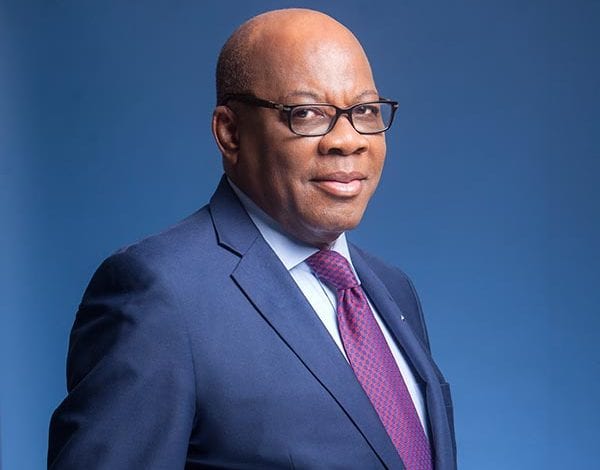
Nigerian human rights activist, maritime lawyer, and former President of Nigerian Bar Association, Mr. Olisa Agbakoba SAN has said that the Nigerian constitution has always been weak.
Agbakoba made this known on Monday while speaking with the media on the constitutional review embarked upon by the National Assembly.
Agbakoba opined that there is a strong perception that the Nigerian constitution is not legitimate because ‘we the people’ was enacted by General Abdulsalami Abubakar’s Military Government.
He went to say that Nigeria’s democracy will always be fragile without strong and independent institutions and that Section 153 of the Nigerian constitution needed to be amended to provide for independent institutions such as the EFCC, Police, Accountant General, INEC, Judiciary etc.
He said: “Our democracy will always be fragile without strong and independent institutions. South Africa enacted chapter 10 of its constitution titled: Institutions consolidating democracy, to guarantee the independence of critical institutions.
Oyo Slain journalist’s wife cries out
“In our case, the closest we have to chapter 10 of the South African constitution, is Section 153, but it falls short of the South African model. We need to amend Section 153 of our constitution to provide for independent institutions such as the EFCC, Police, Accountant General, INEC, Judiciary etc. The strategy is that these institutions will be completely independent of Executive control.
On restructuring, Agakoba said: the ‘calls for restructuring have in my personal view become a catch-all phrase that has introduced more confusion than solution.
“I believe the simple way to go is by regional autonomy. Regional autonomy refers to the governance and administration of a federating unit in the interest of the local people, according to their aspirations.
“Nigeria is made up of multi-ethnic nations managed by a central authority. This model has proved unsuccessful. Europe understood that diversity is best managed by regional autonomy.
“Switzerland has four ethnic groups. Each of them shares the Presidency through four cantons that make up their federating units.
“To Prof George Obiozor, even though Quebec is the only fully French-speaking province, yet Canada is bilingual for the sake of Quebec. On the other hand, Yugoslavia mismanaged its diversity and the result was the emergence of six distinct countries.
“The same fate befell Czechoslovakia, now the nations of Czechs and Slovaks. The same is true of the centralized Russian Federation that splintered into more than 15 nations.
“Ethnic nationalism, the basis for successful nation-states, finds full expression in the reunion of Communist East and Capitalist West Germany.
“This is a perfect case of similar ethnicities easily living together. On the other hand, different ethnicities must live in balanced diversity. Regional autonomy resolves our diversity challenge.
“Devolution of powers is a related concept to regional autonomy. Devolution means transfer of powers from one level of government to another and vice versa.
“There is no question that a transfer of power is needed in our country from the federal to the states. The Federal Government is over-burdened with legislative powers and must shed some to the federating units.
“I suggest three new legislative lists as follows -the Federal list, State list and Shared list. Nigeria operates on the principle of cooperative federalism. The shared list will accommodate cooperation between federal and state governments.”