By David Lawani
As political activities gradually gather momentum ahead of the 2027 presidential election, Nigerians may ultimately face a choice that transcends campaign promises, party structures, and political alliances. More than ever before, the election is shaping up as a contest over credibility, character and public trust.
For decades, presidential campaigns have largely revolved around lofty manifestos and promises of economic revival, security reforms and national unity. Yet, after years of battling corruption, insecurity, economic instability and declining public confidence in governance, many voters appear increasingly inclined to judge candidates by the records they have accumulated—or failed to accumulate—in public office.
This emerging political reality places four prominent presidential figures under the microscope: President Bola Tinubu, former Vice President Atiku Abubakar, former Anambra State Governor Peter Obi and the Social Democratic Party (SDP) presidential candidate, Prince Adewole Adebayo.
Each represents a distinct political proposition. Three carry years of executive experience and the burden of defending their records. One enters the race with neither executive credentials nor the controversies that often accompany public office.
As the incumbent, President Tinubu enjoys the advantage of incumbency and a visible record in office. His administration argues that the removal of fuel subsidy, exchange rate reforms and tax restructuring are bold but necessary measures designed to reposition Nigeria’s economy for sustainable growth.
Government officials frequently point to improving macroeconomic indicators, renewed investor confidence and ongoing fiscal reforms as evidence that the country is gradually turning the corner.
However, many Nigerians continue to judge the administration through the lens of their daily realities.
Despite official assurances, inflation remains high, food prices have continued to soar, the naira has experienced significant depreciation and the cost of living has placed unprecedented pressure on households and businesses.
Security also remains a major electoral issue. Although the government insists that security agencies have recorded operational successes against criminal elements, incidents of terrorism, kidnapping, banditry and violent attacks continue to dominate national discourse.
Whether Nigerians believe the reforms have yielded sufficient dividends may become one of the defining questions of the 2027 election.
Former Vice President Atiku Abubakar remains one of Nigeria’s most experienced presidential contenders, having contested for the nation’s highest office several times since the return to democratic rule in 1999.
His supporters describe him as an accomplished administrator and entrepreneur whose vast experience makes him well-suited to tackle Nigeria’s complex governance challenges.
Yet, public debate surrounding his candidacy continues to be influenced by long-standing corruption allegations, including issues that emerged from a 2010 United States Senate subcommittee inquiry involving suspicious financial transactions linked to a former business associate.
Atiku has consistently rejected every allegation.
He has repeatedly maintained that he has “never been convicted of corruption by any court”, insisting that political opponents have unfairly weaponised allegations against him.
Nevertheless, analysts observe that in Nigerian politics, perception often proves as influential as legal verdicts, especially in an electorate increasingly sensitive to issues of transparency and accountability.
Peter Obi’s political appeal continues to rest largely on his reputation for fiscal discipline during his tenure as governor of Anambra State.
Supporters credit him with prudent financial management, reducing public debt and leaving substantial savings for the state. They argue that those qualities make him uniquely qualified to restore discipline to Nigeria’s public finances.
His critics, however, present a different narrative.
They argue that an excessive focus on savings limited investments in education, healthcare and infrastructure, citing labour disputes involving teachers and health workers as evidence that social sectors did not receive adequate attention.
Obi and his supporters strongly reject that interpretation, insisting that his administration successfully balanced fiscal responsibility with sustainable development.
Consequently, unlike other leading contenders, the debate surrounding Obi is less about corruption allegations and more about differing interpretations of what constitutes effective governance.
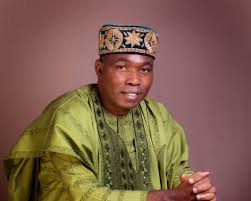
Standing apart from the familiar political establishment is Prince Adewole Adebayo.
Unlike his major rivals, Adebayo has never held an executive office, supervised public procurement, or managed government budgets.
A lawyer, businessman, media entrepreneur and political activist, he enters the presidential race with perhaps his most marketable political asset—an absence of executive baggage.
To his supporters, that distinction is significant.
They argue that after decades of rotating leadership among familiar political actors, Nigeria deserves someone not associated with the controversies that have repeatedly undermined public confidence in governance.
His critics, however, insist that integrity alone cannot substitute for the practical experience required to administer Africa’s largest democracy.
Adebayo disagrees. “I am not an enemy of any politician. I am an enemy of corruption, injustice, unaccountability and autocracy,” he has repeatedly declared.
Rather than defending an executive record, Adebayo has built his campaign around ideas.
He advocates industrialisation, constitutional reforms, improved healthcare, quality education, stronger institutions and accountable leadership.
He has consistently argued that Nigeria’s greatest challenge is not a lack of resources but a persistent failure of leadership.
Political observers believe the 2027 presidential election may ultimately become less about campaign rhetoric and more about competing records.
President Tinubu is expected to ask Nigerians to renew their mandate on the strength of reforms his administration believes will produce long-term benefits.
Atiku Abubakar will likely urge voters to judge him by decades of political and administrative experience rather than by allegations he has consistently denied.
Peter Obi will continue to present fiscal prudence and responsible management as evidence of competence despite continuing debates over his developmental record.
Prince Adewole Adebayo offers something fundamentally different. He is asking Nigerians to judge him not by how he exercised state power, but by the fact that he has never held executive authority or had the opportunity to abuse it.
Whether voters interpret that clean slate as evidence of integrity or simply a lack of governing experience may prove decisive.
As Nigeria approaches another critical democratic crossroads, the electorate faces an unusual question: should leadership be entrusted to those whose records are already known, however contested, or to a candidate whose greatest political advantage is the absence of any executive history to defend?
The answer may not only determine who occupies Aso Rock after 2027, but also reveal what Nigerians now value most in those who seek to govern them—experience, performance, or integrity.