Nigeria’s non-oil exports climbed to 6.17 billion dollars in 2025, marking a 93 per cent increase within five years, despite worsening logistics bottlenecks, rising energy costs and mounting pressure on the nation’s ports, a new report has shown.
The 3T Impex Non-Oil Export Index Report 2026, presented in Lagos by lead consultant Dr Bamidele Ayemibo, analysed 87,824 export transactions conducted between 2021 and 2025, alongside responses from 94 exporters across the six geopolitical zones.
According to the report, exporters maintained strong business optimism, with the Business Confidence Index scoring 87.8 out of 100, while 75.5 per cent of respondents reported actual sales growth.
It added that 91.5 per cent expected stronger global demand and 83 per cent planned fresh investments and expansion.
Ayemibo, however, described the logistics environment as “a structural emergency” after the Logistics Benchmark Index fell to 12.8 out of 100 — the weakest performance indicator captured in the report. He disclosed that 77.7 per cent of exporters faced higher inland transportation and port-handling costs, while only 3.2 per cent recorded a reduction in logistics expenses.
“Nigeria’s non-oil exporters are confident and expanding, but the logistics system is trapping its best performers,” Ayemibo said, warning that poor infrastructure and high operating costs were undermining growth in the sector.
The report identified high energy costs, weak quality certification infrastructure and overdependence on Lagos ports as major obstacles.
It stated that 51.1 per cent of exporters cited rising energy and processing costs as their biggest challenge.
In comparison, 28.7 per cent struggled with quality and standardisation requirements, including compliance with the European Union Deforestation Regulation.
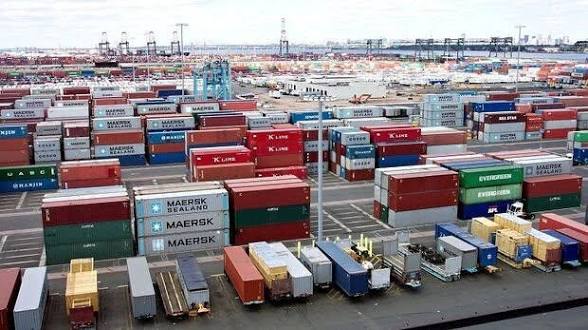
Findings further showed that 71.7 per cent of Nigeria’s exports pass through Apapa and Tin Can Island ports, with Tin Can alone accounting for 45.9 per cent of export traffic in 2025.
Although export value increased sharply, the number of export transactions dropped from 18,280 in 2021 to 16,683 in 2025, signalling the gradual exclusion of Micro, Small and Medium Enterprises from formal export trade.
The report urged the Federal Government and financial institutions to improve electricity supply to export processing zones urgently, activate Onne Port, expand export credit insurance, and introduce logistics-linked financing to ease pressure on exporters.