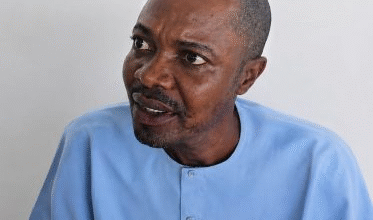
The Minister of Finance and Coordinating Minister of the Economy, Taiwo Oyedele, has urged state governments to reduce their dependence on federal allocations and build stronger internally generated revenue systems capable of supporting long-term development.
Oyedele said Nigeria’s current revenue structure must evolve from one largely sustained by allocations to a system driven by production, private investment, job creation and stronger fiscal management.
The minister spoke on Wednesday in Owerri, Imo State, at the 2026 National Council on Finance and Economic Development Retreat, themed, “Strengthening Fiscal Federalism for Equity, Sustainable Development and Economic Resilience in a Volatile Global Economy.”
He argued that the increase in funds available for distribution to the three tiers of government should not be mistaken for a guarantee of economic development.
Oyedele noted that monthly Federation Account allocations, which previously averaged between N300bn and N600bn before 2023, had risen above N2tn following major economic reforms.
He cited the June 2026 distribution, when the Federation Account Allocation Committee shared N2.8tn among the Federal Government, states and local governments.
“Recent economic reforms, including the removal of fuel subsidy and the unification of the foreign exchange market, have significantly increased revenues available for distribution through the Federation Account,” Oyedele said.
However, he stressed that the increased revenue must ultimately reflect in better infrastructure, stronger human capital, improved productivity and quality public services.
“Nigeria must move from an allocation-dependent economy to one driven by production, investment and job creation,” he said.
The minister urged state governments to expand their tax and non-tax revenue bases, attract private investment and develop sectors capable of generating employment and sustainable economic activity.
He also warned against reckless borrowing, calling on governments to ensure that every liability undertaken has a realistic repayment strategy and contributes to measurable development.
Oyedele further called for greater transparency and accountability in public finance, urging participants at the retreat to approach fiscal federalism as an evolving national issue rather than a matter of entrenched positions.
He said discussions on revenue allocation and derivation should reflect Nigeria’s changing economic circumstances and promote fairness among the different tiers of government.
Representing Imo State Governor Hope Uzodimma, Deputy Governor Chinyere Ekomaru said states could no longer afford to depend excessively on oil revenue or federal transfers.
She said Imo had begun strengthening its revenue collection system through digitisation and measures aimed at blocking leakages, while also investing in agriculture, tourism, digital technology, power, education, small businesses and infrastructure.
Ekomaru said the investments were part of the state government’s strategy to expand economic opportunities and create jobs for its growing population, particularly young people.
She urged participants to use the retreat to develop practical reforms that would give states greater fiscal capacity while ensuring responsible management of public resources.
Earlier, the Permanent Secretary, Special Duties, Federal Ministry of Finance, Mohammed Sanusi, described the retreat as timely, particularly as the country implements reforms aimed at improving economic stability and supporting sustainable growth.
The meeting brought together senior officials and finance policymakers, including the Chairman of the Revenue Mobilisation, Allocation and Fiscal Commission, Mohammed Shehu; Accountant-General of the Federation, Shamsudeen Ogunjimi; Chairman of the Forum of State Commissioners for Finance, Akintunde Oyebode; and Executive Chairman of the Nigeria Revenue Service, Zacch Adedeji.