Party management in Nigeria has been a disaster – INEC Commissioner, Igini

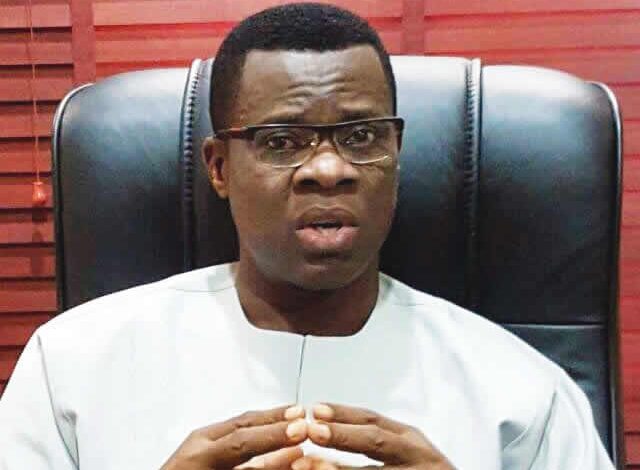
The Independent National Electoral Resident Commissioner in Akwa Ibom State, Mr. Mike Igini, speaks on the controversial electronic transmission of results, failure of political parties to maintain internal democracy, and the forthcoming governorship election in Anambra State, among others, in this interview with Mudiaga Affe
Recently, the National Assembly claimed that electronic transmission of results will not be feasible in the country due to poor network coverage. Is that the end of the road for INEC’s aspiration on the matter?
As a commission, the National Commissioner and spokesperson, Festus Okoye had engaged extensively with details and specifics on this matter with unequivocal and firm assurances to Nigerians that the commission, guided by the constitution and extant laws will safeguard the sanctity of every polling unit result across the country, despite the controversies over whether or not election results should be transmitted.
As a commissioner who has been in the system since 2010 and has participated actively in the conduct of three general elections and several elections in-between general election, l call for the understanding of all critical stakeholders on this issue, and my intervention here with you is to provide additional background information to fill the gaps in the ongoing conversation on this subject matter.
Some of us decided to tarry a while as part of the umpire entity to allow the dust of partisanship to settle, given the dimension this issue of transmission of election results has assumed among politicians along party lines. What many Nigerians do not know is the fact that INEC since the return of the country to civilian democratic rule in 1999 starting with the late Justice Ephraim Akpata as the Chairman of the commission up to the current leadership of Prof. Mahmood Yakubu has been on a consistent trajectory of innovation to give meaning and purpose to the ballot as the best means of expression of the will of a people in a democracy.
On record, you find that every leader of the commission introduced one form of innovation or the other that subsequent leadership built upon in getting to where we are today. Thus, anything done to halt this gradual process of revolutionising the electoral process or completing all the stages of the Electoral Voting System otherwise called EVS that Justice Akpata started, will not be in our collective interest in our quest for electoral accountability.
Are you invariably saying that the Electronic Voting System project started in 1999?
Yes, it started 22 years ago, the late Justice Ephraim Akpata of the Supreme Court was the first chairman who conceived of and awarded the first contract for the installation and transmission of data via V-Sat. But unfortunately, he died before commissioning it. Dr. Abel Guobadia, who succeeded him continued with the vision and created the ICT section, first as a unit under the chairman’s office and then as a full-fledged department with its purpose-built office and recruited almost 90 per cent of the staff across the states, including the current Director of ICT, Chidi Nwafor, and many others who have retired. His leadership also introduced the geo-mapping of polling units using GPS as well as the first attempts at biometric capture of voters using OMR forms and scanning of biometrics of registered voters.
Under Prof. Maurice lwu, he expanded communication and installed the V-Sat in the local councils across the country for use towards the 2007 election and also tried collation and transmission of results from LGAs via SMS. But the political elite conspired to ensure that these facilities that were procured with billions were not used. However, the challenge has been the credibility of the polling units result, whether they are the same results at the time of SMS transmission at the LGAs. By the time of the leadership of Prof. Attahiru Jega that l was part of, he built on what he met by raising the bar, identified the actual location of polling units, compiled the most successful biometric register that no longer contains names of foreigners like Mike Tyson with DDC machine assigned to each polling unit.
He also introduced the permanent voter cards called PVCs as well as the Smart Card Reader for PVCs. Under Prof. Jega, the commission successfully piloted the transmission of polling units’ results from the ward level in the isolated 2012 Governorship election in Cross River State when l was the Resident Electoral Commissioner. The collation process of aggregated polling unit results from wards was real-time and we all observed the process with great excitement for the future.
Again, like the issue raised concerning the credibility of the polling unit result transmitted from LGAs under Prof. Iwu, we also had that issue of credibility of the polling results to be transmitted from the ward, whether they were still in the original form as declared at polling units or on the way to the ward collation centres they been tampered with or altered? That had been the fundamental stage of the EVS that the current leadership has addressed.
In what areas has INEC improved under the current leadership of Prof. Mahmood Yakubu?
The current leadership of the commission under Prof. Yakubu has successfully addressed it by going directly to the polling units where voters cast the ballots instead of LGAs or wards as previously piloted by his predecessors. Polling units where voters cast ballots and counted results that are declared openly are now the points where original results polling units’ results are domiciled or stored in the cloud through our portal, real-time and visible to all collation officers given codes and members of the public. Form EC8A series of polling units are now scanned stored and domiciled as cloud data following our election operation manuals and nobody has issues with that given that it has not put any party at a disadvantage, and this is how it should according to the law that all election results at polling units must be declared and published at the polling unit, and every political party agents and observers should be able to observe the published polling unit result.
All these initiatives and innovations have been piloted successfully through several off-season elections like the recent Edo and Ondo governorship elections. This is what you people call transmission in the general parlance that has generated so much furore and bitterness in the country in the last few weeks. The word transmission seems to frighten people and they seem to have a wrong notion of one kind of continuous electronic transmission process that is susceptible to hacking. The results of polling units are simply domiciled in the cloud as data after publishing by Electoral law, such that as we speak today, Edo and Ondo governorship polling unit results in forms EC8A can be accessed right now through the cloud. All these innovations are without prejudice to the step-by-step manual process of collating the result as required by the Electoral Act.
What do you think made the National Assembly to withdraw its earlier invite to INEC during the debate and what is your take on the issue of lack of network coverage across Nigeria?
As to why the commission was not invited to address the Senate, l cannot speak or speculate on why the reported invitation was withdrawn. But on the issue of capacity, the commission spokesperson had dealt with it extensively with specific details from joint assessment and report of both the commission and NCC showing that we have the capacity as demonstrated with several off-season elections that l have mentioned previously.
l take the view that those who have raised the issue of network coverage should not just be dismissed but should be seen as people who have a shared commitment with the commission and Nigerians who crave domiciling results in the cloud called transmission. We all appear to be of the view that every polling result must not only be counted but must be taken into account by whatever means of giving effect to it.
If that is the case, and there are possible places in the country where, for instance, you cannot receive bank alerts, and there are polling units located in such places, what we should do is to identify, map out and extend the network coverage to those places which can be done this year and even before 2023 which is far away without subjecting INEC’s autonomy to determine how elections are conducted to other bodies or agencies.
What is your assessment of party management as it relates to the conduct of political party primaries since 1999 till date?
After 22 years of democracy, the unhappy truth is that political party management since 1999 has been an unmitigated disaster and very disappointing, having not made progress at all in terms of proper party management and organisation.
If the truth must be told, we have not made progress but regressed badly over the years to a ridiculous point now that despite the commission’s proactive policy of giving political parties sufficient notice for the conduct of party primaries, political parties are bogged down by internal party management and are still unable to conduct rancour-free party primaries.
We have climbed down to situations where actual candidates for elections are no longer known by voters before the day of the election but decided by courts after such elections. Just recall how a political party and candidates lost electoral success after the election due to issues associated with primaries.
Recall what happened in the Bayelsa State governorship election, lmo senatorial bye-election, and several other elections in recent times that disputes over candidates of parties were not resolved before the election, yet people voted.
Is that a measure of progress in political party management? The political elite have failed to realise that the health and sanity of democracy depend on political parties that are the essential organs of the democratic praxis without which modern democracy is inconceivable.
One of the most important tasks of political parties in a democracy is the selection and presentation of candidates for election. Unfortunately, this is where our political parties have failed so far in meeting the expectation of their members and the general public when it comes to internal party management and the conduct of primaries.
But parties are meant to have ideologies, are these ideologies displayed by the political parties we have in Nigeria?
By its formation, a political party should be based on shared ideas of a people on how society should be governed. It is these ideas that should be encapsulated into a manifesto that should be presented to the electorate as a social contract based on which they seek power and by which they are known and identified with as an ideology. If voted into office, these manifestos should ordinarily form the fulcrum of policies based on which performance is evaluated.
Unfortunately, party politics is no longer based on ideology. People now equate public office and exercise of power with an ideology that is not. Our politics lacks intellectualism. Politics is now a dancing arena of all manner of persons who have no business being in politics, many of whom have little or no philosophical insight into what leadership and service are all about in the governance of public affairs. Politics has been diminished and its roles in the ecosystem of governance and consequently of governance systems undermined with the involvement of individuals who are morally and ethically challenged.
Otherwise, political parties are supposed to be platforms generally for the mobilisation and integration of citizens; the articulation and aggregation of interests; the formulation of public policy; the recruitment of political leaders; and the organisation of the legislature and government.
But since 1999, we are far away from maturity in political party management in Nigeria. I do not know why we are in the race to the bottom in the art of political management and other spheres of national life. The major challenge has been that whereas politicians want to regulate everything and everyone else, political parties and political practitioners are unwilling to subject themselves to effective regulation. Hence, governance of political parties by external or internal regulation has suffered many challenges, with people questioning their legitimacy and contesting their claims, which has sprouted several types of desirable and undesirable non-state-actor activities.
Why is Nigeria different?
It is because of who we are as a people on the race to the bottom instead of race to the top. What makes a difference for ensuring consistent incredible and acceptable outcomes in countries where things are more controlled and controllable, is the willingness of political practitioners to accept a common framework for regulation.
Unfortunately, in the Nigerian political party landscape, the tendencies often seem to be the preference for chaos and shambolic outcomes rather than a willingness to conform to a generally accepted ordered framework.
As a result, party management and electoral outcome both internal and inter-party have always been for groups, individuals, or tendencies within political parties to dominate or gain undue advantages over their counterparts.
To give a historical perspective, this year 2021 makes it 60 years since the first electoral guidelines with indigenous input of Nigerians was first introduced in Nigeria in 1961.
By 1962, changes had to be made because the old guideline still had oppressive features that were created by the colonialists to make electoral outcomes controllable by them, such as the requirement to pay a heavy deposit before an aggrieved party could petition the outcome of an election, just like the huge fees imposed by political parties today that aspirant must pay to procure expression of interest form to contest an election.
By 1964, much of these exclusionary and disenfranchising features were removed. Still, politicians found ways of trying to gain electoral advantages over those competing with them, either within their parties or outside their parties by toying with regional or national data. The result was the unhealthy electoral competition within and between parties that led to much social strife.
If our political elite care for the country and its people, they should work towards stability rather than the disorder which outcome is unpredictable. Political parties must develop frameworks for managing the outcome of party congresses and primaries by perhaps creating and expanding participatory roles for those who did not win within parties during the primary election and party leadership contestations.
Unfortunately, our political landscape is more about leadership contestation, than policies and guiding frameworks. After the general elections, we do not put the lessons learnt from both party primary election crisis and those of general elections into codes of practices for political activity improvements in subsequent elections. This is the tragedy of political party management in our country.
How was INEC able to perform its role in Akwa Ibom State following complaints of irregularities by some chieftains of the APC in the just concluded ward congress?
Party congresses and primaries are essentially internal party matters guided by the constitution of the land as well as the constitution of the respective political parties. The job of the commission under the constitution is to regulate and monitor the conduct of these activities along with those rules and that was what INEC had been doing when it developed an objective template and framework for monitoring congresses, primaries, and conventions of political parties by the staff of the commission.
Concerning the ward congress here in this state, they complied fully with the notices and the documentation required of them by the commission concerning venues, especially. The trick by political parties in the past was that venues will always change a few hours to the exercise without notification to INEC staff that will monitor the exercise and even notice of changes to their party members who are aspirants.
There was a change of approach by the state executive and the value of the due process is that if everyone follows the law, issues guidelines, applies them, and abide by them in all situations, things are often better. Unfortunately, some people within political parties, do not like to abide by such rules, particularly when they realise that conforming with the rules will not allow them to win by all means possible.
Ahead of the November 6 governorship election in Anambra, there have been pockets of controversies, what are your views on the evolving issues?
What is happening in Anambra State is emblematic of the overall picture of the state of political party management in the country. If after two decades of return to civilian multi-party democracy, we are still having this unacceptable and very shameful inability to manage political parties, when are we going to stabilize the polity for the sustenance of our democracy?
Let me say this, people get admission to study courses in the university for just four years or at most eight years for Medicine and they graduate to practice their profession and operate on human beings that are complex successfully.
But here we are, after over 22 years, our political elite have not been able to manage political parties and are unstable in their ways. Regrettably, my constituency, the judiciary to which all arms of government no matter how powerful, be they persons and agencies must bow has failed to stand up mighty in defence of the rule of law and democracy as expected, particularly the Supreme Court that should be a policy court.
If democracy will survive, it will depend on the judiciary and conversely, if democracy will die in Nigeria, it will die because of the unprofessional and unethical role of some judicial officers and lawyers. l feel ashamed and embarrassed as a lawyer over the unprofessional conduct of some of my colleagues, both at the bar and bench not only over the current Anambra Judicial anarchy but overtime when it comes to political matters.
Let me be clear here, we have many good judges who are exceptional and shining examples in their professional conduct as judges but a number of them are giving our profession a terrible image and should be shown the exit gate from this noble profession. Let me say this, our profession is not just an occupation to earn a living but it has a special relationship with society, a duty to protect and preserve the core values of society.
Unfortunately, we are not doing so and have not lived up to our professional calling and duty to our society. It is hard to imagine that a party primary that took place in Anambra, politicians in their knack for forum shopping aided by lawyers, instituted legal action in almost all the courts in the six geopolitical zones of the country.
Regrettably, judges in these courts of coordinate jurisdiction that in the first place have no legal or territorial jurisdiction granted all manner of orders on the commission, thereby creating tension and uncertainty until the intervention of the Appeal court Kano Division.
As a lawyer, would you say the judiciary is truly living up to its role as the pillar for the sustenance of democracy in Nigeria?
The situation is not entirely bad, so it is a yes in some cases and absolute no in some matters that the judiciary failed to leave up to expectation when it ought to have stood tall and mighty in defence of democracy and the rule of law.
Its intervention in several instances where aggrieved forces have maintained destabilizing and polarising claims and counter-claims brought about sanity and sustained order in our political system.
For example, the strength and pillar of the American democracy is its judiciary because hardly would an issue arise bordering on the American democratic system that it’s not determined timeously and strictly and not liberally according to the law particularly at the US Supreme Court that acts as both a court of justice and as a policy court.
We are all witnesses to the kind of judgement that the Supreme Court delivered in the 2007 most terrible presidential election that ought to have been annulled. How can the apex court of a country by merely casting vote among themselves uphold electoral outcome that its ballot papers were not serialized as required by law? In fact, as of the time of the said April 14, 2007 election, many of the ballot papers were still in South Africa and the election was conducted with unserialised ballot papers.
Do you think INEC will transmit election results in the Anambra election electronically?
The commission will give a full account of polling units by polling unit result of all elections by storing or domiciling the results in the cloud for the security of the sanctity of those results including the forthcoming Anambra election as it has done in several off-season elections, including those of Edo and Ondo election to the satisfaction of the people of those constituencies, states, and all other stakeholders.
Processes and procedures for securing polling units results all through the various collation stages are operational matters that details should be left to the regulator to determine from time to time given the ever-improving developments in the area of ICT.
We have to be careful the way we are going about issues that border on the independence of the Election Management Body so that we don’t unwittingly undermine its neutrality with the involvement of those that elections are meant to vertically regulate making certain determinations. That is the whole canon of section 160 of the constitution which says, “In the case of INEC, its powers to make rules or otherwise regulate its procedure shall not be subject to the approval of any authority or the president”
So you can see that the constitution does not want those to be regulated by the regulator and manager of election which is INEC to be arbiters on matters that are meant to regulate them. We can share ideas but final determination should be the prerogative of the commission according to the constitution because elections are the hallmark of democratic authorization.
As l have said previously, we should not dismiss with a wave of hand those who have raised concerns regarding network coverage and that is why l have provided additional historical information background of the gradual implementation of the EVS to allay these fears about technical gaps on how to transmit digital text messages of who won elections and their scores in each polling unit.
What we are doing is basically to domicile polling unit result that the law mandates us to publish at the polling unit to the cloud using the Z-PAD. To be clear again, the law mandates INEC to publish election results at polling units as declared in the form EC60, to ensure further integrity of that result. And finally for security, the commission stores polling unit as cloud data using the Z-Pad, where there is no reception after it has been sent as soon as you get to the network area it will be in the cloud.
This is what is currently regarded as a transmission that has generated so much tension and needless name-calling. Both chambers of the National Assembly should revisit this matter after the resumption and take it from the point of view of detailed information that the commission will provide for the good of the system.