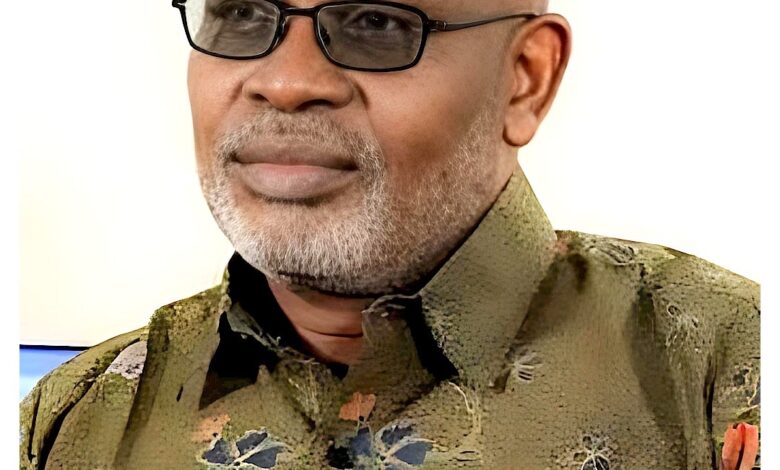
By Rekpene Bassey
The pulpit has become more than a platform for spiritual exhortation in contemporary Nigeria. It is, increasingly, becoming a theatre of political performance.
Throughout political cycles, some self-styled prophets and charismatic clerics predict electoral outcomes, frame national crises in apocalyptic terms, and position themselves as intermediaries between heaven and the political class. The result is a fraught convergence of divine rhetoric and democratic choice.
Nigeria is not unique in wrestling with the interplay of religion and power. From the Hebrew prophets to medieval bishops who crowned kings, the sacred and the secular have long shared an uneasy proximity.
Yet the Nigerian case is distinctive for the scale and intensity of prophetic intervention in partisan politics; often amplified by television, social media, and megachurch infrastructures.
In ancient Israel, figures such as Prophets Elijah, Nathan, Jeremiah and Amos confronted Kings with moral rebuke, insisting that justice, not ritual performance, was the measure of legitimacy.
Their authority lay in speaking against power, not in marketing access to it. They were critics of the throne, not its consultants.
Philosophy offers us a cautionary lens. Demagogues might manipulate belief for political ascendancy. When charisma eclipses reason, the state could drift toward governance by appetite rather than deliberation.
In modern Nigeria, the prophetic voice sometimes risks becoming the emotional accelerant of partisan passions. Latin political wisdom distilled the principle succinctly: vox populi, vox Dei – the voice of the people is the voice of God.
But democracy inverts the prophetic hierarchy; sovereignty resides not in revelation but in representation. When, for instance, clerics preemptively declare winners before ballots are cast, they risk supplanting civic consent with spiritual fiat.
Prominent clerics have shaped public discourse in striking ways. Enoch Adeboye, leader of the Redeemed Christian Church of God, for example, has periodically issued national prophecies that ripple across political spaces.
The late T.B. Joshua, too, was known for highly publicised predictions, some of which touched on elections beyond Nigeria’s borders. Whether accurate or not, such declarations often become political signals interpreted by millions.
In the 2023 electoral cycle, several high-profile clerics publicly aligned with candidates or predicted outcomes, contributing to a charged atmosphere in which spiritual endorsement was treated as a strategic asset. It even began with the campaigns, when some alleged fake Bishops were hired to endorse one of the political parties and its presidential candidate.
Campaigns courted altars as vigorously as they courted constituencies. The prophetic word became, in effect, a campaign resource.
This dynamic has produced what might be termed a “prophetic economy.” A marketplace in which spiritual legitimacy is exchanged for political proximity. Politicians seek divine imprimatur; prophets gain influence, visibility, and often material patronage.
The relationship is less prophetic than transactional, less about conscience than calculus. The maxim quid pro quo captures the essence of the exchange. Endorsement for access. Prayer for patronage. Visibility for validation.
In this climate, the pulpit risks morphing into a consultancy suite; strategic messaging wrapped in sacred language.
The implications are not merely theological; they are institutional. When electoral victory is framed as a divine mandate, dissent becomes sacrilege. Opponents are not just rivals but adversaries of providence.
Such rhetoric corrodes the pluralist foundation of a large country composed of Christians, Muslims, and adherents of traditional faiths.
Nigeria’s constitutional architecture envisions a secular state. One that neither establishes religion nor suppresses it. The principle is not hostility to faith but neutrality. Governance must answer to citizens collectively, not to prophetic selectivity.
There is also the psychological effect. If citizens are persuaded that political outcomes are predetermined by prophecy, civic agency diminishes. Fatalism replaces participation.
For example, why organise campaign rallies, persuade, or vote if the heavens have already spoken? Democracy withers when citizens abdicate responsibility in favour of supernatural certainty.
Moreover, prophetic pronouncements can become self-fulfilling. A widely broadcast prediction may influence swing voters or intimidate local actors who fear opposing a “divinely chosen” position. In volatile regions, such declarations can heighten tension, especially where electoral competition already intersects with ethnic and religious cleavages.
The digital age magnifies the phenomenon. Sermons are clipped, shared, and weaponised on social media platforms. A single prophecy can trend nationwide within hours, shaping narratives long before electoral commissions release official results. Information arena amplifies charisma faster than institutions can respond.
The need for restraint, therefore, cannot be too accentuated. Cicero once argued that the stability of the republic depends on civic virtue, rather than spectacle. When spectacle dominates, national norms erode. The Nigerian state, still consolidating democratic habits, cannot afford spectacle as a substitute for substance.
None of this is to deny the legitimate moral role of religion in public life. Faith communities have historically mobilised against injustice, corruption, and authoritarianism. During military rule in Nigeria and elsewhere, many clerics stood courageously for human rights. The issue is not participation but partisanship masquerading as prophecy.
The biblical injunction, “Render unto Caesar what is Caesar’s, and unto God what is God’s,” recorded in the Gospel according to our Lord Jesus Christ, captures the delicate balance. Spiritual authority and political authority occupy distinct domains, even when they intersect in the conscience of believers.
The way forward. Practical reforms are available. Media literacy initiatives can equip citizens to critically interrogate claims, distinguishing spiritual encouragement from political manipulation.
Civil society organisations, the National Orientation Agency and universities can host forums that unpack the ethics of clerical engagement in partisan contests.
Religious bodies themselves can adopt voluntary codes of conduct on political matters, including elections that discourage politically motivated prophecies, explicit candidate endorsements, or premature declarations of victory. Such self-regulation preserves moral credibility for the pulpits while respecting democratic processes.
Electoral institutions and the political class must also assert transparency and efficiency. When their activities and/or results are credible and promptly communicated, there is less vacuum for prophetic speculation to fill.
Institutional strength is the antidote to charismatic overreach. Ultimately, democracy is an exercise in collective reasoning. As the renowned philosopher Aristotle observed, the polis exists not merely for life but for the good life. It is called udaimonia. Flourishing depends on laws, deliberation, and accountability, not on unverifiable revelations.
Nigeria’s prophets may continue to command vast followings. Charisma is not easily legislated away. But we must not forget to remember a simpler maxim: res publica res populi – the public matter belongs to the people. Political affairs are decided not by prophecy but by participation. In reaffirming that principle, Nigeria safeguards both its faith and its freedom.
*Rekpene Bassey is the President of the African Council on Narcotics and a Drug Prevention and Security Specialist.