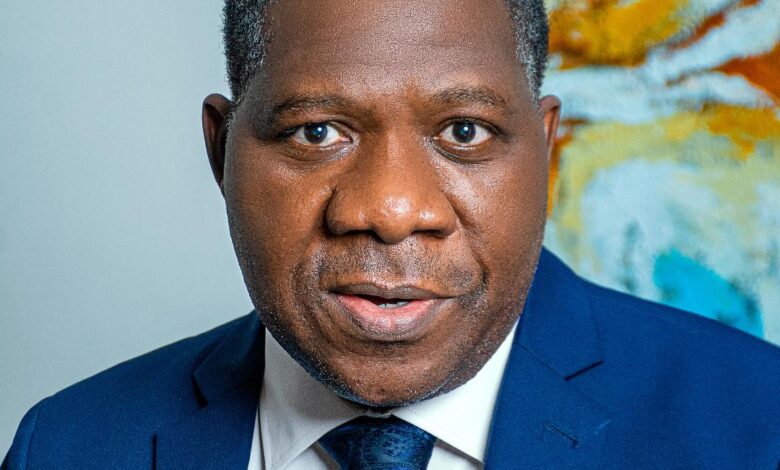
By Opeyemi Bamidele
The Electoral Act, 2026, has finally come into force. Its enactment confirms the demise of the old order that never perfectly met our aspirations and proclaims the birth of an entirely new order that now promises the future we all desire.
The National Assembly enacted the Act purely in the collective interest of the citizenry to deepen credibility, promote transparency, and boost the integrity of our electoral process. Unlike before, the process, which culminated in its passage alone, took the parliament two years of rigorous work and broader engagement.
Could you clarify why the process took so long? First, the process was inclusive and not unilateral. It was painstakingly midwifed to engage key stakeholders broadly, including civil society organisations (CSOs), development partners, the Independent National Electoral Commission (INEC), and the Office of the Attorney-General of the Federation (OAGF).
Second, it entailed building confidence across all strata of our fatherland so that the parliament would not work at cross-purposes with the stakeholders.
At the end of it all, the two-year process delivered us an entirely new electoral governance framework that will henceforth regulate how we manage our political parties, how we choose our political leaders, and how we govern our nation, in line with democratic tenets that reinforce public confidence.
The process did not scale through easily. Clause 60(3) of the Electoral Bill, which governs the transmission of election results from polling units, sharply sparked disagreement among lawmakers in both chambers.
But the clause was subjected to clause-by-clause voting, a globally recognised mechanism for dispute resolution among democratic legislatures. In the Senate, at least 70 lawmakers took part in the consideration of the clause.
Of this figure, no fewer than 55 senators approved the adoption of electronic transmission of election results with a proviso, while 15 disapproved it. This represents 78.57% approval and is consistent with the core tenets and values that govern democracies globally.
Does this suggest the parliament disapproved the clause? We did not reject it, but I will address what we did later in this piece.
Specifically, the way we managed the process, addressed dissenting voices, and mainstreamed inclusiveness is a testament to the resilience of our democracy. How is it a testament? It will be clearer before I round off this piece.
What then can we learn from the enactment of the Electoral Act, 2026? Or what does the new regime portend for the country’s political environment? The new regime is a major shift from our previous electoral governance frameworks. This is evident in the preponderance of key reforms embedded in the new regime.
Also, this provision perfectly aligns with Section 153(1) and Third Schedule, Item F, paragraph 14 of the 1999 Constitution, which authorises the INEC to exercise its powers independently and without undue interference from any quarter.
Unlike the 2022 Electoral Act, the new regime stipulates that the election funds “due to the INEC for any general election shall be released not later than 6 months before the next general election…” It is now obligatory, not optional, as under the old regime.
The second is explicit in Section 47(2) of the Electoral Act, 2026. The section provides for the compulsory use of the Bimodal Voter Accreditation System (BVAS) or any other technological device, mandatory “to verify, confirm or authenticate the particulars of the intending voter in the manner prescribed by the INEC”.
Wherever such a device fails to function and a fresh one is not deployed, Section 47(3) stipulates that the election of the polling units “shall be cancelled and another election shall be scheduled within 24 hours if the INEC is satisfied that the result of the election in that polling unit will substantially affect the final result…”
The third decisively addresses the issue that often arises when female and male voters mingle in the queue. In some parts of the federation, culture frowns at such a practice. This factor has been one explanation for low voter turnout in some states, stemming from beliefs or cultural practices.
But Section 49 now authorises the presiding officers “to separate the queue of male voters from that of female counterparts” in areas where culture is dominant. Its essence is two-fold. First, it is in observance of a belief or cultural practice that prohibits the mingling of female and male voters. Second, it is a measure to boost broader participation in our electoral process.
Another takeaway relates to a mechanism introduced to deepen inclusiveness in our country’s electoral process. This mechanism is designed to support voters with visual impairments or other disabilities.
Under Section 54(1), the new regime authorises presiding officers to provide an environment that supports voters with such conditions in exercising their suffrage without let or hindrance. But the section further stipulates that no political party agent, candidate or party official “shall be permitted to accompany a voter into the voting compartment.”
Under Section 54(2), the Act equally seeks to protect the rights of vulnerable voters. The section directs the INEC to “take reasonable steps to ensure that persons with disabilities, special needs and vulnerable persons are assisted at the polling place by the provision of suitable means of communication, such as Braille, large embossed print, electronic devices, sign language interpretation, or off-site voting in appropriate cases.”
This provision further deepens inclusion in our country’s electoral governance framework and ends the vicious cycle of exclusion that has long prevailed in our political environment.
The fifth concerns how election results should be transmitted after voting concludes. This triggered a protracted debate that lasted four weeks. But a consensus was eventually reached in favour of Section 60(3) of the Electoral Act. The section now mandates the electronic transmission of polling unit results to the INEC Result Viewing Portal (IReV). It is consistent with the public demand that electronic transmission should be compulsory.
But the Act looks beyond mere electronic transmission. It accounts for an unforeseen situation that could be costly if not properly addressed. It anticipates communication failures that may occur before or during the voting process. We can create a mechanism to help us legally resolve any issues that may arise. In this instance, the presiding officers may revert to Form EC8A for result collation.
Section 60(6) provides a measure that can prevent presiding officers from contravening or frustrating the electronic transmission of election results. Its purpose is to prevent sabotage and to impose sanctions.
On this ground, the Act prescribes a six-month imprisonment, a fine of N500,000, or both, against presiding officers who frustrate the transmission of election results as required under the new legislation. This means the presiding officers will now be held accountable for failing to electronically transmit election results, especially when there is no justifiable reason not to do so.
Sixth, under Section 72(2), the Act spells out the requirements for the inauguration of any candidate whom the Court of Appeal or the Supreme Court has pronounced the winner after the determination of any election petition. The section stipulates that a certified true copy of the court order “shall be sufficient for the swearing-in of any candidate declared as the winner of an election by the court.”
In this instance, the new regime clarifies that the certified true copy of a court order can be used for this purpose only if the INEC fails, refuses, or neglects to issue the certificate of return. This is a shift from the previous practice that led to logjams or delays in enforcing the court order.
The seventh concerns access to election documents that may be requested by any political party, its candidates, or other interested parties. Under Section 74(1-2), the new legislation authorises the Resident Electoral Commissioner (REC) to release a certified true copy of such documents to any interested party or political party that requests them within 14 days after payment of a prescribed fee.
But if the REC fails to comply with this provision, Subsection 2 stipulates that the REC has already committed “an offence and is liable on conviction to imprisonment for a minimum term of two years without an option of fine.”
Eighth, Section 77 (1-5) of the 2026 Electoral Act provides for stringent measures that will henceforth govern and regulate the conduct of primaries and the process of organising party primaries, congresses or conventions from the ward to the national level.
As a result, this section requires each political party to maintain a digital register of its members, issue membership cards to each member, and submit that register to INEC 21 days before the party’s primaries, congresses, or conventions.
This provision governs how political parties manage their internal affairs and elect their candidates. Under Section 77 (6-7), the new regime states that a political party “shall not use any other register for party primaries, congresses and conventions than the register submitted to the INEC. A political party that fails to submit the membership register within the stipulated time shall not be eligible to field a candidate for that election.” These measures are indeed consequential restraint measures, which most stakeholders strongly believe will deepen internal democracy and democratise our electoral and political system.
The ninth concerns the models for electing candidates to elective offices. Section 84(2) outlines the models: direct primaries and consensus. Unlike the 2022 Electoral Act, the indirect model was removed from this provision on two grounds.
First, it is designed to reduce the need to pay off party delegates. Second, it aims to adopt a model that vests the power to elect party flag bearers in the party membership rather than in delegates, who constitute a minute fraction of party members.
Another takeaway is evident in the upward review of the campaign spending limit under Section 92(1-8) of the 2026 Electoral Act. The presidential campaign spending limit has been reviewed upward from ₦5 billion to ₦10 billion.
The spending limit for governorship campaign has been raised from ₦1 billion to ₦3 billion; senatorial campaign now from ₦100 million to ₦500 million; House of House of Representatives from ₦70 million to ₦250 million; House of Assembly from ₦30 million to ₦100 million; Area Council from ₦30 million to ₦60 million and the limit for councillorship campaign has raised from ₦5 million to ₦10 million. This review, to a large extent, now reflects the country’s current socio-economic realities.
Eleventh, under Section 93(3-4), the new legislation introduced an accountability mechanism aimed at demonetising political activities in the country and prescribing commensurate sanctions where breaches are established. The section mandates that each political party submit an audited return of its election expenses to the INEC within 6 months after the election.
It also requires that the audited return “shall be signed by the political party’s auditors and countersigned by the Chairman of the party …” As a measure to enforce compliance, Section 93 (7) prescribes a fine of ₦10 million against a political party that failed to submit an accurate audited return within the stipulated period.
Lastly, the new regime enshrined measures to curb the ugly trends of vote-buying, impersonation, and result manipulation during the general election. Under 125(1-2), the new regime stipulates a two-year imprisonment for such offences. But such cases must be tried, prosecuted, and established before penalties are awarded.
It also sets out fines ranging from ₦500,000 to ₦2 million, or both, when the court establishes prima facie cases against suspects of such offences. These measures are intended to discourage both buyers and sellers of voters from engaging in unethical practices that compromise the integrity of our electoral process and aid the election of rogue candidates seeking to seize political power through the back door.
From all indications, the Electoral Act, 2026, is a product of collective responsibility, involving nearly all interests across the federation. Each of these takes attests to far-reaching reforms that have been mainstreamed into our new electoral governance framework. This leads us to two deductions about this intervention.
The amendment is not limited to Section 60(3), which prescribes how we transmit our election results. It also embraces many initiatives that will positively improve how we choose our leaders, manage our political parties, and govern our fatherland, purely in the spirit of democracy.
Senator Opeyemi Bamidele is the Leader of the Senate of the Federal Republic of Nigeria.