By Francis Ajuonuma
The Federal Government has mounted fresh pressure on telecommunications operators to urgently improve service delivery nationwide, declaring that Nigerians can no longer tolerate poor connectivity despite rising telecom costs.
Minister of Communications, Innovation and Digital Economy, Bosun Tijani, said operators, including MTN Nigeria, Airtel Nigeria, Globacom and T2, must immediately address recurring network failures affecting millions of subscribers nationwide.
“It is now the responsibility of telecom operators such as MTN Nigeria, Airtel Nigeria, Globacom, and T2 to take all necessary steps to resolve network challenges and deliver the level of service Nigerians expect,” Tijani said in a statement issued on Sunday.
The Minister said in a statement on Sunday that the administration inherited deep-rooted structural deficiencies in the telecom sector, blaming years of underinvestment in critical infrastructure for deteriorating service quality and widespread connectivity disruptions.
According to him, weak infrastructure capacity has continued to undermine efficient service delivery, leaving consumers frustrated by poor call quality, unstable internet access and frequent network outages.
Tijani disclosed that the government had already launched a combination of emergency and long-term interventions to overhaul Nigeria’s digital infrastructure and restore confidence in the sector.
As part of the long-term strategy, he said the Federal Government had secured funding support, led by the World Bank, under Project BRIDGE to drive nationwide fibre-optic expansion.
“We have secured funding, led by the World Bank, and established the framework for a special purpose vehicle with Project BRIDGE, to deliver nationwide open access fibre infrastructure,” he stated.
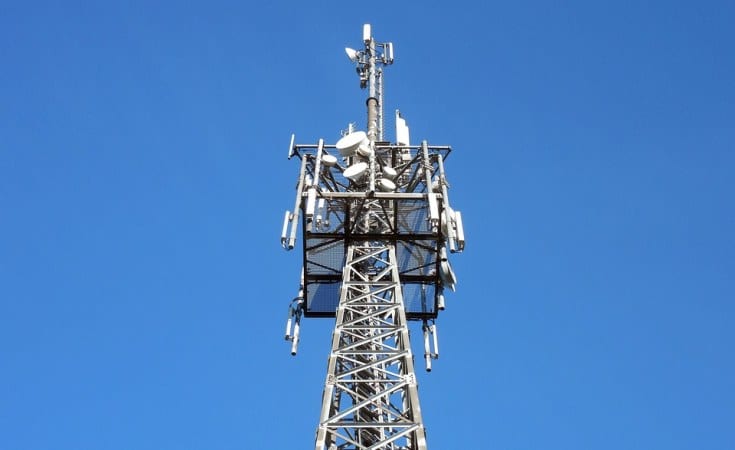
The minister further announced that fresh fibre deployment projects and additional telecom tower installations under NUCAP would commence before the end of the year, alongside measures to strengthen satellite connectivity nationwide.
He said the planned investments are expected to bridge critical infrastructure gaps within the next two to five years and significantly improve internet penetration, network stability and digital access across the country.
Explaining the administration’s target, Tijani said the government wants Nigerians to enjoy stable, affordable high-speed internet connectivity in homes, offices, and business premises without relying solely on unreliable mobile networks.
“A small business owner should be able to access reliable, high-speed fibre internet directly at their home or shop, not rely solely on dongles or unstable mobile connections,” he said.
The Minister also listed recent reforms introduced to stabilise the industry, including tariff adjustments, tax harmonisation policies, designation of telecom infrastructure as critical national infrastructure and broader economic reforms designed to improve investor confidence.
According to him, the reforms have created a more transparent and commercially sustainable environment for telecom operators, many of whom have now returned to profitability.
“They are now operating in a more stable, transparent, and market-driven environment and have returned to profitability,” Tijani added.
He stressed that operators now have both the financial strength and the enabling environment to improve service quality for subscribers significantly.
Tijani disclosed that the Nigerian Communications Commission had been empowered to independently monitor operators, enforce regulatory compliance and sanction firms that fail to meet service standards.
The minister warned that government oversight would increasingly rely on regulatory reports and consumer complaints to hold telecom companies accountable in the coming months.
“Where operators deliver, it will be recognised, and where they do not, the Commission is expected to take appropriate regulatory action,” he warned.
Tijani maintained that Nigerians deserve telecom services that reflect the value of what they pay for, expressing confidence that noticeable improvements in network coverage, call quality, and internet services would soon emerge nationwide.
“Nigerians should begin to see improvements in Quality of Service and get the value that they paid for now, and in the future. And we will ensure that the sector delivers,” he added.