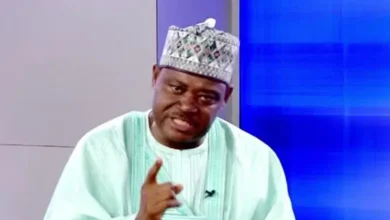
Presidential spokesman, Bayo Onanuga, has defended President Bola Tinubu’s recent exercise of the prerogative of mercy, which sparked outrage over the inclusion of convicted drug barons and murderers. Speaking on Arise Television’s Prime-Time programme, Onanuga explained that the President acted after consulting the Council of State, stressing that pardons are granted only to reformed and remorseful offenders. David Lawani monitored the interview
Isn’t the review and reversal an admission that the initial decision was fraudulent? What does this say about the President’s decision-making process?
Well, what Nigerians ought to have seen by now is that this President is not afraid to reverse himself if he feels he has made an error. He has been consistent about that. He is a human being who can make mistakes, and he listens to the public. He’s a President who wakes up in the morning, reads the newspapers, watches television to know what is going on, and tries to understand what the people are saying. So, I don’t see it as a matter of weakness. It’s a matter of strength—to do something, reassess it, and then make adjustments. That’s exactly what he has done in this case of pardon and clemency. When people talk about public outrage, they refer mainly to the case of Maryam Sanda, whom the court found guilty and sentenced to death for killing her husband. Most of the criticisms came from that case. As for those claiming he freed drug convicts, even the second list still contained some drug offenders who were granted clemency—not pardon. Maryam too was granted clemency, not a pardon.
In other words, their sentences were reduced?
Yes. She was sentenced to death, and the President commuted it to 12 years imprisonment.
What about the drug convicts?
Some of their sentences were reduced, not pardoned. The sentences were commuted. The President is a compassionate person, and his decisions often reflect his philosophy and empathy toward others. Take Maryam Sanda’s case for example. The court found her guilty of killing her husband—a young man at that time. But her situation was complicated because she has two children, I think two daughters. Some scholars of Islamic jurisprudence have argued that the court should have taken her children into account—who would care for them since their father is gone and their mother is in prison?
But she must have been aware of the consequences. Why did she still do it?
It was a crime of passion, not premeditated murder. Anything can happen between a man and a woman in the heat of an argument. Our President is a man moved by compassion, and that is what influenced his decision.
Don’t you think this could be a flip-flop that undermines the President’s credibility?
No, there’s no flip-flop in what he has done. He is a man who is not afraid to reassess his actions, make corrections, and move forward.
It appears the President acted in reaction to media pressure rather than thoughtful reconsideration.
If you read the letter carefully, you’ll see that even the Ministry of Justice was not in charge of the prerogative of mercy, it was another department. What the President did in this review was to transfer the secretariat of the prerogative of mercy to the Ministry of Justice for better oversight. The members of the committee that made the recommendations are respected Nigerians. They would not have made such recommendations without due consideration. Many of those granted clemency are young people—some in their twenties, others teenagers—convicted for illegal mining and similar offences. Should we waste their lives?
What was the President thinking when he pardoned 70 individuals convicted of drug dealing, fraud, and violent crimes, including a former House of Representatives member convicted of receiving $500,000 bribe?
You’re referring to Farouk Lawan. He has served his sentence and is now a free man. The President merely granted him pardon to enable him start afresh. We can’t continue to punish people indefinitely. The man has served his time, lost everything, and shown remorse. The state has a duty to rehabilitate such people.
But critics say this sends the wrong message—that political correctness can earn you a presidential pardon.
That’s not the message. Lawan had already served his sentence. Are we now going to accuse the President of doing the same thing as the colonialists did when they convicted Herbert Macaulay for embezzlement over a century ago?
But that’s a different scenario entirely.
Or would you accuse him of pardoning Ken Saro-Wiwa and the Ogoni Eight? Society must have the heart to forgive. We can’t carry grudges forever. Those granted clemency have shown remorse and a willingness to change.
What criteria were used in compiling the pardon list, especially in the case of Maryam Sanda?
Her husband’s biological father, Ilyasu Bello, was among those who pleaded for her release. He argued that keeping her in prison also punishes her children, who have already lost their father. In some jurisdictions, the penalty for similar offences is a jail term rather than death. The same crime attracts different punishments globally.
From a moral and political standpoint, how can the President justify granting clemency to drug offenders in a country battling criminals and bandits who depend on drugs to commit crimes?
He didn’t pardon them. He granted clemency to some who had already served 10 or 12 years in prison.
Doesn’t that still send the wrong message?
Not necessarily. If someone has served the bulk of their sentence and shown remorse, why keep them imprisoned? Around the world, punishment standards differ widely. The idea of prison is to reform, not to destroy.
Does the right to grant clemency not amount to overriding judicial decisions, especially in reducing a death sentence to a term imprisonment?
I’m not a lawyer, but globally, presidents have the right to exercise mercy. It’s not a violation—it’s part of the justice system.
But doesn’t that undermine the doctrine of separation of powers?
No. The same constitution empowers the President to exercise the prerogative of mercy after the judiciary has concluded its process. The executive keeps prisoners, not the judiciary. So, after judgment, the executive can act within its rights. Governors also exercise similar powers.
Shouldn’t the reviewed list have been resubmitted to the Council of State?
The President only needs to consult the Council of State—not to seek approval. Consultation is the key word.
Some lawyers now argue that Section 127 of the Constitution should be repealed, as it demoralizes law enforcement and undermines public trust in the justice system. What’s your reaction?
They can take their case to the National Assembly. The 1999 Constitution empowers the President to exercise prerogative of mercy, and until an amendment is made, that remains the law.
Are you doing anything to prevent the abuse of this prerogative?
If they feel it should be reviewed, let them approach the National Assembly. Constitutional evolution is continuous. If necessary, the provision can even be expunged entirely.
Are you satisfied with the President’s review process?
Yes. The President doesn’t act alone. The prerogative of mercy committee, made up of respected Nigerians, made the recommendations. He consulted the Council of State before the release. Following public reaction, he ordered a review and transferred the secretariat to the Ministry of Justice for better oversight. That’s a positive reform.
What lesson has the President learned from all this?
The President listens to public opinion. He admits his mistakes, makes amends, and moves on. That’s not weakness—it’s strength.
What prompted the President to change his military chiefs?
It was a routine change. The President is concerned about the handling of the security situation and wanted new energy. He told the new service chiefs they must end the 16-year insurgency that began in 2009.
Some reports linked the changes to an attempted coup. Is that true?
Those are mere rumours. Sometimes journalists report without asking, “Of what benefit is this story?” The military already issued a statement clarifying the matter. Unfortunately, some sections of the media spread sensational and unverified stories just to attract traffic.
But respected media like The Punch also reported that the NDDC MD was arrested.
Yes, and that’s unfortunate. Some outlets picked up stories from tabloids with no credibility. The same man allegedly arrested appeared on television the next morning. We must be careful not to feed on unverified information simply for click bait.