By Nathaniel Zaccheaus, Abuja
The Senate Public Accounts Committee (SPAC) on Tuesday absolved the Nigeria Customs Service (NCS) of any wrongdoing in relation to the alleged non-remittance of N62.2 billion to the Federation Account, as contained in the 2019 audit report of the Auditor-General for the Federation.
The panel ruled that the sum in contention represented statutory levies collected on behalf of other government agencies and therefore did not constitute funds due for remittance into the Federation Account.
The committee, however, directed the establishment of a reconciliation framework to resolve the remaining 76 audit queries raised against the service.
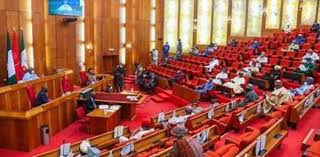
The decision followed an investigative session presided over by Senator Ibrahim Dankwambo, during which the Comptroller-General of Customs, Bashir Adewale Adeniyi, provided lawmakers with detailed explanations on 77 audit observations covering the 2019 and 2020 financial years.
After reviewing the submissions, senators concluded that the disputed figures were largely due to classification discrepancies between Federation Account revenues and other statutory levies collected and administered outside the central revenue pool.
At the heart of the controversy was an audit query indicating that in 2017, the Customs Service generated total revenue of N691.242 billion but remitted only N629.23 billion, leaving a balance of N62.2 billion, which the Auditor-General’s Office flagged as unremitted.
A similar query was raised under another sub-head, also suggesting a shortfall in remittances.
However, the Customs chief maintained that the figures identified as gaps were not funds withheld from the Federation Account but proceeds belonging to designated levy accounts managed for specific government interventions.
Explaining the discrepancy, Adeniyi told the committee that the misinterpretation arose from the blending of Federation Account revenues with non-Federation levy collections.
He noted that Customs revenue operations are fully automated and that all eligible Federation Account receipts are remitted instantly through digital platforms.
According to him, “Most of the issues raised stem from misclassification. What appears as non-remittance is actually levies collected on behalf of other agencies and intervention programmes, which are not meant to go into the Federation Account.”
He further clarified that levies, such as those applied to specific sectors, including agricultural production inputs, textiles, and other designated interventions, are accounted for separately in line with extant financial regulations.
“While Customs collects revenue on behalf of the government, not all collections are Federation Account revenue. The N62.2 billion in question represents such statutory levies, which are ring-fenced for particular purposes,” he said.
Members of the committee, after considering the explanations, expressed concurrence with the Customs position, noting that public finance management distinguishes between Federation Account revenues and special levy accounts.
Senator Dankwambo, a former Accountant-General of the Federation, observed that the misunderstanding reflected technical accounting classification issues rather than any deliberate financial infraction.
“There are clearly defined revenue streams. Some go directly into the Federation Account, while others are retained in designated accounts for specific government interventions.
He said, “Once that distinction is made, the issue becomes clearer, adding that the committee was satisfied that no loss to the Federation Account had occurred in respect of the query.”
Other lawmakers, including Senators Aliyu Wadada and Osita Izunaso, also supported the clarification, arguing that many of the issues raised in the audit report could have been resolved administratively before escalating to a full parliamentary investigation.
Wadada noted that most of the concerns appeared to be inherited challenges predating the current Customs leadership, while Izunaso stressed the need to streamline audit reconciliation processes to avoid repeated legislative scrutiny of similar matters.
“I think many of these issues should ordinarily be resolved at the administrative reconciliation level between agencies and the Auditor-General’s office before they come here. It will save time and reduce unnecessary duplication,” Izunaso stated during the session.
Following deliberations, the committee formally resolved to vacate the query relating to the alleged N62.2 billion under-remittance and accepted the explanation provided by the Customs Service.
However, lawmakers agreed that the remaining 76 audit queries required structured reconciliation to ensure full closure of all outstanding issues contained in the audit reports.
To this end, SPAC announced the setting up of a joint reconciliation panel comprising representatives of the Senate committee, the Office of the Auditor-General for the Federation, and the Nigeria Customs Service.
The panel is expected to review all disputed entries, harmonise accounting classifications, and present a consolidated report to the Senate for final legislative consideration.
Senator Dankwambo, while announcing the resolution, said the committee was committed to ensuring transparency and accountability without undermining administrative clarity in public finance management.
He explained that the reconciliation mechanism would help eliminate repetitive queries and provide a clearer framework for distinguishing between different categories of government revenue.
“We are setting up a small technical team between the relevant institutions to reconcile these issues once and for all. This will ensure that only truly outstanding matters return to this committee,” he said.
The session ended on a conciliatory note, with lawmakers commending the Customs Service for its cooperation and responsiveness throughout the investigative process.
The development is expected to ease tensions surrounding the audit queries and pave the way for a comprehensive resolution of outstanding financial observations affecting the service.