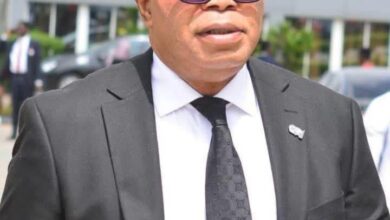
By Nathaniel Zaccheaus
The Senate on Wednesday confirmed the appointment of Taiwo Oyedele as Minister of State for Finance, charging him to urgently drive fiscal reforms to expand government revenue and improve economic management.
Lawmakers said the appointment comes at a critical time when Nigeria must strengthen its revenue base and reduce overreliance on borrowing to fund government budgets.
Oyedele’s confirmation followed his screening by the upper chamber, during which senators expressed confidence in his competence and professional track record in tax policy and fiscal reforms.
Responding to questions from lawmakers, Oyedele assured the Senate that he would work with stakeholders to deepen reforms aimed at expanding government revenue sources, improving budget implementation and aligning fiscal policy with Nigeria’s industrialisation goals.
He said one of the most pressing concerns among citizens was the lack of trust in how the government utilises tax revenues.
“One of the most common questions people ask is that when they pay taxes, what assurance do they have that the money will be used for the right purpose,” he said.
The nominee traced his academic and professional journey from humble beginnings, noting that he attended Community Comprehensive High School in Ikare Akoko, where he graduated as the best student and received a scholarship that enabled him to complete his secondary education.
He later studied at the Federal Polytechnic and Yaba College of Technology, before earning a degree in accounting from Oxford Brookes University in the United Kingdom.
Oyedele also undertook executive programmes at Harvard University, Yale University, the London School of Economics and Political Science, and the Gordon Institute of Business Science.
Before joining the government, he built a career in the private sector, rising to become Africa Tax Leader and Policy Leader at PricewaterhouseCoopers, where he oversaw tax policy engagements across more than 20 countries.
He also chaired the Presidential Fiscal Policy and Tax Reforms Committee, which developed major reform proposals for Nigeria’s tax system.
According to him, the committee worked with multiple stakeholders to design four major tax reform laws that the National Assembly of Nigeria eventually passed.
The reforms, he explained, are expected to modernise Nigeria’s tax framework, strengthen revenue generation and support long-term fiscal stability.
Beyond taxation, Oyedele said the reforms also focus on improving revenue from government-owned enterprises and public assets while ensuring more efficient use of public resources.
During the screening, senators raised concerns about Nigeria’s weak revenue generation from the solid minerals sector despite the country’s vast mineral deposits.
In response, Oyedele said the country had historically focused too heavily on taxation and oil revenues while neglecting other sectors with strong revenue potential.
He identified policy inconsistency as one of the key factors discouraging investors in the sector.
According to him, providing policy certainty and legislative guarantees would unlock significant investment in mining.
He cited the Nigerian Liquefied Natural Gas project, noting that strong legislative backing helped restore investor confidence and enabled the project to expand.
“Providing that level of policy stability can attract similar investments into the solid minerals sector,” he said.
On the issue of budget implementation, Oyedele said many government budgets at both the federal and state levels were unrealistic because they were based on revenue projections that were difficult to achieve.
He noted that nearly half of such budgets were financed through deficit borrowing.
To address this challenge, he proposed more realistic revenue projections and improved cash management across government institutions.
Oyedele also recommended a comprehensive audit of government financial obligations, including outstanding debts owed to contractors.
According to him, clearly documenting such obligations would allow the government to design a practical repayment plan.
“When government delays payment for years, contractors build the risk into their contract values. That ultimately increases the cost of projects,” he explained.
He also stressed the need to align fiscal policies with Nigeria’s industrialisation agenda, warning that some tariff policies currently discourage local manufacturing by imposing higher duties on raw materials than on finished goods.
Correcting such distortions, he said, would support local production, stimulate industrial growth and create jobs.
Presiding over the session, Senate President Godswill Akpabio described Oyedele as a highly competent technocrat whose expertise would benefit the country’s economic reforms.
Akpabio also commended Bola Ahmed Tinubu for the nomination, noting that Oyedele had already played a key role in explaining the administration’s tax reform agenda to Nigerians.
Following the screening exercise, the Senate confirmed Oyedele’s nomination, clearing the way for his swearing-in as Minister of State for Finance.