By Seyi Odewale
Fresh opposition has greeted the Edo State Government’s decision to sell Edo House, the state’s liaison office in Victoria Island, Lagos, as political leaders, professionals and civil society groups warned that disposing of the landmark property would amount to sacrificing a strategic public asset for short-term financial gains.
Investigations revealed that the administration of Governor Monday Okpebholo has concluded plans to dispose of the property located atnumber 1225 Ahmadu Bello Way, Victoria Island, with proceeds earmarked for the construction of a new International Conference Centre at the Garrick Memorial School grounds in Benin City.
The proposal has reignited a debate that has trailed successive administrations, with critics arguing that Edo House, regarded as one of the state’s most valuable assets outside Edo, should be redeveloped into a revenue-generating commercial property rather than sold.
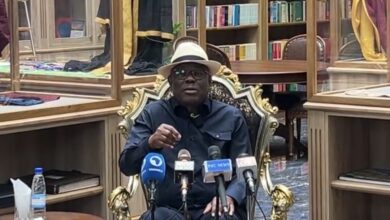
Confirming the decision, the Commissioner for Information and Strategy, Prince Kassim Afegbua, defended the move, insisting that the property had become a financial burden to the state government.
“Yes, we just have a building, and we are losing money. Even the rent, we are not collecting because the previous administration collected rents upfront for many years,” Afegbua said.
He maintained that the government spends substantial resources maintaining the ageing structure without corresponding returns.
“We will sell it and use the proceeds to build an International Conference Centre at the Garrick Memorial School grounds in Benin City. The conference centre will create employment opportunities and generate revenue for the government. It will serve Edo people better,” he added.
But former Managing Director of the Edo Development and Property Agency, Dr Pedro Obaseki, described the proposal as ill-advised, urging Governor Okpebholo to abandon the plan in the interest of future generations.
“Edo House is not an ordinary property. It is one of Edo’s most valuable assets outside the state. Once sold, it can never be recovered. Government should explore ways of redeveloping and commercialising the property instead of disposing of it,” he said.
A Lagos-based Edo indigene, Linus Ojo, also faulted the proposal, saying it was economically unsound to dispose of a permanent public asset to finance another capital project.
“Strategic public assets should be preserved and made productive, not sold off. Government should seek alternative funding sources instead of disposing of one of Edo’s prime properties in Lagos,” he said.
Also reacting, Lagos lawyer, Ehi Otaru, demanded greater transparency, insisting that Edo people deserved full disclosure before any transaction involving the property.
“The people deserve transparency. The government should disclose the valuation of the property, the proposed buyers and the legal framework for the transaction. Public assets are held in trust for the people,” Otaru stated.
Similarly, another stakeholder, Dr Glory Efe, warned that the proposed sale could provoke widespread public resistance if undertaken without adequate consultation.
“This is a landmark that represents Edo’s history and identity in Nigeria’s commercial capital. Any attempt to dispose of it without engaging stakeholders will generate avoidable controversy,” she said.
Also, Mr Frank Osaro argued that governments should preserve strategic assets capable of generating sustainable income instead of liquidating them to fund projects.
“Edo House sits on prime real estate in Lagos. With proper redevelopment, it can become a major revenue source for the state. Selling it will amount to losing a strategic economic asset forever,” he said.
Built during the administration of the late Brigadier Samuel Ogbemudia when the defunct Bendel State was under military rule, Edo House has served for decades as Edo State’s official presence in Lagos. It remains one of the enduring legacies inherited from the old Bendel State.
The latest proposal has also revived memories of previous attempts by the administrations of former governors Adams Oshiomhole and Godwin Obaseki to dispose of the property. Those plans were eventually abandoned following sustained opposition from prominent Edo leaders, professionals and civil society organisations.
With Governor Okpebholo now reviving the proposal, pressure is mounting on the administration to reconsider the decision amid growing concerns that the state could permanently lose one of its most strategic public assets.
However, Afegbua dismissed the criticisms, alleging that many of those opposing the sale were beneficiaries of previous arrangements surrounding the property.
“Those making noise about the sale are people who benefited from the old order. Our responsibility is to take decisions that will deliver greater value and development for Edo people,” he said.
Despite the government’s defence, opposition to the planned sale appears to be gathering momentum, with stakeholders insisting that the state should retain, modernise and commercialise Edo House rather than dispose of what they describe as a priceless symbol of Edo’s history, identity and economic future.