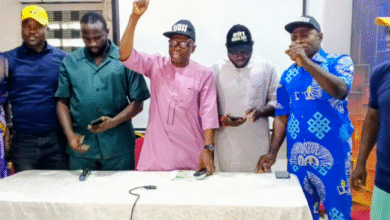
Chairman of the House of Representatives Committee on Health Institutions, Amos Magaji, has advised Nigerians to always seek medical advice from experts before taking drugs for ailments.
Magaji made the call while speaking with newsmen, on the sidelines of the Committee’s visit to the University of Ilorin Teaching Hospital (UITH) on its oversight function.
He said that there was an increase in cases of renal and liver problems in the country, adding that the cause of this had been attributed to indiscriminate consumption of un-recommended drugs by the people.
“Many Nigerians are used to taking different types of drugs including “Agbo” (local herbs) and other drugs not prescribed by medical experts without thinking of their effects. This is why cases of renal and liver diseases are becoming rampant among our people.
“Nigerians should desist from taking un-prescribed drugs, they should seek medical advice from experts before they take drugs when they are sick,” he said.
The lawmaker also cautioned against taking very cheap drugs that are bought from roadside health vendors, adding that they should take prescriptions from experts and renowned pharmacies in the country.
He observed that though people are complaining of the high cost of drugs in the country, it was better to take expensive drugs than to take cheap drugs that could send one to an early grave.
The health committee chairman also advised Nigerians to always do periodic health checks to know their health status, saying that they should not wait until the time that they are sick before conducting health checks.
He also urged them to do the checks either in a hospital or at approved laboratories.
Magaji said, “People should develop a culture of periodic health checks. They should not wait until the time they are sick before going to the hospital.
“They should go to the Radiology Department to know the condition of their body system. This will also assist doctors to know their health status when they get to the hospital.”
According to Magaji, health for all is possible if certain things are done for the nation’s health facilities, and the government takes action to improve the performance of the National Health Insurance Scheme.
“The government should increase capitation of the National Health Insurance. At present, the National Health Insurance covers below 20 percent of the people.
“It should be increased to about 80 per cent because you cannot have health for all if people are still paying from their pocket,” he said.
Magaji said that from the oversight function conducted at UITH, the committee discovered that the capital component given to the hospital in the 2022/2023 budget was too low.
He noted that the hospital’s budget for capital projects was below N1 billion as against the recurrent of N14bn.
According to him, with this oversight function, the committee assesses that the capital allocation for the hospital is too low.
“If we want to reverse the medical tourism in this country, we have to develop infrastructure and replace key equipment in our hospitals and there should be a change of attitude of our medical professionals,” he said.
He said that the committee would work towards increasing capital budgetary allocation to health institutions in the 2025 budget.
In his comments, the Chief Medical Director of UITH, Prof Abdullahi Yusuf, appreciated the committee for its visit, stating that the committee should ensure that medical tourism was reduced to the minimum.
Yusuf said that the health committee met with the management of the hospital and offered useful advice.
He explained that some challenges facing the hospital included poor power supply, high cost of diesel, and shortage of funds.