By Chukwudi Obasi, Abuja
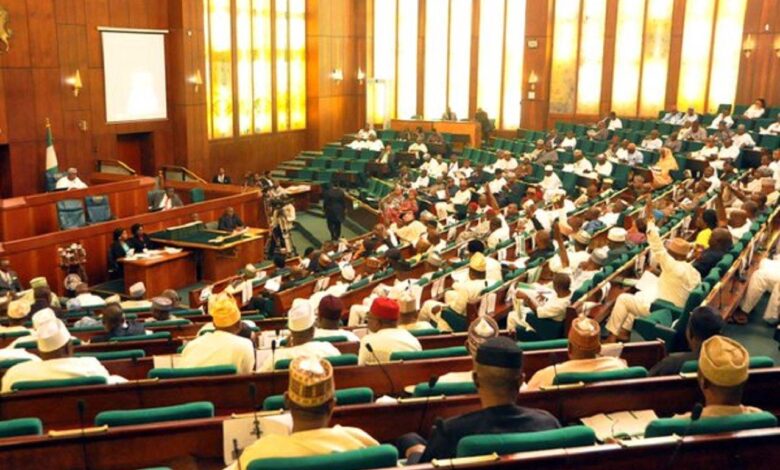
The House of Representatives has called on the Federal Government to bolster security operations nationwide and take urgent steps to safeguard both military personnel and civilians in light of escalating attacks by terrorist groups.
This resolution followed a motion of urgent national importance brought before the chamber by Hon. Ahmed Satomi, who cited recent coordinated assaults by Boko Haram on military installations in Borno and Yobe states.
Satomi expressed deep concern over the increasing frequency and intensity of attacks, warning that both soldiers and civilians remain at high risk.
According to Satomi, the attack on Giwa Barracks was particularly devastating, not just for the military but also for nearby civilian communities.
He stressed the need for the federal government to comprehensively reassess security strategies around military bases and installations to prevent further incursions.
In the same motion, lawmakers urged the government to investigate the recent fire at the Giwa Barracks armoury and to compensate the families of soldiers affected by the incident.
Several lawmakers raised alarms over possible foreign elements aiding insurgents during the debate. Hon. Zainab Gimba claimed that foreign mercenaries, allegedly white operatives, were spotted among the attackers who targeted military formations.
She also warned that the withdrawal of Niger, Mali, and Burkina Faso from regional security alliances could pose a significant challenge for Nigeria, potentially leading to porous borders and increased insecurity.
Lawal Shettima Ali supported these concerns by pointing to the insurgents’ advanced weaponry as evidence of foreign backing, emphasising the urgent need for intervention.
Chairman of the House Committee on Navy, Yusuf Adamu Gagdi, lamented the loss of expensive military equipment to terrorists. He said it was unacceptable that armoured tanks and other weapons, procured at enormous cost to taxpayers, could fall into the hands of enemies of the state.
Gagdi called for accountability from security chiefs and stressed the need for a performance-based evaluation of military funds’ use.
He argued that merely issuing statements in response to attacks is insufficient, insisting that the National Assembly intensify its oversight responsibilities to ensure real action is taken to curb insecurity.
Ahmed Jaha Babawo echoed these concerns, stating that Boko Haram fighters now possess more sophisticated weapons, including drones and heavy artillery, than the Nigerian military.
He warned that unless urgent steps are taken, the country risks relapsing into the days when insurgents overran more than 20 local government areas in the North East.
He called for a more aggressive oversight of security budgets to ensure funds translate into adequate security protection.
Babajimi Benson also criticised the gap between the government’s security spending and the results seen. He noted that despite significant investments, insecurity remains widespread, and key reforms such as state policing and local government autonomy have not materialised.
In his contribution, Minority Whip Ali Isa urged the President to prioritise the safety and welfare of Nigerians, stressing that the government must act decisively to restore security and public confidence.