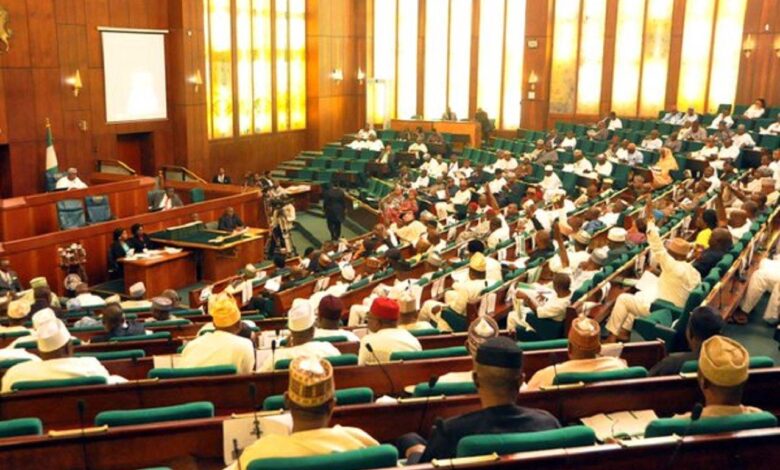
The House of Representatives adopted the Finance Committee’s report yesterday on President Bola Tinubu’s four tax reform bills submitted to the National Assembly.
The committee’s chairman, James Abiodun Faleke (APC, Lagos), laid the report before the House on Tuesday.
The committee also met with the House leadership before considering it.
The House suspended all other scheduled items on its order paper to focus on discussing and reviewing the proposed bills.
Presenting the bills for consideration, Faleke urged lawmakers to approve all the recommendations contained in the report.
Following the report’s adoption, Faleke assured Nigerians that the laws resulting from the tax reform bills would be widely acceptable.
Speaking with newsmen after the House approved the committee’s recommendations, Faleke highlighted the extensive consultation process that shaped the bills, including three days of public hearings during which over 80 key stakeholders submitted memoranda.
The committee also held an eight-day retreat to scrutinize every bill clause.
“I am glad that members of the House saw that we had done a thorough job and have approved all our recommendations.
“We appreciate our members and all Nigerians who showed interest in these bills, and we assure them that the laws that will emerge from them will be acceptable to all,” he said.
Faleke also expressed gratitude to the House leadership for entrusting the committee with the task and President Bola Tinubu for prioritizing tax law reforms, noting that some of Nigeria’s tax laws date back to 1959.
“We cannot continue to operate with archaic tax laws while striving to meet modern economic demands, business needs, and revenue targets,” he added.
The Deputy Chairman of the committee, Rep. Saidu Abdullahi (APC, Niger), acknowledged the controversy surrounding the tax reform bills, stating that no other bill in the 10th Assembly had sparked such widespread debate.
However, he commended Speaker Tajudeen Abbas for fostering consensus among all stakeholders.
Abdullahi noted that interest groups from all geopolitical zones and regional leaders were engaged in the process, helping to address public concerns.
He emphasized that the committee’s recommendations were drawn from the extensive input provided by stakeholders.
“These bills were never seen as perfect documents. They originated as proposals from the Executive, but the public hearings allowed Nigerians to refine them. What we have today reflects the collective will of the country, as represented by lawmakers,” he said.
Ikeagwuonu Ugochinyere (PDP, Imo) also praised the transparency of the process, noting that consultants and executive representatives made adjustments to align the bills with public interests.
“Even though we are in the opposition, we are proud of this historic moment that will bring more people into the tax net and generate more revenue for effective governance.
“The tax collection system will be more efficient, and small businesses are well protected. This is why we all worked together to ensure the bill’s passage,” Ugochinyere said.
Benson Babajimi (APC, Lagos) added that the House carefully considered concerns raised by stakeholders, including issues related to inheritance tax, derivation, and value-added tax (VAT).
“This is a good day for Nigeria. The necessary injection to propel Nigeria into the comity of competitive economies has been applied. The House of Representatives has done its part, and we now await the Senate’s concurrence,” Babajimi said.