By Cross Udo, Abuja
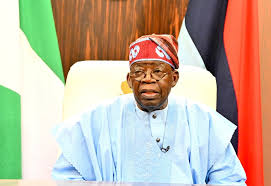
President Bola Tinubu has declared that Africa’s abundant resources, especially solid minerals, mean the continent does not need to wait for aid and grants from the global community.
Tinubu also said that with the enormous resources in Africa, the world needs them more today than before.
These, among other things, were contained in his keynote address at the high-level event of the Africa Minerals Strategy Group, “Africa’s Natural Resources Shaping the Future,” on Tuesday in New York, US.
The President, who his deputy, Senator Kashim Shettima, represented, said Africans have learned from the experiences of the slave trade and commodity export.
He said that the continent could see the persistence of the injustice of unequal trade relations despite the agreements between the ACP (African, Caribbean, and Pacific) countries and the European Union or the United States program, AGOA (African Growth and Opportunity Act), or even the ongoing implementation of trade agreements.
The Nigerian President said that it was with utmost conviction that the great people of Africa have reached a critical moment in their long struggle for social, economic, and political independence, adding, “Now is our time to seize the chance to change the narratives that have been our lot that I stand before you today to set a new agenda of transformation.”
He said the beautiful fact of Africa’s ugly past of colonial and neo-colonial exploitation was that before the continent was plundered and overpowered with the technological innovation of the gun, “Our ancestors and their counterparts from Europe were friends, business allies and mutual sovereigns.
“Africa’s merchants exchanged trade articles such as leather, gold, ivory and palm oil for cotton, silk, gin and mirrors.”
Citing example, Tinubu said, “In 1485, the Portuguese, led by John D’ Aveiro, established trade with the Kingdom of Benin in present-day Nigeria. According to our historical records, during the reign of Oba Esigie (1504-1550), the Kingdom of Benin established diplomatic ties with Portugal.
“Both kingdoms exchanged ambassadors, and a school for learning the Portuguese language was established in the Benin Kingdom. The cultural exchange was so engaging that Oba Esigie learnt and spoke Portuguese!
For most of Africa before colonisation, this was the character of the relationship between our ancestors and the white men from Europe.
“Commercial relationships led to political relationships until the visitors became greedy and upset the cordial harmony by unleashing the Trans-Atlantic slave trade, the most devastating depopulation that mankind has ever witnessed.”
He said that he foresaw the resurgence of commercial partnership, mutual diplomatic relations, and economic collaboration in that era. After exploiting each other, enslaving each other, killing each other for over three centuries, noting that the world has realised the futility of hatred and the fatality of one man exploiting another.
He said that technology is the greatest force for global unity and cohesion today, as he opined that communications technology had shrunk the world into a global village and turned strangers into neighbours.
“It has dissolved boundaries and created a world without borders. Telecommuting has transformed the world of work into virtual hubs of co-creation. Wherever you turn, young brilliant innovators are raising the bar, leading the charge of progress into the intelligent world.
“One of the factors of this development is revolutions in battery technology. Evolution in lithium-ion technology enables manufacturing portable consumer electronics, laptops, computers, cellular phones, and electric cars. We live in a world of electronic mobility in which lithium-powered batteries provide higher specific energy, higher energy density, and higher energy efficiency, longer cycle life, and longer calendar life.
“This development powers the global struggle against carbon emissions. It promotes a greener world that tames destructive floods and excessive heat, two consequences of a worldwide climate under pressure that millions encounter and thousands fail to survive.
“The global need for new battery technology has triggered a new scramble for Africa’s critical minerals. Africa possesses 92 per cent of international reserves of platinum, 56 per cent of cobalt, 54 percent of manganese, and 36 per cent of chromium.
“These are the minerals employed in the manufacturing of the new batteries. In short, the world needs Africa today more than ever.
“Africans have learned from the experiences of the slave trade and commodity export. We can see the persistence of the injustice of unequal trade relations despite the agreements between the ACP (African, Caribbean, and Pacific) countries and the European Union or the United States program, AGOA (African Growth and Opportunity Act), or even the ongoing implementation of trade agreements.
“Whenever and wherever we accept the age-old role of supplier of raw materials to global industry, we end up with the short end of the stick.
“Our people no longer want to wait for your aid and grants. A situation in which the raw minerals are extracted from our countries, exported, refined, and sold to us as finished products merely consolidates the foundations of our misery and pushes us further down the depths of underdevelopment.
“We seek to break free by localising the mineral value chain from extraction to processing to sales within our countries. We have skilled men and women, talented graduates in any discipline you desire, and an immense capacity to learn and innovate.
“We have put in place policies to promote direct foreign investment and ease repatriation of profits; we have introduced tax holidays and incentives for the importation of machinery and migration of professionals with expertise and experience.
“The governments in Africa are working day and night to improve business efficiency. We are improving our energy, transportation, and housing infrastructures and facilities. We are simplifying our business rules in line with international best practices and containing threats to security, law, and order.
“Specifically, my administration has adopted the principle of local value addition as conceived by the Africa Minerals Strategy Group, chaired by Nigeria’s Minister of Solid Minerals Development, Dr. Oladele Alake.
“Key to this strategy is attracting companies involved in manufacturing lithium batteries, concentrates, and components to set up their business and domesticate the value chain from extraction to production in Nigeria.
“With over 226 million hardworking, fastidious subscribers, we offer an immediate market for local purchases and international exports. This has been demonstrated by the boom in our country’s 10 billion dollar telecoms market, manifesting an internationally competitive annual growth of 5.20% per annum.”
He highlighted alarming statistics from the United Nations Development Programme, revealing that over 328 million people in the poorest countries need humanitarian assistance.
He stated, “Poverty worsened for the first time in two decades, particularly for low-income and middle-income earners,” underscoring the urgency for transformative strategies.”
In his address, Dr Dele Alake, Chairman of Africa Minerals Strategy Group and Nigeria’s Minister of Solid Minerals, proposed a paradigm shift from merely exporting raw minerals to processing them locally into finished goods.
He defined local value addition as transforming raw minerals into semi-finished or finished products, enhancing capital formation, and creating jobs across Africa.
He said, “By moving from commercialization to industrialization, we can significantly raise the contribution of the solid minerals sector to our GDP.
“The initiative has already gained traction, with ten new mineral processing projects underway in Nigeria focusing on lithium, gold, bauxite, and other valuable resources.”
He called on African leaders to unite in this endeavour and urged global mining companies to partner with African nations to foster industrialization in the solid minerals sector.
“We seek to localize the entire mineral value chain from extraction to processing within our countries,” he said.
He emphasised that the initiative represents a unique opportunity for Africa.
“This is our chance! Together, we can transform our continent from suppliers of raw minerals to equal partners in the global mining industry,” he added.
Secretary-General, Moses Engadu, at the inaugural high-level roundtable of the Africa Minerals Strategy Group (AMSG), emphasised the vital role of Africa’s natural resources in shaping the continent’s future and that of the world.
Engadu welcomed esteemed leaders, including Nigerian Vice President Shettima and Malawian President Lazarus Chakwera, stating, “Today, we gather to discuss how Africa’s wealth can serve as a catalyst for sustainable development and economic empowerment.”
The Secretary-General urged African nations to unite in their approach to resource management. “No natural resources should leave our borders as raw materials. We must promote a common agenda,” he said.
He also announced plans for the Africa Minerals and Metals Exchange, which aims to facilitate regional collaboration and ensure fair market value for African commodities.
The roundtable provided a platform for leaders to effectively discuss strategies for harnessing these resources.