Ignore W’ Bank, IMF policies, adopt home-grown solutions for economic revival-Akpan, varsity don

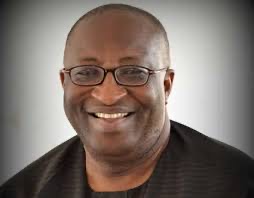
An emeritus professor in the Department of Economics, University of Uyo, Akwa Ibom State, Akpan Ekpo, criticises the World Bank and International Monetary Fund’s advice that urged Nigerians to be patient with the current fiscal and monetary policies of President Bola Tinubu’s administration for the next 15 years. In this interview with Anthony Otaru, the erudite scholar lamented that the removal of fuel subsidy vis-à-vis the floating of the naira has brought untold hardship on the masses, among other issues
The World Bank, supported by the IMF, wants Nigeria to sustain the current Fiscal and Monetary policies introduced by the government for at least the next fifteen years to allow the economy to take shape. What is your take?
I do not support their position; countries that have leap-frogged into growth and development have grown double-digit and more sustained for between 20 years. However, countries like China, Indonesia, Singapore, Malaysia, etc, abandoned the World Bank and IMF’s neo-liberal -policies for home-grown solutions. Furthermore, there was the political will; the leadership lived by example. They were not extravagant and had a strong state/public sector to drive development. Nigeria’s currency is among the worst performing today because of the removal of oil subsidy and the floating of the naira simultaneously. The naira is not a convertible currency, and the economy could be more productive; hence, the depreciation of the domestic currency would bring no substantial benefits to the country. The major export that brings in foreign exchange is crude oil export, the output of which is determined by a cartel called OPEC. In addition, oil prices are subject to the vagaries of the global oil market. Consequently, the revenue from oil is exogenous; hence, it is unhealthy for any economy to depend on an exogenous source of income to drive growth and development in the medium and long term. The 15-20 years suggestion by the World Bank is anchored on trickle-down economics, which is no longer tenable. In the long run, we are all dead. To shore up our currency, policy should be focused on the production/ manufacturing and export of non-oil goods and services to earn foreign exchange. Even within that context, a managed float is the approach to adopt because the foreign currency is insufficient, even if a developing country thinks it has enough.
The National Bureau of Statistics recently put Nigeria’s inflation rate at 32.7%. How can the Nigerian government bring down inflation?
Nigerian inflation is a cost/supply push caused by subsidy removal, utility hikes, insecurity, and the floating of the domestic currency. The demand-driven component is very marginal. Consequently, the government should address the matter of insecurity to enable farmers to return to the farms because the food component is the variable driving the rising inflation rate. Public refineries should be made to address the issue of the supply of petroleum products, and all things being equal, prices would begin to taper downwards. Investment policies should be aggressively implemented to enhance growth and create jobs. For example, massive housing construction would generate employment, create jobs, and generate revenue for the government.
What do you think is the solution to the constant electricity greed collapse witnessed in the power sector?
The epileptic power supply slows growth, which is embarrassing in this 21st century. No country develops with generators. Research shows that a 1 percent increase in constant power supply would increase GDP by 3 percent. Power generation, transmission, and distribution are no longer rocket science. I do not know why the national grid keeps collapsing. There is a need for investigation, and there should be consequences if anyone is found guilty, that is, if it is due to sabotage and negligence.
Nigerians no longer have confidence in ASUU’s threats to strikes. This is because most union members play the role of INEC returning officers who assist political party candidates in rigging elections and bringing those with no interest in the masses to power. What is your comment on this?
A very negligible number of lecturers are involved as returning officers during elections. Nigerians should know that the university system would have collapsed years ago without the Academic Staff Union University [ASUU]. ASUU constantly reminds the government of its responsibility to provide education to Nigerians. The government has yet to implement the 2009 agreement with ASUU fully. Both the Onosode and Briggs reports are yet to be implemented. I comment on this question as a former vice-chancellor of a federal and state university (only two years). ASUU has been very understanding with the government because of the interest of the students and their parents. The government, on its part, should stop using lecturers as returning officers. University lecturers have sacrificed so much for the system. If you consider their remuneration and the conditions under which they work. There is an ongoing mass exodus of academics, especially the young ones, for greener pastures. Parents should demand from the government that workers in the university be properly incentivized. ASUU fought for today’s education tax fund, among other initiatives. Strike is always the last option.
Although the federal government has approved the N70,000 minimum wage for workers, but implementation has also become an issue. Why do you think the government is finding it difficult to implement it holistically?
I wonder why the government is finding it difficult to implement the minimum wage of N70,000. The government should cut down on frivolous expenditures and pay the minimum wage, which has been eroded by inflation.
President Bola Tinubu has sacked five of his cabinet ministers for non-performance. Are you comfortable with the performance of the remaining ones?
Of course, the President has already sacked some of the non-performing ministers. Nigerians expected him to have fired the majority of them. But be that as it may, the President’s action needs to be commended because it will signal the remaining Ministers to be on their toes; the Presidency should have a scorecard after almost 16 months in office. He needs highly skilled technocrats to run the machinery of government. That is fine if he finds a politician who fits the description. My advice to the entire cabinet is to put on their thinking caps to give the best to the country. They should serve with the fear of God and humanity; cabinet members should know that Nigerians are eager to escape current poverty and economic hardship. The fact remains that the masses are suffering, and this must not continue for long.