By Chukwudi Obasi, Abuja
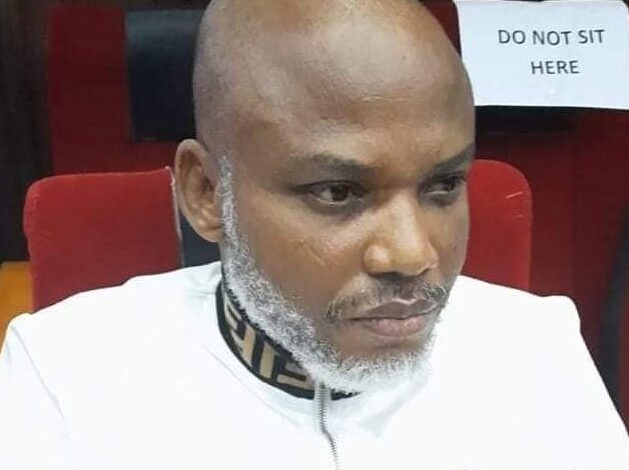
The Federal Government has formally closed its case against the detained leader of the Indigenous People of Biafra (IPoB), Nnamdi Kanu, in the terrorism and treason trial currently before the Federal High Court in Abuja.
This marks a significant turning point in the high-profile case, which has drawn international attention and stirred intense debate across Nigeria, particularly in the South-East region where Kanu commands a strong following.
The development followed the conclusion of testimony by the fifth and final prosecution witness, identified in court records only by the initials “EEE,” due to national security concerns.
The witness appeared under tight security and was cross-examined by Kanu’s lead defence counsel, Mr Onyechi Ikpeazu (SAN), during proceedings presided over by Justice James Omotosho.
Government counsel, Chief Adegboyega Awomolo (SAN), told the court that the prosecution had concluded its planned presentation of evidence.
He stated that the five witnesses, coupled with submitted video recordings and other materials purportedly showing Kanu’s leadership role in IPOB’s alleged violent campaigns, were sufficient to support the terrorism-related charges brought against him.
“Having called all our witnesses and presented our materials, we hereby close our case,” Awomolo declared.
In a swift response, Chief Kanu Agabi (SAN), lead counsel for the defence, informed the court of the team’s intention to enter a no-case submission—a legal strategy to argue that the prosecution has failed to establish a prima facie case warranting the trial to continue.
Justice Omotosho granted the defence leave to file the submission at a later date, which is expected to trigger legal arguments over whether the court should dismiss the charges or require Kanu to open his defence.
Kanu, who was re-arrested in 2021 under controversial circumstances and brought back to Nigeria from Kenya, is facing multiple charges, including terrorism, treasonable felony, inciting public violence, and managing an unlawful group.
The charges stem primarily from his activities as the self-proclaimed leader of IPOB, which the Nigerian government has since proscribed and labelled a terrorist organisation.
Since his re-arrest, the case has sparked protests, diplomatic concerns, and legal campaigns from rights groups and Igbo socio-political organisations demanding his release, citing human rights violations and what they describe as political persecution.
The outcome of the no-case submission could shape the direction of a trial that has far-reaching implications for civil liberties, national security, and Nigeria’s unity.
Justice Omotosho is expected to announce a new date for the hearing of the no-case submission.