By Presley Olu
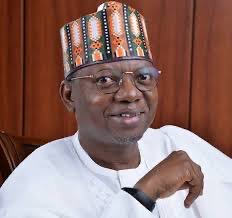
Senator Mohammed Sani Musa’s emergence as Chairman of the Senate Committee on Finance comes at a critical time for Nigeria’s fragile economy.
With a fiscal system plagued by leakages, opaque budgeting, and growing public debt, the 10th National Assembly was handed a tough assignment: restore discipline to public finance and rebuild confidence in government spending.
Musa, who represents Niger East, has stepped into that spotlight, bringing with him a track record of administrative efficiency and legislative activism. But the real test lies in whether his committee’s interventions can effect long-term structural changes—especially in how Nigeria spends, borrows, and accounts for public funds.
He has made strong pronouncements on the need to curtail revenue leakages and eliminate ghost workers through stricter enforcement of the Integrated Personnel and Payroll Information System (IPPIS).
His committee has also been vocal in reviewing tax waivers, scrutinising loan requests, and questioning ministries over underperforming revenue targets.
In November 2024, Musa’s committee temporarily suspended consideration of several executive loan requests, demanding detailed breakdowns and timelines for project execution. “We cannot continue to rubber-stamp without due diligence,” he told reporters during a finance committee briefing. “We need results, not paperwork.”
But some economic analysts warn that without assertive follow-through, such oversight may become performative.
Dr Kemi Olayinka, Senior Economist at the Centre for Fiscal Transparency, described Musa’s leadership as “technically sound but politically constrained.”
“He’s asking the right questions—about borrowing limits, non-oil revenue diversification, and state fiscal autonomy. But unless the Senate asserts more independence from the executive, these reforms will stall,” she said.
Similarly, Budget Advocate and civic tech activist, Chinedu Iroche of BudgIT, said the Finance Committee under Musa is “a step ahead of previous ones,” but called for more openness.
“We’ve seen better scrutiny during budget defence sessions. But Nigerians need more transparency, especially on how recommendations are implemented. The Finance Committee must publish quarterly oversight reports,” he added.
Perhaps the most visible flashpoint of Musa’s tenure so far has been the face-off with various federal MDAs over poor budget utilisation and indiscriminate requests for supplementary allocations.
The Ministry of Works, Power, and Humanitarian Affairs have all been asked to provide more apparent justification for their budget performance in recent sessions.
Musa’s emphasis on tying debts to revenue-yielding infrastructure has also put him at odds with some pro-spending lawmakers who see borrowing as essential in the short term.
“It’s a delicate balance,” said Dr Habeeb Sanusi, a policy analyst. “He has to resist the populist push to approve every spending proposal while also ensuring the government doesn’t grind to a halt.”
One of Musa’s more ambitious goals has been to reignite the conversation around revenue sharing and fiscal federalism. He has argued that states should have greater control over their resources and tax base, saying the current centralisation of revenue undermines economic development.
In a policy memo presented to the Revenue Mobilisation Allocation and Fiscal Commission (RMAFC), Musa advocated a new formula that allows states to retain up to 50% of income from solid minerals, tourism, and local taxes.
Governor Umar Bago of Niger State—Musa’s home state—endorsed the proposal, saying it reflects “a growing awareness that Abuja can’t solve every problem.”
Back home in Niger East, the senator’s critics and supporters offer contrasting views.
Mrs Hauwa Abdullahi, a school administrator in Paikoro, noted, “He’s one of the few senators who returns to consult. We’ve seen solar lights, boreholes, and vocational training, but we want more investment in schools and healthcare.”
But in parts of Munya and Shiroro, where banditry has displaced entire communities, some residents feel legislative action hasn’t translated to improved security.
“I respect him, but what’s the point of roads if we can’t travel them safely?” asked Musa Idris, a displaced farmer now living in a camp near Suleja.
Musa’s expanding influence within the All Progressives Congress (APC) and his repeated involvement in national economic discourse have prompted speculation about a possible leadership role in the Senate or even a ministerial future.
However, he continues to position himself as a lawmaker focused on reform—not ambition.
When asked recently if he sees himself in a future executive role, Musa responded: “If we fix the Senate’s oversight capacity, that’s already service.”
Musa’s efforts at reforming Nigeria’s public finance architecture are commendable—but far from complete. His committee’s assertiveness has improved legislative scrutiny, and his style blends technocratic competence with political calculation.
But in a system where budget padding, weak enforcement, and executive overreach are entrenched, Musa will need more than political will. He will need public pressure, institutional backing, and bipartisan support to shift Nigeria’s fiscal culture.
For now, the question remains: Can his oversight drive discipline, or will it be swallowed by the bureaucracy it seeks to tame?
*Olu is an Abuja-based civil servant