By Cross Udo, Abuja
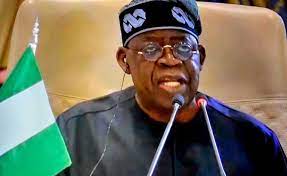
President Bola Tinubu has assured the World Bank that Nigeria’s ongoing economic reforms are irreversible, insisting the country will not retreat despite the early pains associated with policy changes.
Tinubu gave the assurance at the State House during a meeting with a World Bank delegation led by its Managing Director for Operations, Anna Bjerde, following a briefing session with the Minister of Finance and Coordinating Minister of the Economy, Wale Edun, and Vice President Kashim Shettima.
Expressing optimism, the president said Nigeria had chosen a difficult but necessary path. “Since we entered this tunnel of reform, our hands are on the wheel, and we are not going to look back,” he said, acknowledging that the reforms initially caused hardship but were essential for long-term stability.
Tinubu described Nigeria as the “heart of Africa,” stressing that with its youthful population and vast arable land, the country must embrace bold decisions to unlock growth. He identified agriculture as a central pillar of his economic agenda, particularly through mechanisation.
He said the government had already established mechanisation centres to support farmers and improve productivity, adding that greater collaboration with the World Bank was welcome, especially in seed development and modern farming techniques.
Linking agriculture to industrial development, Tinubu highlighted progress in the petrochemical sector, noting that increased local fertiliser production would boost yields and transform smallholder farmers into large-scale cooperative producers.
Reaffirming his stance on governance, the president said transparency and accountability remain core principles of his administration. He admitted that previous subsidy regimes and multiple exchange rates encouraged corruption, but insisted those practices had ended.
“It was tempting for leaders to look the other way in corrupt environments, especially with subsidies and forex arbitrage. But we gave it up so that Nigerians and the world can benefit from a stable economy,” Tinubu said.
He acknowledged that inflation rose sharply after the reforms but claimed the situation had improved. According to him, the naira has stabilised, and the investment climate is becoming more predictable.
Tinubu urged the World Bank to explore innovative financing models tailored to Nigeria’s large population and development needs, and to reduce bureaucracy and accelerate project execution.
In her remarks, Bjerde commended Nigeria’s leadership for staying the course on reforms, noting that the country is a frequent reference point in her discussions with global leaders and investors.
“Nigeria is often cited in my conversations around the world because, in the last two years, the results achieved are truly commendable,” she said, adding that steady communication of reform objectives had boosted investor confidence.
She noted that the World Bank’s Country Partnership Framework aligns with Nigeria’s ambition to achieve a $1 trillion economy and sustain 7 per cent growth under the leadership of Ajay Banga.
Bjerde outlined key areas of cooperation, including job creation, infrastructure, agricultural value chains, SME financing, and human development, especially early childhood education.
She disclosed that the World Bank’s support package for Nigeria includes about $17 billion in public financing, $5 billion annually for private-sector mobilisation through the International Finance Corporation, and expanded investment guarantees.
“Nigeria is always top of my mind when Africa is discussed,” she said, pledging continued partnership to support the country’s reform-driven growth agenda.