By Nathaniel Zaccheaus, Abuja
Yesterday, the Court of Appeal proposed an amendment to the Constitution and the Electoral Act, ensuring the swearing-in of a governor whose deputy has been disqualified by a competent court of law.
The Appellate Court, in its proposal at a three-day retreat on amendments to the 1999 Constitution and the Electoral Act 2022 by the National Assembly in Abuja, explained that the anomaly should be addressed.
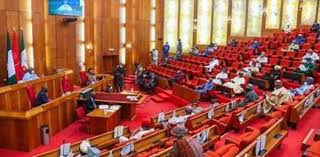
The Joint National Assembly Committee on Electoral Matters, in collaboration with the Policy and Legal Advocacy Centre (PLAC), organized the retreat.
The Session on the Judiciary was presided over by Senator Sharafadeen Ali, Chairman of the Senate Committee on Electoral Matters, his counterpart in the House of Representatives, Hon Adebayo Balogun, and the Executive Director of PLAC, Clement Nwankwo.
The proposed amendments by the President of the Court of Appeal, Hon. Justice Monica Dongbam-Mensem, were presented to the NASS panel by Justices Peter Olabisi Ige and Abba.B. Mohammed.
The President of the Appellate Court specifically sought an amendment to Section 187 of the 1999 Constitution, which should include a new Section 187(1).
The Justice explained that Subsection (1) (A) & (B) should State clearly that the disqualification or non-qualification of a Deputy Governor shall not affect the Governor-elect or Governorship Candidate of a Political Party.
The proposed Section 187 (1) (A), she said, should read that, “The removal of a deputy-governor or deputy-governorship candidate on account of qualification or disqualification by a Court or Tribunal, shall not affect the election of a governorship candidate or governor-elect.
“Section 187 (1) (B) If a Court or Tribunal removes a deputy governor or deputy-governorship candidate, the governor or governorship candidate shall have the right to nominate another person as deputy-governor or deputy-governorship candidate.”
The Appellate Court also proposed an amendment to Section 246 (3), which states that the Appeal Court’s decision in relation to Pre-Election matters shall be terminated at the Appeal Court.
The proposal read, “The decisions of the Court of Appeal in respect of appeals arising from the Governorship, National and State Houses of Assembly election petitions and all pre-election matters shall be final.”
Similarly, the Appellate Court sought amendment to Sections 285(7) and (12) of the Constitution to require the disposal of all litigation arising from elections within 60 days.
The proposed amendment, the Court said, should be amended as follows – Section 285(7) of the 1999 Constitution –
“An appeal from an election tribunal or Court of Appeal decision in all election matters shall be heard and disposed of within 60 days from the date an appeal is entered in the Court of Appeal or the Supreme Court.
“285 (12) of the 1999 Constitution– An appeal from a decision of a Court in a Pre-Election matter shall be heard and disposed of within 60 days from the date an appeal is entered in the Court of Appeal or the Supreme Court.”
The Court also sought an amendment of Section 285 of the Constitution by inserting a new subsection 15.
The proposed amendment reads, “Section 285(15) of the 1999 Constitution—All Pre- and Post-Election Matters shall be heard and determined before the election winners take the oath of office.”
The Appellate Court also advised the National Assembly panel to consider harmonizing the Electoral Act and the INEC guidelines, especially on matters related to the use of technology during elections.