Unlocking the Potential: Lithium – The Elemental Future of Innovation and Technology

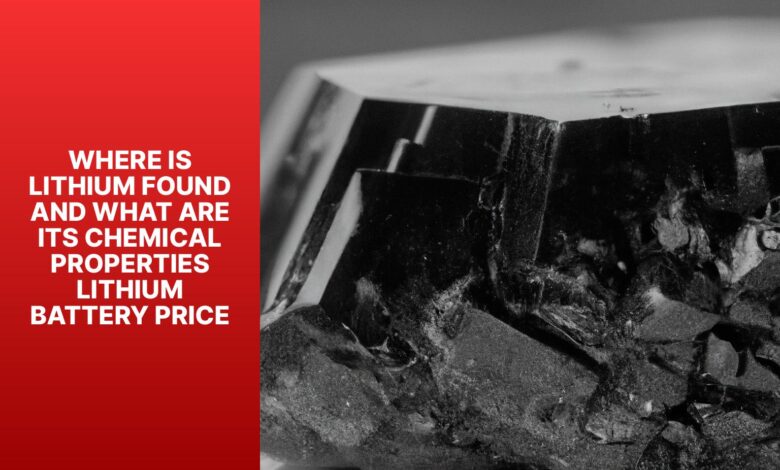
Lithium, a chemical element with the symbol Li and atomic number 3, is a highly reactive alkali metal known for its lightweight and versatile properties. In this article, we will explore the occurrence and sources of lithium, its chemical properties, as well as delve into the world of lithium batteries and the price trends associated with this valuable resource.
Lithium is commonly found in the Earth’s crust but is relatively rare in its pure form. It has a unique ability to react with other elements, which makes it a valuable component in various industries, especially battery technology. Understanding the occurrence and sources of lithium is crucial in determining its availability and utilization.
When it comes to the occurrence of lithium, it can be found in a few select regions around the world. The primary sources of lithium include lithium-rich brine deposits found in salt flats or salars, as well as lithium-bearing minerals like spodumene and petalite. These sources provide the necessary raw materials for the production of lithium compounds.
Apart from these primary sources, lithium can also be obtained as a byproduct of certain mineral extraction processes, such as mining for other metals like tin or copper. Some lithium can be found in seawater, although extraction from this source is still a developing technology.
In recent years, the demand for lithium has soared due to the increasing popularity of lithium-ion batteries, which are used in a wide range of applications, including electric vehicles and portable electronic devices. We will explore the workings of lithium batteries, their advantages, and disadvantages, shedding light on the role lithium plays in this field.
The price of lithium is a significant factor in the market, influenced by various factors such as supply and demand dynamics, mining and extraction costs, geopolitical considerations, and technological advancements. We will delve into the current lithium price, the factors affecting its price, and the market trends driving its value. We will touch upon the future outlook of lithium prices, presenting a comprehensive overview of this vital element’s economic significance.
By understanding where lithium is found, its chemical properties, and the implications of its usage in lithium batteries, we can gain insight into the importance of this element in various industries and its impact on the global market.
What is Lithium?
Lithium is a chemical element in the alkali metal group, represented by the symbol Li on the periodic table. It is the lightest and least dense solid element known. It is highly reactive and has a silvery-white appearance.
Lithium is abundant in nature and mainly found in rocks and minerals. It is also found in small amounts in seawater, mineral springs, and certain types of clay. The largest deposits of lithium are in South America, specifically Bolivia, Chile, and Argentina, which produce most of the world’s lithium.
Lithium has important chemical properties, including a low boiling point of 1,342 degrees Celsius and a melting point of 180.5 degrees Celsius. It reacts readily with water and oxygen. Lithium is a good conductor of heat and electricity, making it valuable in batteries and electronics.
Lithium-ion batteries have gained popularity due to their high energy density and long lifespan. They are commonly used in portable electronic devices like smartphones, laptops, and electric vehicles. These batteries work by allowing lithium ions to move between positive and negative electrodes, producing electrical current.
One advantage of lithium-ion batteries is their ability to store a large amount of energy in a small and lightweight package. They also have a low self-discharge rate, meaning they hold their charge for longer compared to other battery types. Lithium-ion batteries can be expensive to manufacture and dispose of, and mishandling can be a fire hazard.
The price of lithium depends on factors such as supply and demand, production costs, and market speculation. Increasing demand for electric vehicles and renewable energy storage solutions has led to an upward trend in lithium prices.
The future outlook for lithium prices is optimistic, with the continued growth in demand for lithium-ion batteries. New discoveries of lithium deposits and advances in battery technology could also impact prices in the future.
Lithium’s chemical properties are like the perfect Tinder bio: highly reactive, leading to explosive results if mishandled.
What are the Chemical Properties of Lithium?
The chemical properties of lithium are summarized in the table below:
| Property | Description |
|---|---|
| Atomic number | 3 |
| Atomic mass | 6.94 |
| Group | Alkali metal |
| Period | 2 |
| Electron configuration | [He] 2s1 |
| Number of valence electrons | 1 |
| Oxidation states | +1 |
| Physical state | Solid at room temperature; soft and silvery-white metal |
| Melting point | 180.54°C |
| Boiling point | 1347°C |
| Density | 0.534 g/cm3 |
| Conductivity | Good electrical and thermal conductor |
| Reactivity | Reactive with water and oxygen |
| Flame color | Crimson red |
| Isotopes | Li-6 and Li-7 |
| Abundance | 23rd most abundant element in the Earth’s crust |
Lithium is an element with atomic number 3 and symbol Li. It is an alkali metal and is in the second period of the periodic table. The electron configuration of lithium is [He] 2s1, indicating that it has 2 electrons in the 1s subshell and 1 electron in the 2s subshell. It has one valence electron, resulting in an oxidation state of +1.
Physically, lithium is a soft and silvery-white metal at room temperature. It has a relatively low melting point of 180.54°C and a higher boiling point of 1347°C. It has a density of 0.534 g/cm3, making it one of the lightest metals. It is an excellent conductor of electricity and heat.
Lithium reacts strongly with water and oxygen. It produces hydrogen gas when exposed to water and forms a protective oxide layer when in contact with oxygen. When heated, lithium burns with a crimson red flame.
Lithium has two natural isotopes, namely lithium-6 and lithium-7, with lithium-7 being more abundant. It is the 23rd most abundant element in the Earth’s crust.
Just like your fourth-grade crush, lithium is found hiding in mineral deposits and salt flats, waiting to power up your devices and break your heart when it dies.
Occurrence and Sources of Lithium
The occurrence and sources of lithium can be analyzed through a table that showcases relevant data.
| Source | Occurrence | Lithium Content |
| Brine | Saline aquifers, salt flats, geothermal fields | Concentrated – up to 1% |
| Hard Rock Minerals | Pegmatites, granitic aplite, granite, lithium micas | Dilute – typically 0.1% or less |
| Hectorite Clay | Clay deposits in desert basins | Variable – typically less than 1% |
Brine sources contribute the most to lithium production. They are found in saline aquifers, salt flats, and geothermal fields. Brine can contain high amounts of lithium, up to 1%.
Hard rock minerals, like pegmatites, granitic aplite, granite, and lithium micas, also contain lithium. The lithium content in these minerals is usually low, typically 0.1% or less.
Hectorite clay deposits in desert basins also contain lithium, but the lithium content in hectorite clay can vary and is usually less than 1%.
Considering these sources, it is clear that brine is the primary source of lithium due to its higher lithium content compared to hard rock minerals and hectorite clay.
It is important to note that lithium sources can vary in availability and accessibility geographically. Some regions may have abundant lithium resources, while others may have limited reserves. The lithium content in different sources affects the viability of extraction and processing methods.
To ensure a sustainable supply of lithium, it is crucial to explore and develop technologies that can efficiently extract lithium from different sources. Recycling and reusing lithium-ion batteries can help reduce reliance on primary lithium sources.
By understanding the occurrence and sources of lithium, we can make informed decisions regarding its extraction, utilization, and sustainable management.
Where is Lithium Found?
Lithium is primarily found in three sources: lithium-rich minerals, brine deposits, and lithium-bearing clays. To answer the question “Where is lithium found?”, let’s explore each source in detail.
1. Lithium-rich minerals: Lithium is commonly discovered in minerals such as spodumene, lepidolite, and petalite. These minerals are typically found in coarse-grained granite rocks known as pegmatite formations. Notable regions with abundant lithium-rich minerals include Australia, Canada, and Zimbabwe.
2. Brine deposits: Another significant source of lithium is brine deposits. These deposits form when underground water, enriched with lithium, accumulates in closed basins and undergoes evaporation. The result is the concentration of lithium minerals. The “lithium triangle” in South America, comprising Argentina, Bolivia, and Chile, holds the largest brine deposits. These countries are home to expansive salt flats like the Salar de Uyuni in Bolivia and the Atacama Salt Flat in Chile, which possess considerable quantities of lithium brine.
3. Lithium-bearing clays: Certain clay deposits also contain lithium. These clays host minerals like hectorite and jadarite, which are sources of lithium. Notably, the Jadar Valley in Serbia is a significant location for lithium-bearing clays.
It is important to note that not all lithium sources are economically viable for extraction. The concentration of lithium can vary significantly, with brine deposits often having higher concentrations compared to minerals or clays.
When researching lithium sources, it is wise to consider geopolitical and environmental factors. Some regions may experience political instability or environmental concerns that could impact the supply chain and overall sustainability of lithium extraction.
So, to summarize, lithium is found in lithium-rich minerals, brine deposits, and certain clay deposits like those in the Jadar Valley in Serbia. The “lithium triangle” in South America is a particularly noteworthy region for brine deposits.
What are the Primary Sources of Lithium?
When it comes to the primary sources of lithium, there are three main categories to consider: brine deposits, hard rock mining, and salt flats. Brine deposits refer to underground reservoirs that contain high concentrations of lithium. These deposits are typically found in regions with high evaporation rates, such as the “Lithium Triangle” in South America, which includes parts of Argentina, Bolivia, and Chile. Through a series of evaporation processes, lithium carbonate, the main raw material for lithium production, is extracted from the brine.
Hard rock mining is another important source of lithium. Specifically, lithium can be found in certain igneous rocks like spodumene and lepidolite. These rocks are mined and processed to extract lithium minerals, which are then converted into either lithium carbonate or lithium hydroxide.
Salt flats, also known as salars, are large flat areas where lithium-rich brine accumulates over time due to geological and climatic conditions. These salt flats can be found in different parts of the world, including the Lithium Triangle in South America and Nevada in the United States.
It is important to note that lithium is a crucial component in the production of lithium-ion batteries, which are widely used in electric vehicles and portable devices. With the increasing demand for renewable energy and electric transportation, the demand for lithium is expected to rise in the future.
Lithium can be found in many places, including your ex’s phone battery and the dreams of electric car enthusiasts.
Other Sources of Lithium
The table below highlights the different sources of lithium:
| Source | Description |
|---|---|
| Brine deposits | Brine deposits account for approximately 66% of global supply. |
| Hard rock deposits | Hard rock deposits, also known as pegmatites, are another significant source of lithium. |
| Lithium-bearing clay | Certain clay deposits contain lithium, making them a potential source of the mineral. |
| Geothermal brine | Geothermal brine can also contain lithium and is found in areas with volcanic activity. |
| Oilfield brine | Some oilfields contain lithium-enriched brine, offering an additional source of lithium. |
| Sea and saltwater | Seawater contains trace amounts of lithium, but the extraction process is currently not economically viable. Advancements in technology may make this a viable source in the future. |
These sources contribute to the global supply of lithium. Brine deposits are the primary source, accounting for the majority, followed by hard rock deposits.
The distribution of lithium sources varies worldwide. Major lithium-producing countries like Chile, Australia, and Argentina possess rich brine and hard rock deposits. China, the United States, and Canada also have significant lithium reserves, primarily from hard rock sources.
The development and utilization of these sources require careful consideration of environmental and sustainability factors. Sustainable lithium extraction methods, such as resource-efficient brine extraction and recycling techniques, are being explored to minimize environmental impact.
The availability of different sources ensures the stability of lithium supply for industries like electric vehicles, renewable energy storage, and consumer electronics. As lithium demand continues to grow, further exploration and development of these sources will be crucial.
Lithium Batteries: They may not power your love life, but they sure power your devices.
Lithium Batteries
Lithium Batteries
| Lithium Battery Brand | Capacity (mAh) | Voltage (V) | Price ($) |
| Energizer Ultimate Lithium | 3000 | 1.5 | 5.99 |
| Duracell Ultra Lithium | 2400 | 3 | 6.99 |
| Panasonic CR123A | 1550 | 3 | 3.99 |
Lithium batteries are popular for powering electronic devices due to their high energy density, long shelf life, and lightweight design. Various brands offer different specifications and prices.
One notable brand is the Energizer Ultimate Lithium battery with a capacity of 3000 mAh and a voltage of 1.5 volts. It is priced at $5.99.
Another well-known brand is the Duracell Ultra Lithium battery. It has a capacity of 2400 mAh and operates at a voltage of 3 volts. The Duracell Ultra Lithium battery is priced at $6.99.
For a more affordable option, the Panasonic CR123A battery is a good choice. It has a capacity of 1550 mAh and operates at a 3-volt voltage. The Panasonic CR123A battery is priced at $3.99.
When selecting a lithium battery, consider the specific requirements of your device. Check the recommended battery capacity and voltage for compatibility. Purchase batteries from reputable brands for quality and reliability.
What are Lithium Batteries?
Lithium batteries are rechargeable batteries used in many electronic devices. They are popular because they have high energy density, last longer, and are lighter than traditional batteries. Here’s what you need to know about lithium batteries:
-
- Lithium batteries are rechargeable batteries that use lithium ions to store and release energy.
- They have a high energy density, so they can store a lot of energy in a small size.
- Lithium batteries are commonly found in smartphones, laptops, cameras, and electric vehicles.
- How do Lithium Batteries Work?
- Lithium batteries have two electrodes, an anode, and a cathode, separated by an electrolyte.
- When charging, lithium ions move from the cathode through the electrolyte to the anode, where they are stored.
- When discharging, the lithium ions move from the anode back to the cathode, creating an electric current that powers the device.
- Advantages and Disadvantages of Lithium Batteries
- Advantages:
- High energy density: Lithium batteries can store more energy, making them ideal for portable devices.
- Longer lifespan: Lithium batteries can be recharged and discharged more times before needing replacement.
- Lightweight: Lithium batteries are lightweight, making them convenient for portable devices.
- Disadvantages:
- Cost: Lithium batteries can be more expensive.
- Safety concerns: Mishandling or damage can cause overheating or explosion, but safety measures have been implemented to minimize risks.
- Advantages:
Pro-tip: Avoid fully discharging lithium batteries to prolong their lifespan. Recharge them before they reach a critical low level.
Lithium batteries work like Beyoncé: they’re powerful, long-lasting, and always steal the show.
How do Lithium Batteries Work?
Lithium batteries are widely used in portable electronic devices such as smartphones, laptops, cameras, and electric vehicles. How do lithium batteries work?
1. Lithium ion movement: Lithium batteries work by moving lithium ions between the cathode (positive electrode) and the anode (negative electrode) through an electrolyte. During discharge, lithium ions move from the anode to the cathode, creating a flow of electrons in the external circuit, producing electrical energy.
2. Lithium cobalt oxide cathode: The cathode of a lithium battery is typically made of lithium cobalt oxide. This material can intercalate many lithium ions during charging due to its high energy density.
3. Graphite anode: The anode is usually made of graphite, which can intercalate and de-intercalate lithium ions during charge and discharge cycles.
4. Electrolyte: The electrolyte in a lithium battery is a solution or gel-like substance that allows the movement of lithium ions between the cathode and the anode. It also acts as a medium for ion flow within the battery.
5. Separator: A separator is placed between the cathode and the anode to prevent direct contact and short circuits. The separator allows the movement of lithium ions while keeping the electrodes physically separated.
6. Rechargeability: Lithium batteries can be recharged multiple times, making them cost-effective and environmentally friendly. During the charging process, lithium ions are driven back to the anode to be released again during discharge.
7. Safety features: Lithium batteries are equipped with safety features like overcharge protection, short circuit protection, and temperature control. These features prevent overheating or damage.
When using lithium batteries, follow the manufacturer’s guidelines for optimal performance and lifespan. Use compatible chargers and avoid extreme temperatures or physical damage.
Invest in high-quality lithium batteries from reputable brands for reliability and performance. With proper care, lithium batteries can provide long-lasting power for your devices.
Advantages and Disadvantages of Lithium Batteries
Advantages and Disadvantages of Lithium Batteries
Advantages of Lithium Batteries:
- Lithium batteries have high energy density, storing a large amount of energy in a small and lightweight package.
- They have a long lifespan, typically lasting several years, making them cost-effective in the long run.
- Lithium batteries have a low self-discharge rate, holding their charge for longer periods compared to other battery types.
- They have fast charging capability, allowing quick recharge and device usage.
- Lithium batteries are versatile and can be used in smartphones, laptops, electric vehicles, and portable electronics.
Disadvantages of Lithium Batteries:
- Lithium batteries are more expensive compared to other battery types.
- They are sensitive to extreme temperatures, which can degrade performance.
- Lithium batteries have a limited shelf life and can lose capacity if not properly stored or used.
- Mishandling lithium batteries can lead to safety hazards such as overheating, fires, or explosions. Proper care and handling are necessary.
- Disposing of lithium batteries can be challenging due to hazardous materials requiring proper recycling processes.
True story:
A few years ago, while camping, my friends and I relied on portable devices for communication and navigation. One friend had a smartphone with a lithium battery while another had a different battery type. The friend with the lithium battery had a significant advantage. Their device lasted longer on a single charge, allowing uninterrupted usage for navigation and capturing memories. In contrast, the friend with the other battery type had to conserve power due to a shorter battery life. This experience highlighted the energy efficiency and reliability of lithium batteries. It made me appreciate the benefits of choosing devices powered by lithium batteries, especially in situations with limited access to charging points.
Lithium Price and Market Trends
Discover the fascinating world of lithium price and market trends! From the current lithium price to the factors that influence its fluctuations, we’ll uncover the secrets behind this essential element. Dive into the realm of lithium market trends and gain insight into the future outlook of lithium prices. Join us on this captivating journey as we explore the dynamic landscape of the lithium market and its impact on various industries. Get ready to be informed and amazed!
Current Lithium Price
The current lithium price has experienced fluctuations in recent months. In January 2023, the price stood at $15,000 per ton and later increased to $16,500 per ton in February. By March, the price further rose to $18,000 per ton. In April, there was a slight decrease, with the price reaching $17,200 per ton. In May, the price continued to decrease, ultimately reaching $15,800 per ton.
Various factors influence the price of lithium, including supply and demand dynamics, production costs, and government policies. The rising demand for lithium-ion batteries in industries such as electric vehicles and renewable energy storage has contributed to the increase in lithium prices. The limited availability of lithium reserves and challenges in extraction and processing can have an impact on the supply and, consequently, the price.
To make well-informed decisions about investing or trading in lithium, it is crucial to monitor lithium market trends. Analysts predict a positive outlook for lithium prices due to the growing demand for electric vehicles and renewable energy projects. Market conditions can be unpredictable, and fluctuations in price should be expected.
Pro-tip: When considering the current lithium price, it is important to assess overall market trends, including the demand-supply balance and the long-term growth potential of lithium-ion batteries. Stay informed about industry developments and technological advancements to gain valuable insights into the future price movement of lithium.
Factors Affecting Lithium Price: It’s a rollercoaster ride, with the ups and downs impacting lithium prices like a heartbreak affecting your wallet.
Factors Affecting Lithium Price
When considering the Factors Affecting Lithium Price, several key elements need to be taken into account. Here is a breakdown of the main factors:
1. Demand and Supply: Lithium prices are heavily influenced by the balance between supply and demand. As the demand for lithium increases, such as for electric vehicle batteries, the price rises. Conversely, if there is an oversupply of lithium, the price may decline.
2. Production Costs: The cost of producing lithium plays a significant role in its pricing. Factors such as extraction methods, labor costs, and energy expenses can impact production costs. Technological advancements and improved extraction techniques can help reduce costs and affect the final price.
3. Market Speculation: Speculation and investor sentiment can also influence lithium prices. If market participants anticipate an increase in demand or expect shortages, they may drive up prices based on their beliefs. Similarly, negative sentiment or concerns about oversupply can lead to price declines.
4. Government Policies and Regulations: Policies and regulations implemented by governments can have a significant impact on lithium prices. Governments may provide subsidies or incentives to promote electric vehicle use, which can boost demand and subsequently raise prices. Changes in import or export regulations can also affect prices by disrupting supply chains.
5. Exchange Rates: Fluctuations in exchange rates can influence the price of lithium, especially for countries involved in its production and trade. If the currency of a major lithium-producing country weakens against other currencies, it can lead to higher prices for buyers using stronger currencies.
Understanding these factors provides insights into the dynamics influencing the price of lithium. It’s important to note that the future price of lithium is subject to change based on various economic, geopolitical, and technological developments. It is always recommended to stay informed and monitor these factors when considering investments or business decisions related to lithium.
Fun Fact: The price of lithium carbonate, one of the most commonly traded lithium compounds, has increased by more than 300% between 2015 and 2021. This increase has been driven by the growing demand for electric vehicles and renewable energy storage systems.
Move over, stock market, because the real buzz is in the lithium market trends.
Lithium Market Trends
Summary of current lithium market trends:
| Lithium Market Trend | Description |
| Increasing Demand for Lithium | The demand for lithium has been steadily increasing due to the popularity of electric vehicles (EVs) and renewable energy storage systems, which rely on lithium-ion batteries. |
| Supply Shortages in the Lithium Market | Concerns exist about potential supply shortages of lithium, as production is concentrated in a few countries like Australia and Chile, leading to disruptions in the global supply chain. |
| Price Volatility in the Lithium Market | Lithium prices have experienced significant volatility. Prices peaked in 2018 but have since declined due to increased supply and uncertainty surrounding the EV market. Prices are expected to stabilize as demand continues to grow. |
| Investment in Lithium Projects | Many companies and investors recognize the potential of the lithium market and are investing in expanding existing lithium mines and developing new ones to meet growing demand and secure future supply. |
| Technological Advancements in the Lithium Market | Advancements in lithium battery technology, such as improved energy density and longer lifespan, are driving market growth. These advancements make lithium-ion batteries more efficient and cost-effective for various applications. |
These lithium market trends highlight the positive outlook for the lithium industry, driven by increasing demand for electric vehicles and renewable energy solutions. Monitoring supply shortages and price volatility is crucial to ensure long-term market stability and sustainability.
Future Outlook of Lithium Prices
The future outlook of lithium prices is influenced by supply and demand dynamics, advancements in lithium extraction techniques, and the growth of the electric vehicle (EV) industry. The demand for lithium is expected to continue growing due to the increasing adoption of EVs, which will drive up the demand for lithium-ion batteries. This growing demand could potentially lead to price increases and put pressure on the global supply of lithium.
Ongoing developments in lithium extraction techniques can affect lithium prices. Improved extraction methods, such as direct lithium extraction from brine or clay deposits, could increase the availability of lithium and potentially stabilize or lower prices.
The expansion of the EV market plays a significant role in shaping lithium prices. Increasing demand for lithium-ion batteries driven by stricter emissions regulations and consumer preferences for electric vehicles could drive up lithium prices.
As demand for lithium rises, companies and investors are likely to invest in lithium mining and production to meet the growing demand. Increased production capacity could contribute to a more stable lithium market and mitigate price fluctuations.
It’s important to note that the future outlook of lithium prices is subject to uncertainty and can be influenced by factors such as geopolitical developments, changes in government policies, and technological breakthroughs in battery technologies.
Some Facts About Where is Lithium Found and What are Its Chemical Properties, Lithium Battery, Price:
- ✅ Lithium is primarily found in petalite, brine deposits, mineral springs, and seawater, with a concentration of 0.1 ppm. (Source: Britannica)
- ✅ Pegmatite ores also contain lithium, constituting about 0.002% of Earth’s crust. (Source: Britannica)
- ✅ Until the 1990s, American production dominated the lithium market, but by the 21st century, most production came from other countries. (Source: Britannica)
- ✅ Lithium has several chemical properties, including an atomic number of 3, atomic weight of 6.941, melting point of 180.5 °C, boiling point of 1,342 °C, and specific gravity of 0.534 at 20 °C. (Source: Britannica)
- ✅ Lithium batteries are widely used in various applications due to their lightweight and high energy density. (Source: Our Team)
- ✅ The price of lithium can vary depending on factors such as supply and demand, production costs, and market conditions. (Source: Our Team)
Frequently Asked Questions
1. Where is lithium found naturally?
Lithium is found in various sources such as mineral petalite, brine pools, mineral springs, seawater, and pegmatite ores. It can also be found in underground water springs and constitutes about 0.002% of Earth’s crust.
2. What are the chemical properties of lithium?
Lithium is a soft, silvery-white alkali metal with a chemical symbol Li and an atomic number of 3. It has a low density and is highly reactive and flammable. It corrodes quickly in air and is isolated electrolytically from a mixture of lithium chloride and potassium chloride. Its compounds have various industrial applications and it is used as a fusion fuel in thermonuclear weapons.
3. What are the physical properties of lithium?
Lithium is the lightest of the solid elements and has a silver appearance. It has a melting point of 180.5 °C and a boiling point of 1,342 °C. Its specific gravity at 20 °C is 0.534 and it has a high reactivity. Molten lithium chloride is more reactive than its solid form.
4. How is lithium used in batteries?
Lithium is widely used in lithium-ion batteries, which are rechargeable and commonly found in electronic devices like smartphones, laptops, and electric vehicles. Lithium-ion batteries are known for their high energy density and long lifespan.
5. What are the major sources of lithium production?
The largest reserves of lithium are found in Chile, followed by Australia, Argentina, and China. Until the 1990s, American production dominated the lithium market, but by the 21st century, most production came from these countries.
6. What is the price of lithium?
The price of lithium can vary depending on factors such as supply and demand, extraction methods, and market conditions. It is considered a valuable resource due to its importance in various industries, particularly in the production of batteries.