Vaccine: UN urges $50bn finance to end pandemic, drive recovery

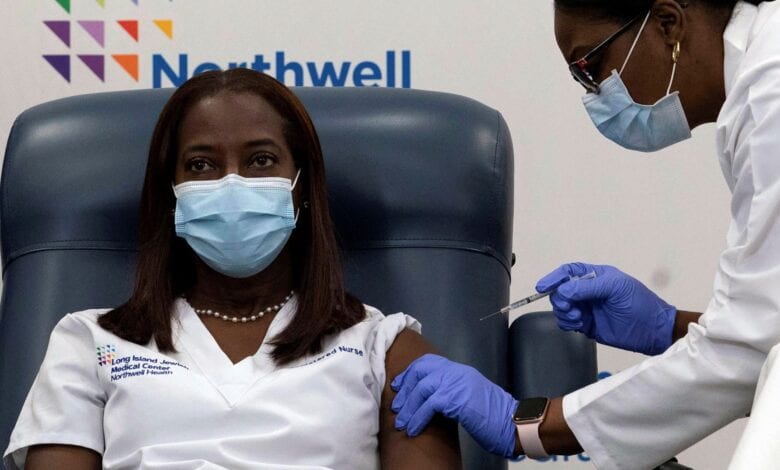
The UN agencies on Tuesday urged governments to finance a new 50 billion dollars roadmap to end the COVID-19 pandemic and drive a fast recovery.
The UN agencies stated that the heads of the world’s predominant global financing, health and trade agencies made the call on Tuesday after a joint media conference coordinated by World Health Organisation (WHO)
The media conference was jointly hosted by WHO, International Monetary Fund (IMF), the World Bank Group (WBG), World Health Organisation (WHO), and World Trade Organisation (WTO).
The plan seeks to scale up supplies of vaccines, tests, and treatments, thus reducing the “equity gap” in developing countries.
The leaders of the agencies warned that unless governments acted now, continued waves of infections and outbreaks, as well as more transmissible and deadly virus variants, could threaten recovery.
“By now it has become abundantly clear there will be no broad-based recovery without an end to the health crisis; access to vaccination is key to both.
“The 50 billion dollars investment is required for two crucial reasons.
“The funding will increase manufacturing, supply, trade, and delivery that would accelerate the equitable distribution of the tools to diagnose and treat COVID-19, such as vaccines, oxygen, and medical supplies, while also promoting economic growth around the world.’’
“This new roadmap reflects the need to enhance countries’ readiness and capacity systems to utilize these tools rapidly, safely, and effectively,” said WHO Director-General, Tedros Ghebreyesus, speaking at a media briefing on Tuesday.
The funding commitment will bring the pandemic to an end faster in developing countries, the partners said, reducing infections and deaths while also accelerating economic recovery.
At the news briefing, Kristalina Georgieva, IMF Managing Director, explained the link between vaccination and the global economy.
“We are deeply concerned because an increasingly two-track pandemic is causing a two-track economic recovery with negative consequences for all countries.
“And our data shows that in the near term, vaccinating the world is the most effective way to boost global output. In other words, vaccine policy is economic policy,” she said.
The agency leaders estimated that the investment would generate some nine trillion dollars in additional economic activity by 2025.
The estimate is in line with recent analysis by the International Chamber of Commerce, the world’s largest business organisation, and Eurasia Group, a political risk consultancy.
These entities have made the case for a relatively modest investment by governments, compared with the trillions spent on stimulus plans, and also lost in foregone economic output.
UN Secretary-General António Guterres had repeatedly stressed that vaccines must be global public goods available to all people and everywhere.
According to Guterres, the funding plan will spur global vaccination and bridge “the equity gap” in accessing doses.
WHO and its partners in the vaccine equity initiative, COVAX, recently set the goal of inoculating 30 percent of the global population by the end of this year.
This could reach 40 percent through other agreements and surge investment, and at least 60 percent by the first half of 2022, according to the joint statement.
“To urgently get more shots in arms, doses need to be donated immediately to developing countries synchronized with national vaccine deployment plans, including through COVAX,” it said.
Kano Fire Service saves 197 lives, properties worth N75m in May
WTO Director-General, Ngozi Okonjo-Iweala, emphasised the need for cooperation on trade, as export restrictions continue and countries wrangle over waiving an agreement on intellectual property rights, known as TRIPS.
The Agreement on Trade-Related Aspects of Intellectual Property Rights (TRIPS) is an international legal agreement between all the member nations of WHO.
Okonjo-Iweala told newsmen that trade policy could help scale up vaccine production, including by freeing up supply chains, and through working with manufacturers to make the most of existing production facilities and build new ones.
“We know that there is the TRIPS waiver debate going on at the WTO.
“I cannot take sides; we need to get to a conclusion on this debate, we need to promote also the transfer of technology and know-how to get lasting increases in production capacity,” she said.