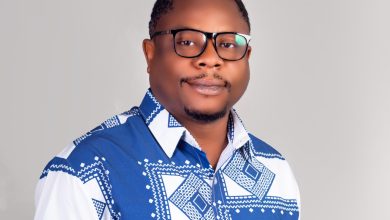
By Lemmy Ughegbe, PhD
In the early hours of a day that may yet mark a turning point in global politics, reports emerged that United States forces executed a highly coordinated operation in Caracas, entering the private residence of Venezuelan President Nicolás Maduro and taking him and his wife Cilia Flores into custody.
According to international accounts, the operation was swift and surgical, with the Venezuelan leader reportedly removed from his bedroom and transferred out of the country before any organised resistance could occur.
Whether framed as law enforcement, regime disruption, or military intervention, the imagery alone was enough to send shockwaves through the international system.
If these reports and subsequent analyses are to be taken seriously, the world may now be standing at the edge of a troubling geopolitical shift. Developments surrounding Maduro and the role reportedly played by the United States under President Donald Trump have ignited a debate that goes far beyond Venezuela. At stake are the future of sovereignty, the restraint of power, and the rules governing conduct among nations.
While facts remain contested and narratives sharply divided, one reality is undeniable. The episode has forced the international community to confront uncomfortable questions about how far powerful states are prepared to go and under what justification. It has also revived anxieties about a world in which strength increasingly substitutes for process.
According to international reporting and commentary, Washington framed its posture toward Venezuela within a security and criminal justice narrative, blurring traditional lines between law enforcement, accountability, and the use of force.
That framing matters because how power is justified often determines how widely it will later be used. When extraordinary action is normalised through language, restraint quietly erodes.
Even those deeply critical of Maduro’s record must pause here. The issue is not whether Venezuela’s leadership has been controversial or widely condemned. It is whether the methods reportedly employed signal a new willingness by powerful states to bypass multilateral processes and assert direct control over outcomes within sovereign territories.
This is where the analysis becomes more consequential.
Some geopolitical analysts have warned that the Venezuela episode may represent more than a one-off confrontation. It may reflect a broader recalibration of United States strategic thinking that draws from older doctrines while applying them in newly assertive ways.
References to hemispheric dominance, reminiscent of the nineteenth-century Monroe Doctrine, suggest a posture in which regional power is asserted more openly and with fewer diplomatic constraints.
This evolving approach has been described by some as a modernised variant of that doctrine, signalling that the Western Hemisphere remains a zone of direct American strategic interest where unilateral action could increasingly be justified in the name of security or criminal accountability. If that interpretation holds, then Venezuela is not the end of the story. It may be the beginning.
This is why commentators caution that geopolitics could become weirder and potentially far more dangerous. Once the capture or removal of a sitting leader is framed as a legitimate policy option rather than an extraordinary last resort, the global rules of engagement shift. What was once an exceptional risk is becoming routine.
The implications are profound.
First, sovereignty itself becomes conditional. Smaller or weaker states may find that their territorial integrity and political autonomy depend less on international law and more on alignment, leverage, or strategic value. This undermines the post-Second World War global order, which sought to restrain the use of unilateral force through institutions and norms.
Second, precedent becomes contagious. If one powerful state asserts the right to act decisively across borders without multilateral authorisation, others may follow. Regional and global powers could cite similar reasoning to justify their own interventions, each claiming exceptional circumstances.
Third, the authority of multilateral institutions is further eroded. When decisive action takes place outside the United Nations framework, post-facto debates risk becoming symbolic rather than restraining. The danger is not merely institutional irrelevance, but the steady hollowing out of global restraint.
None of this absolves authoritarian or abusive governments of responsibility. Accountability for human rights violations and democratic erosion remains essential. But the method of accountability matters. International law was designed precisely to prevent the substitution of raw power for due process, even when moral outrage is justified.
For Latin America, the symbolism is especially charged. The region’s historical experience with external intervention makes any assertion of hemispheric control deeply sensitive. Even governments that have little sympathy for Maduro are wary of precedents that could one day be turned inward.
Nigeria, in particular, has reason to read these developments with heightened caution. Only weeks earlier, President Donald Trump publicly described Nigeria in deeply unflattering terms and threatened direct action to eliminate terrorists killing Christians in the country. Those remarks unsettled diplomatic sensibilities and raised questions about how loosely the language of intervention was being deployed.
That concern deepened when a United States airstrike was later carried out in Sokoto State against terrorist targets. Both the American and Nigerian governments stated that the operation was conducted in collaboration. Yet the sequence of events inevitably fed public speculation.
Many Nigerians wondered whether consent was freely negotiated or extracted under pressure, and whether the episode signalled a new dynamic in which powerful allies increasingly shape the terms of security cooperation.
There is no publicly available evidence that Nigeria was coerced. But in geopolitics, perception matters almost as much as proof. When an influential leader disparages a country, threatens intervention, and shortly thereafter executes a military operation within that country’s territory, even with official consent, it invites uncomfortable questions about leverage, agency, and asymmetry.
This is precisely how sovereignty is subtly eroded in practice, not always through outright invasion, but through circumstances in which weaker states appear compelled to acquiesce to demonstrate seriousness, credibility, or compliance with the expectations of more powerful partners. What is framed as cooperation can, under certain conditions, begin to resemble compulsion.
For Africa and countries like Nigeria, the broader lesson is sobering. In a world where power increasingly trumps process, the best defence of sovereignty lies not in rhetoric but in state legitimacy. Credible elections, accountable institutions, effective security forces, and an economy that reduces social fracture. Weak governance creates openings for external solutions; however, they are framed.
The Venezuela episode, therefore, speaks to a larger global anxiety. We may be drifting away from a rules-based international system toward a more transactional, power-centric order. In such a world, moral claims are selectively invoked, legal boundaries are stretched, and restraint becomes a matter of choice rather than obligation.
The question before the world is not whether powerful states can act unilaterally. History shows that they can. The real question is whether they should, and what kind of global system such actions ultimately produce.
If sovereignty becomes negotiable, no nation is entirely safe. If rules apply only when convenient, legitimacy erodes everywhere.
Venezuela may yet find its own political resolution. But the manner in which global power is exercised in this moment will outlive any single leader. It will shape expectations, embolden imitators, and redefine the limits of acceptable conduct.
That is why this episode matters. Not because of one country or one leader, but because of what it suggests about the future of global politics in an age where restraint is weakening, and power is becoming increasingly impatient.
Dr Lemmy Ughegbe, FIMC, CMC
Email: lemmyughegbeofficial@gmail.com
WhatsApp ONLY: +2348069716645