

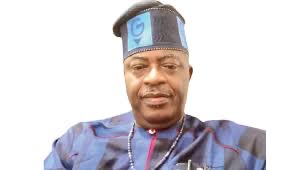
By Bisi Adegbuyi
Nigeria’s modern political experience reveals a recurring cycle: difficult economic corrections begin, public discomfort rises, patience weakens, and leadership transitions occur just as reforms approach maturity. The country repeatedly endures adjustment without transformation — effort without harvest.
As Nigeria approaches another electoral horizon, the national discussion should move beyond personalities toward a more fundamental question:
When a nation begins a structural reform cycle, should it interrupt the process before outcomes materialise?
This question explains why President Bola Ahmed Tinubu deserves a second term — not primarily because of what has already been achieved, but because of the trajectory of ongoing reforms, which is increasingly inevitable if continuity is preserved.
Transformational reforms follow a predictable historical pattern. The first phase produces discomfort. The second phase produces stability. The third phase produces growth.
Political resistance typically peaks during the first phase because benefits lag behind corrections. Nigeria today occupies that transitional space.
Policies introduced during President Tinubu’s first term, subsidy restructuring, exchange-rate normalisation, fiscal recalibration, and revenue reforms, were not popularity-seeking measures. They were structural corrections addressing distortions accumulated over decades.
Such measures resemble surgery: necessary, disruptive, and initially painful.
But surgery is judged by recovery, not incision. Courage in front-loaded leadership.
Historically, leaders defer difficult decisions to preserve short-term approval. President Tinubu chose the opposite path by confronting entrenched distortions early.
During my tenure as Postmaster General and Chief Executive Officer of NIPOST, I witnessed how deeply inefficiencies can embed themselves within public institutions. Reforming legacy systems rarely attracts immediate applause because dysfunction often becomes normalised over time.
Nigeria’s economic distortions followed a similar pattern. Correcting them required political courage more than political convenience.
The significance of the first term, therefore, lies not in immediate comfort but in structural repositioning.
Why reform benefits arrive late. Economic transformation unfolds through a lag sequence:
Correction → Stabilization → Confidence → Investment → Productivity → Prosperity
Nigeria appears to be transitioning between stabilisation and confidence.
Interrupting reform leadership at this stage risks restarting adjustment without ever reaching national GAIN, the point at which reforms translate into visible improvement in citizens’ daily lives.
This is the reform paradox confronting Nigeria.
Lessons from Global Reform Experiences: History offers clear precedents.
China’s economic transformation under Deng Xiaoping required sustained continuity beyond initial hardship before growth accelerated. India’s post-1991 liberalisation matured only after years of institutional consolidation. Indonesia’s restructuring demanded persistence through uncertainty before stability emerged. Ghana’s fiscal stabilisation demonstrated that credibility follows correction, not precedes it.
Across these experiences, the lesson is consistent: First terms confront distortion. Second terms deliver consolidation.
Nigeria’s Strategic Window: Nigeria now stands at a convergence shaped by demographic expansion, digital transformation, momentum in fiscal reform, and renewed attention to productivity sectors.
Continuity converts stabilisation into growth. Disruption risks resetting progress.
The national question is therefore not whether challenges remain; they do, but whether reform momentum should be completed or interrupted.
Leadership Beyond Immediate Approval: Democratic leadership is often judged through short-term sentiment, yet history evaluates leaders differently, based on whether their decisions positioned their nations for long-term advancement.
Transformational periods demand patience. The measure of statesmanship lies not only in popularity but in the courage to pursue outcomes whose benefits emerge later.
President Tinubu’s first term initiated a difficult but necessary recalibration. The logical test of such reforms is completion.
Completing the Reform Cycle: If continuity is maintained, Nigeria’s next governance phase can move from stabilisation toward structural nation-building, empowering Local Governments, modernising land administration, deploying address-based demographic intelligence, and anchoring development planning on verifiable grassroots data.
Nations rise when reform cycles are completed, not interrupted. Nigeria now faces a choice between restarting adjustment and allowing transformation to mature.
History favours completion.
*Barrister Bisi Adegbuyi is a former Postmaster General of Nigeria and CEO of NIPOST and founder of the Grandview innovation ecosystem focused on address intelligence and technology for public good.


