By Nathaniel Zacchaeus, Abuja
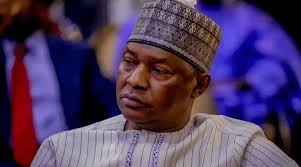
The Senate yesterday confronted Pastor Tunde Bakare, the Senior Pastor of Citadel Global Community Church, and accused him of criticising the National Assembly with contempt and unsubstantiated claims.
In a statement in Abuja, the Chairman of the Senate Committee on Media and Public Affairs, Senator Yemi Adaramodu, insisted that Bakare’s criticism of the federal parliament was biased and politically ecumenical homily.
He noted that the nation’s apex legislative institution welcomes constructive criticism but frowns at those whose commentary turns into unwarranted invective and misleading assertions that risk eroding public trust in democratic institutions.
Therefore, he enjoined the cleric and others who constantly poke holes in the National Assembly’s activities to confront its leadership for necessary explanations instead of misinforming the public.
Bakare, a former Vice Presidential candidate under the defunct Congress for Progressive Change (CPC), recently criticised President Bola Tinubu over what he called the seeming state capture.
He also described the situation in Rivers State, where the President declared a state of emergency, as a theatre of the absurd, further endorsed by the National Assembly, which he described as the most “spineless” in Nigeria’s recent history.
But Adaramodu said Bakare’s position as a political leader influences the context of his statements, which not only reflect his personal views but also carry significant political implications.
Part of the statement read, “The attention of the Senate of the 10th National Assembly of the Federal Republic of Nigeria has been drawn to recent public remarks by Pastor Tunde Bakare, which included sweeping generalisations and disparaging commentary aimed at the institution of the National Assembly.
“While the Senate respects the right of every citizen- regardless of station- to express views on the nation’s state, we are constrained to respond when such commentary crosses the line into unwarranted invective and misleading assertions that risk eroding public trust in democratic institutions.
“Pastor Bakare, a cleric and political voice in his own right, has previously contributed to national discourse in ways that have spurred reflection and debate.
“However, his most recent statements veer away from constructive criticism into rhetoric, unfortunately laced with contempt and unsubstantiated claims.
“It is also important to acknowledge that Pastor Bakare was a presidential aspirant in the last general elections and a vice-presidential candidate in a previous electoral cycle. We view his corrosive criticisms of the National Assembly as a biased, political, ecumenical homily.
“While he remains a respected cleric, his role as a prominent political figure cannot be discounted when assessing the lens through which his comments are made. His position as a political leader influences the context of his statements, which reflect personal views and carry significant political implications.
“We also wish to note that Pastor Bakare is not only a cleric and political figure but also one with a legal background. He is, therefore, well aware of the constitutional boundaries that guide public commentary – particularly on sub-judice matters.
“The National Assembly cannot and will not be drawn into responding to issues already before a court of competent jurisdiction out of respect for the rule of law and the independence of the judiciary.
“While some may attempt to portray an unnecessary adversarial dynamic between the National Assembly and the Executive arm of government as a marker of virility in checks and balances, we must clarify that such tension, though it may entertain some, does not necessarily equate to effective legislative oversight.
“The actual test of institutional maturity lies not in performative hostility but in principled engagements and results-driven processes. Indeed, there are well-documented instances where the National Assembly has constructively disagreed with the Executive – including on specific provisions of the presidential declaration on the Rivers State of emergency, which Pastor Bakare referenced.
“These examples reflect our commitment to constitutionalism and fidelity to the Nigerian people – not posturing for effect.
“It’s noteworthy that the executive has never brought any unconstitutional agenda before the 10th National Assembly, like the unspeakable but infamous Third Term agenda, the rejection of which the Pastor used as a benchmark for performance.
“To cast aspersions on the entire institution based on personal frustrations, ideological differences, or as positioning ahead of possible future political alignments is unfair and counterproductive to our collective democratic journey.
“The challenges facing our country require dialogue anchored on truth, mutual respect, and a commitment to nation-building – not polarising rhetoric that undermines confidence in our democratic institutions.
“It is important to note that Pastor Bakare may have, in times past, similarly directed harsh criticisms at previous sessions of the National Assembly – some of which he now praises in glowing terms.
“We are confident that, in time, with a nuanced review of the performance of the 10th National Assembly – within the context of the exigencies of this time and season – Pastor Bakare may, at some point in the future, commend us for acting in the best interest of the people of Nigeria, in line with our constitutional mandate.
“The Senate remains open to constructive engagement with all Nigerians—including Pastor Bakare. We can advance the cause of good governance and national development through such dialogue, not diatribe.
“We urge all public figures – especially those with influence in the civic and spiritual spheres – to temper their criticisms with facts and a sense of national responsibility.
“Our democracy, though imperfect, is best nurtured through thoughtful contributions that inspire reform, not resentment. We view his corrosive criticisms of the National Assembly as a biased, political, ecumenical homily.”