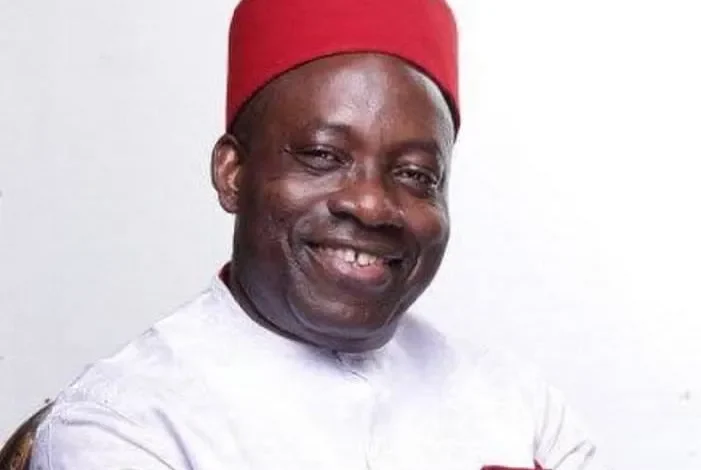
By Cajetan Mmuta, Awka
History was rewritten in Anambra State on October 3, 2024, when the newly elected mayor and deputy mayors (chairmen and vice-chairmen) of the 21 local government areas were sworn in to take charge of government affairs and governance at the grassroots level in the state.
Indeed, it was a great relief and heart-warming for the people of not only the 21 LGAs but also, most importantly, the 179 communities across the state’s three senatorial districts.
This is so given that for over 11 years, the people at the grassroots suffered inexplicable levels of backwardness and apparent rot in terms of actual development in the hands of the successive governments that then held sway.
It is on record that the last time Anambra had a taste of ‘near’ election into the local government areas was at the twilight of former governor Peter Obi’s administration after his eight years on the saddle.
The third tier of government also suffered and suffocated gravely during the eight years of government of the immediate past helmsman, Willie Obiano.
Both Obi and Obiano settled for transition committees (TCs) to preside over the local councils’ affairs; in the end, their efforts at that level did not yield any testimonial results.
However, with the coming on board of a former governor of the Central Bank of Nigeria (CBN), Prof Charles Soludo, as the governor of Anambra State in 2021, the state heaved a sigh of relief.
Soludo, during his inaugural speech as governor, before the milling crowd of faithful of the ruling All Progressives Grand Alliance (APGA), supporters, and Ndi Anambra, promised to conduct elections in the 21 LGAs of the state.
He took strenuous steps to reform and strengthen the LGAs and the Anambra State Independent Electoral Commission (ANSIEC), which is charged with conducting local government elections, to guarantee a seamless process in the state.
That promise was finally kept on Saturday, September 28, 2024, after about two years and eight months into the first term of the Soludo administration.
It would be recalled that on July 11, 2024, the Supreme Court, in a case marked SC/343/2024, delivered a judgment in which Justice Emmanuel Agim ruled that all funds due to the 774 local government areas in Nigeria must be paid directly into the accounts of local government areas and not through a joint state and local government account, as was the case.
The court also directed the Accountant-General of the Federation to pay LG allocations directly to their accounts, as it declared the non-remittance of funds due to LGAs by the 36 states as unconstitutional.
The nation’s apex court had earlier granted all 774 LGAs autonomy.
ANSIEC Chairman Genevieve Osakwe, with her team, had to midwife the process, which was judged by many as free, fair, and credible.
On Sunday night, September 30, 2024, Osakwe announced the poll results at the ANSIEC head office in Awka, the state capital, and declared that APGA cleared all the 21 chairmanship and 326 councillorship seats in the state’s local government areas.
The ANSIEC chairman announced the total scores of the APGA candidates and their names one after the other, declared them winners, and they were, therefore, returned elected, having scored the highest number of votes cast.
The commission’s boss commended the people of Anambra State for trooping out en masse to exercise their civic rights and lauded the security agencies for ensuring peace and order throughout the process.
Soludo voted during the poll at his Ofuiyi Square polling unit 002 at Umueze-Isuofia, Aguata local government area.
He said the exercise remained a foretaste of his victory come the 2024 governorship election in the state.
He also described the weekend’s local government election as seamless and an example of what an election should be.
Critics and opposition groups, however, kicked against the preparations leading to the conduct of the poll, which they claimed lacked or fell short of the needed legal framework as provided for by the Electoral Act and other constitutional requirements.
The posers by critics and opposition political parties hinged on the controversy surrounding the amendment of the state’s electoral laws as it affected the conduct of election into the local governments by members of the State House of Assembly; the timeframe for the conduct of the local government election, the poor or low level of sensitisation/awareness allowed by ANSIEC for the participating political parties, conduct of party primaries, low-keyed or zero political campaigning, availability of logistics during the poll, and other issues that heralded the exercise across the state.
Analysts and groups had raised questions and concerns about the election process, citing obvious lapses, such as the late arrival of ad-hoc staff and materials for the election, voter apathy, and the absence of result sheets in most of the voting centres and polling units.
Consequently, the Labour Party (LP), All Progressives Congress (APC), and a few others boycotted the election and went to court to challenge the process.
The LP, in the suit marked FHC/ AWK/223/2024, had dragged the ANSIEC before a Federal High Court sitting in Awka, the Anambra State capital, over the publication of the list of candidates purporting to be the party’s standard bearers for the Saturday, September 28 council elections in the state.
Other defendants in the case include the Independent National Electoral Commission (INEC), Inspector-General of Police (IGP), Directo -General of the State Security Services (SSS), and 14 other persons listed as LP chairmanship and councillorship candidates in the council elections.
Theo Egbe, LP’s publicity secretary, said in a statement to newsmen in Awka that the party had already announced its withdrawal from the council polls.
He described those listed as candidates of the party in the election as ‘fake.’
Egbe disclosed that, of the 21 local governments of the state, ANSIEC published the list of candidates purporting to be LP candidates in about eight local governments—Idemili-North, Orumba-North, Nnewi-North, Aguata, Awka-North, Oyi, and Anambra East LGAs.
He added that the candidates were foisted on LP through faceless and unpatriotic persons to act as LP members.
According to him, the LP boycotted the council polls because the amendments to the state House of Assembly Act establishing the ANSIEC, provisions in the Act concerning the conduct of the council polls, as well as the guidelines issued by ANSIEC, which were copiously manipulated against opposition parties.
Despite the threat of a winner-takes-it-all, Governor Soludo and his solution team felt that there must be winners and losers in every contest.
No doubt, both the state government and those who participated in the election have etched their names on the stone of history, and the grassroots can now breathe a sigh of relief that what they had long yearned for is presently at their doorstep.
Expectedly, what remains at the moment is a way out of the arduous tasks before the newly elected mayors and the legislative arms across the 21 LGAs.
Findings have shown that humongous challenges await them amid many questions about the bleak future of the country’s wobbling sociological and economic uncertainty, festering hunger, and hardship.
Sadly, the 21 local governments, like others across the nation, are faced with a wide range of problems, which include poor infrastructural development, an army of youth unemployment, communal crises, power tussles between powerful, influential personalities, traditional institutions in various communities and President-Generals of town unions; internal strife, crime and criminalities arising from the problem of insecurity, land disputes, and several others.
These and many more are part of the challenges that the new mayors, deputies, and the legislative arm of the councils are to face as they walk the tortuous path towards cleaning the Aegean stables of long abandoned, decayed, and raped councils before the arrival of Soludo.
Interestingly, beyond the emerging legal and political brouhaha that follows the feat, which has added to his long list of achievements, Charlie Nwamgbafor captured the essence of the collaborative work between the state and the new executives of the councils.
While swearing in the newly elected mayors and deputy mayors on Wednesday at the Exco Chambers of the Agu Awka Government House, Governor Soludo congratulated them on their victory at the poll, which he said was a testimony to the people’s votes and confidence.